
Introduction
Your shortlist looks solid until the first factory call turns into a fog of vague answers: who owns tooling, what tests get run, which site actually makes the goods, and what happens when a clip fails in the field. That uncertainty slows your workflow because you cannot write a clean spec pack, and you end up chasing missing documents instead of building the line.
Getting it wrong is expensive. One quality escape or safety incident can trigger returns, chargebacks, and a recall that wipes out launch budgets and retailer trust. This guide gives you a repeatable, evidence-first system to evaluate full-service pet manufacturers, using five practical strategies you can run with any supplier. You will start with fundamentals (scope, risk, evidence), then work through the five strategies and a decision guide you can apply to your next PO.
Strategy 1: Define full-service requirements upfront
The key takeaway: if you do not define full-service requirements in writing, you will pay for rework in sampling cycles and packaging resets later. Your team should treat the first two weeks as a spec-lock sprint, not a casual conversation.
Start by building a spec pack that a factory can actually execute:
- Dimensions and tolerances (where "close enough" is unacceptable)
- Material callouts (including coatings, plastics, and metal finishes)
- Labeling and warnings (placement, language set, durability expectations)
- Packaging configuration (inner pack, master carton, drop-test needs)
Next, map "category needs" even if your marketing roadmap includes Organic Pet Food, Pet Supplements, or Raw Pet Food Diet products. Accessory SKUs still need their own compliance logic: abrasion resistance, corrosion resistance, and mechanical strength matter more than ingredient panels.
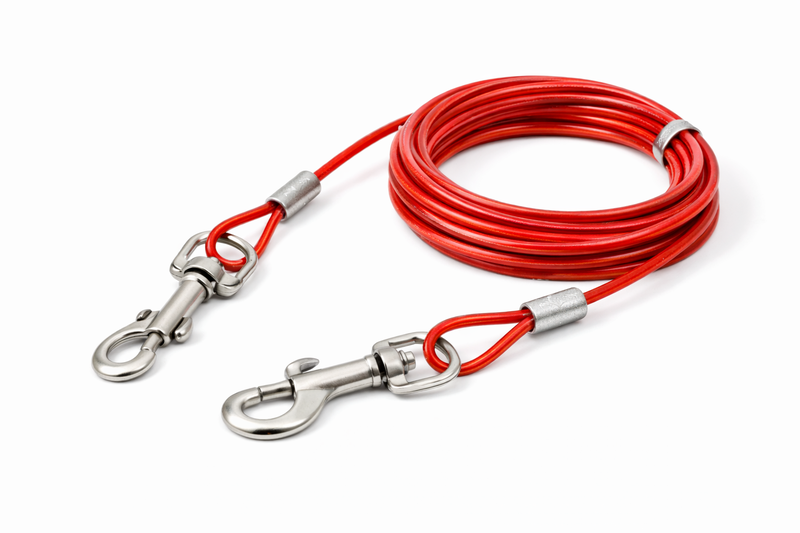
To make this concrete, EverBrit's Tie-Out Cable page specifies steel cable with vinyl coating, multiple lengths (10 ft to 35 ft, customizable), a stated diameter option (3/16 inch, customizable), and a weight capacity up to 250 lbs (customizable). Those numbers are not just marketing; they are the starting point for your acceptance criteria and test plan.
Strategy 2: Verify compliance with auditable evidence
The key takeaway: compliance is not a promise, it is a package of current documents that match the exact producing site and the exact product type. If your workflow relies on "we are audited" without report currency and corrective action proof, retailer onboarding will stall.
For social compliance, a common audit framework is SMETA. Sedex explains that a SMETA 4-pillar audit covers labor standards, health and safety, environment, and business ethics, while the 2-pillar scope covers labor standards and health and safety only. That scope difference matters when your customer requires environmental and ethics coverage, not just labor practices. According to Sedex, the 4-pillar audit is broader and typically longer to conduct.
Make your evidence request specific:
- Audit type: SMETA 2-pillar or 4-pillar (or customer-specific)
- Report date: within the last 12 months for high-risk sites
- CAPA status: open vs. closed, with objective evidence
- Site match: address and facility name must match production site
EverBrit states its factories are audit-ready for major U.S. and European retailers and references Sedex among its compliance programs, so the right next step is to ask for the latest audit summary, scope, and CAPA closure evidence for the site that will build your SKU.
Strategy 3: Stress-test product safety and failure modes
The key takeaway: you reduce returns and incidents fastest by testing the few parts that fail most often, not by adding generic inspections. For leashes and tie-outs, that usually means hardware, crimps, locking systems, and coatings.
Build a simple failure-mode checklist before you approve the pre-production sample:
- Clip deformation or break under load
- Recoil or snap-back risk after a failure
- Tape or rope edge fray, stitch pull-out, or housing crack
- Swivel seizure leading to tangling and sudden jerks
This is not hypothetical. A recall notice from the U.S. Consumer Product Safety Commission described a case where a metal clasp could bend or break and the leash could recoil back unexpectedly, creating a serious injury risk. Use that kind of recall language to shape your test plan: you are not only validating strength, you are validating what happens when something fails.
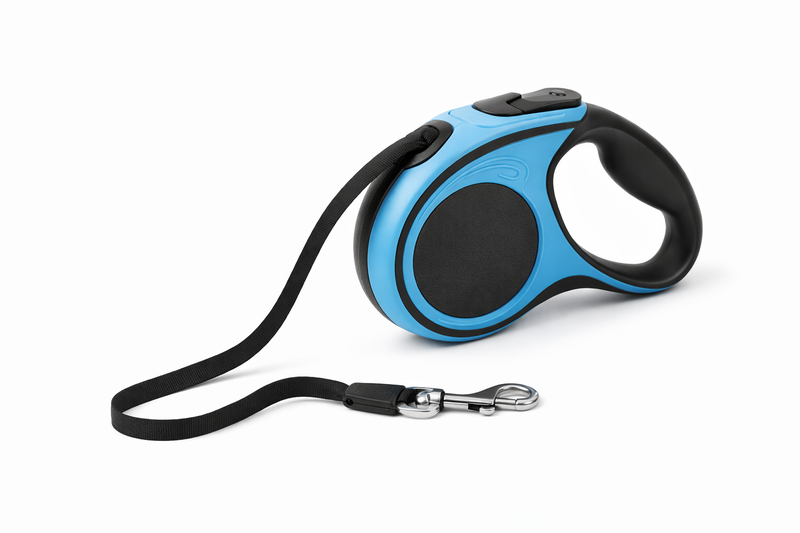
EverBrit's Retractable Leash listing calls out ABS housing, nylon tape or rope options, and a secure locking and braking system with length options (3 m, 5 m, 8 m customizable) and load capacity up to 50 kg (customizable). Translate those claims into measurable tests: cycle testing of the mechanism, drop testing of housing, and pull testing of the clasp and tape attachment under your target load with a safety margin.
Strategy 4: Audit manufacturing capacity and continuity
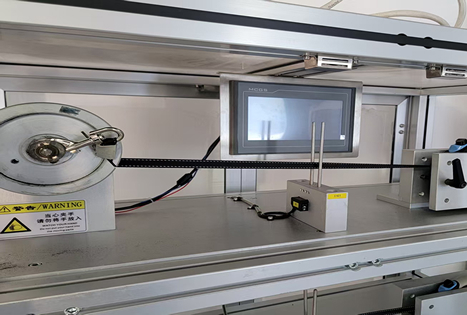
The key takeaway: a factory tour is not enough. You need to validate throughput, staffing stability, and what the factory will do when a bottleneck hits mid-season. Capacity is a system, not a headcount number.
Your capacity audit should answer:
- Where is the constraint step (wire and hardware, sewing, assembly, packaging)?
- What is the planned output per line per shift?
- What happens if a key machine or mold goes down?
- Which processes are in-house vs. outsourced during peak demand?
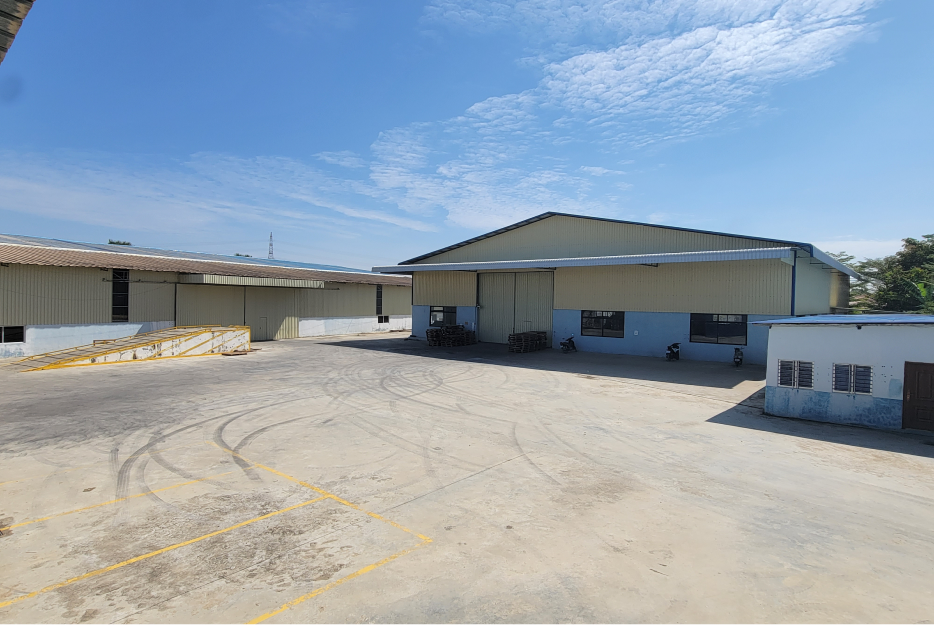
EverBrit describes an integrated production system across China and Cambodia, with in-house wire and hardware manufacturing for Tie-Out Cable and Retractable Leash, plus cutting and sewing for soft goods and dedicated assembly operations. That mix matters if your assortment includes Biodegradable Waste Bags, GPS Pet Trackers, Automated Pet Feeders, or CBD for Pets in the long run, because you may be sourcing multiple categories from different process types. Even if EverBrit does not manufacture electronics or consumables, you can still use the same continuity questions to avoid single-point failures.
Continuity planning should be explicit:
- Dual-country plan: which SKUs can shift locations
- Tooling strategy: duplicate critical tools or rapid replacement plan
- Approved material alternates: pre-qualified, not ad hoc
Strategy 5: Build a measurable quality management loop
The key takeaway: quality improves when you close the loop with data, not when you add more inspection. You want a cadence that turns defects into root causes, then into process changes that stick across reorders.
Define a simple QMS loop in your supplier agreement:
- Incoming material checks: what gets verified, and how often
- In-process checkpoints: critical-to-quality steps only
- Final inspection: AQL level and defect taxonomy
- CAPA workflow: timelines, containment, root cause, verification
ISO frames ISO 9001:2015 as a quality management system standard that helps organizations deliver consistent products and services and provides a basis for continual improvement. ISO also notes certification is performed by independent certification bodies, not by ISO itself. In sourcing terms, that means you should ask who certified the site, the certificate scope, and whether it covers the producing facility.
Use measurable targets so you can manage quality like an operations metric:
- Defect rate trend by defect type (not just pass/fail)
- Top 3 recurring defects per SKU
- Corrective action closure time
When you run this loop well, it protects not only leash and tie-out programs, but also brand-adjacent lines like Pet Dental Care or Anxiety Relief for Pets where packaging, labeling, and retailer requirements often change.
Selection/Decision Guide: How to choose a trusted full-service partner
Step 1: Match category fit to real processes
Decision context: you are not choosing a factory, you are choosing a process set. Start with what the product physically is.
- Metal and wire assemblies: look for in-house hardware control
- Soft goods: evaluate cutting accuracy and stitch consistency
- Furniture structures: validate materials and stability testing
Step 2: Score compliance readiness with current documents
Decision context: onboarding fails when documentation is missing or out of date.
- Audit report within required window
- CAPA closure evidence available
- Site address matches production location
Step 3: Validate engineering depth through sampling discipline
Decision context: good sampling predicts smooth mass production.
- Spec pack redlines returned quickly
- Clear tolerance feedback
- Packaging and labeling sampled, not implied
Step 4: Confirm delivery reliability and continuity planning
Decision context: stable supply is a design constraint, not a logistics detail.
- Line capacity backed by throughput math
- Backup plan for peak season
- Change control documented and enforced
| Decision factor | What to verify | What good looks like | Trade-off |
|---|---|---|---|
| Category fit | In-house core steps | Wire, sewing, assembly | Narrower category range |
| Compliance readiness | Audit + CAPA | Recent, site-matched | More upfront effort |
| Engineering depth | Samples + DFM | Fast iterations, clear tolerances | Longer spec phase |
| Delivery reliability | Capacity + backups | Dual-site contingency | Added coordination |
Conclusion
Trusted full-service pet manufacturers are found with an evidence-first process, not with a single great call or a nice sample. Define scope upfront, demand auditable compliance proof, test real failure modes, validate capacity and continuity, and then run a measurable quality loop that improves each reorder.
If you want to execute fast without taking unnecessary risk, start with one pilot SKU program and build your documentation set as you go. Once the workflow is stable, expand into adjacent SKUs using the same five strategies so each new launch gets easier, not harder.
Official Site: EverBrit Pet
FAQ
How do I define a full-service scope without overpaying?
Define full-service scope by listing every deliverable your team expects, then separating it into engineering, compliance support, manufacturing, packaging, and logistics tasks. Ask the supplier to confirm what is included versus optional, and tie each item to a concrete output like a spec pack redline, a signed sample approval, or a test report. Keep the scope SKU-specific, because a retractable leash program needs different validation than soft goods or cat furniture. Finally, require change control so new requests (like a label update) do not silently expand the workload.
What documents matter most before placing a PO?
The highest-leverage documents are a signed specification, a packaging approval, and a test plan or test report that matches the exact SKU configuration. You also want the latest factory audit report summary with corrective action status, because retailers often require current proof for onboarding. Confirm that the producing site name and address on documents match the actual manufacturing location. If anything is labeled "generic" or "for reference," treat it as incomplete and request the site- and SKU-matched version.
How can I assess whether a factory is truly audit-ready?
A factory is truly audit-ready when it can provide a recent audit report, explain the scope, and show evidence that corrective actions were closed with objective proof. Ask whether the audit covers labor, health and safety, environment, and business ethics, and whether it was conducted as announced, semi-announced, or unannounced. Confirm that the same site will produce your goods, not a different affiliate location. Also check whether the factory can quickly produce traceability records for materials and finished goods lots.
What is the fastest way to reduce quality issues after launch?
The fastest way is to tighten critical-to-quality specs and connect defects to a corrective action loop with deadlines. Start by defining a defect taxonomy (critical, major, minor) and aligning it with AQL so inspections lead to consistent decisions. Track defects by type, not just by total count, because recurring issues usually come from one process step. Require root cause analysis and verification testing so fixes are proven, not promised.
How should I manage sourcing risk across countries?
Manage cross-country risk by deciding which SKUs need a validated backup plan and which can remain single-source. For high-volume or seasonal items, pre-qualify the alternate site with matching materials, tooling, and packaging so the switch is operationally real. Set trigger points, such as lead time slippage or capacity constraints, that automatically start the contingency plan. Finally, keep change control synchronized across sites so you do not create version mismatches.
How do I evaluate a manufacturer for multiple categories?
Evaluate multi-category capability by verifying the specific processes required for each category, not by assuming skills transfer. For example, metal and wire production demands hardware control and pull testing, while soft goods demands cutting accuracy and seam strength consistency. Ask for category-specific samples, test plans, and process documentation for each product family. If the supplier proposes subcontracting, require transparency on which steps are outsourced and how quality is controlled.
What should I test first on retractable leashes and tie-out cables?
Test the highest-risk failure points first: the clasp, the attachment between the strap or cable and the hardware, and the retractable mechanism or swivel behavior. Add cycle testing for the lock and brake, plus pull testing to a defined load with a safety margin above intended use. For tie-out cables, validate crimp integrity and coating durability through abrasion and corrosion-focused checks. Finally, include a misuse-informed test scenario, because many incidents happen during sudden jerks or unexpected recoil.
How do I prevent scope drift during OEM or ODM development?
Prevent scope drift by locking a baseline spec pack and recording every change in a simple change-control log that includes reason, impact, and approval owner. Require the factory to confirm whether the change affects materials, tooling, process steps, testing, or packaging. Tie approvals to physical artifacts: updated drawings, updated samples, and updated labels, not just email confirmation. This keeps your team aligned when marketing-driven additions like new Pet Dental Care labeling claims or Pet Wellness messaging arrive late in the cycle.
