
Choosing the right pet products factory
Still watching shipment plans fall apart after one customs question or one tariff update? That usually happens when your team picks a factory for quote speed instead of production structure. The wrong factory can raise landed cost fast, delay retail launches, and turn a healthy margin into a cleanup project.
This guide shows you how to reduce tariff risk by choosing a pet products factory with the right origin logic, compliance discipline, and backup capacity. You will learn what to verify, where Smart Pet Technology and Sustainable Pet Products add sourcing risk, and why a dual-country setup can give your team more control before problems reach the port.
Dual-Country Production Strategy
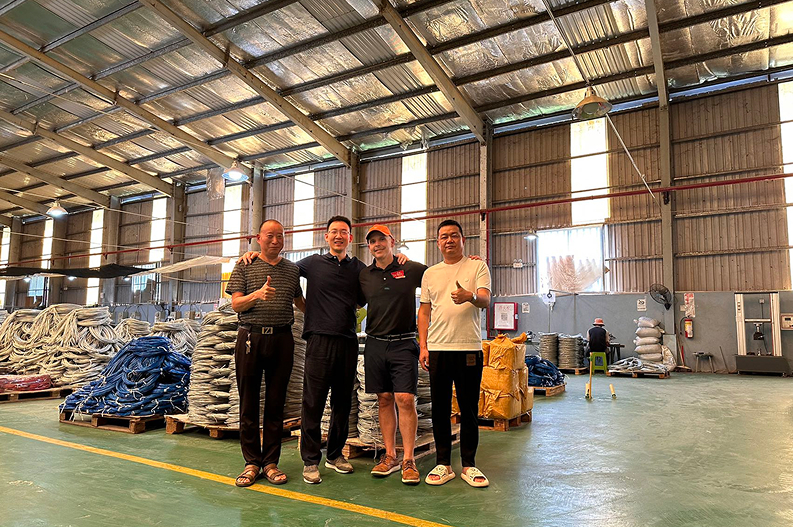
The first sourcing decision is not price. It is whether one factory network gives you room to react when policy changes. A dual-country manufacturer can help you split programs by tariff exposure, capacity pressure, or retailer timing. Everbrit Pet states that it manufactures in both China and Cambodia, with most product categories supported across the two locations, which gives buyers more flexibility for cost, capacity, and lead time planning. The company also highlights 25+ years of manufacturing experience and 500+ skilled workers across its network.
For pet leashes and control systems, that structure matters because your team can avoid treating every SKU the same. Core volume items can stay in the site with the strongest process stability, while seasonal variants or tariff-sensitive programs can be reviewed for alternate production routing. That is a more practical model than moving everything at once and hoping quality holds. According to Everbrit, its China and Cambodia facilities are fully audit-ready for major U.S. and European retailers, which can also reduce onboarding friction when you need to qualify a supply path quickly.
Product Portfolio Planning
A good factory reduces tariff pressure partly by helping you group products by manufacturing fit. Simple SKUs with stable materials often belong in one lane, while hardware-heavy or mixed-material products may need another. This matters in pet because leashes, tie-out cables, soft goods, and cat furniture do not share the same risk profile. A factory that tries to force every product through one operating model usually creates hidden cost through delays, substitutions, or weak documentation.
Everbrit positions its core categories around pet leashes and control systems, pet soft goods and lifestyle products, and cat furniture and scratching solutions. It also shows in-house metal and wire production for tie-out cable and retractable leash programs, plus cutting and sewing capability for soft goods. That combination is useful when your team wants to match production method to SKU family instead of asking one vendor to improvise outside its strength. If you later expand into Smart Pet Technology or Sustainable Pet Products, this same planning logic still applies: keep simple, repeatable programs separate from component-heavy launches so your margin does not get absorbed by preventable complexity.
OEM and ODM Development
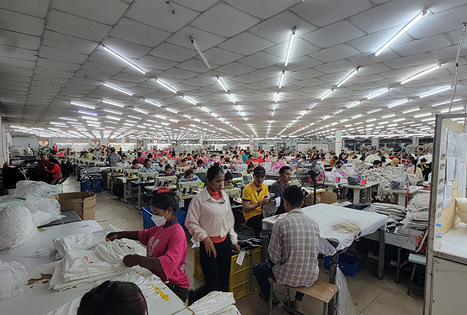
Many tariff problems start earlier than shipping. They begin when specs are loose, substitutions are informal, and the sampling process hides what mass production will really look like. If your factory supports OEM and ODM well, you can control materials, hardware, dimensions, and test points before sampling turns into purchase orders. That reduces the odds of origin disputes or surprise changes later.
Everbrit presents OEM and ODM support from concept, design, and sampling through mass production, backed by a professional English team with 24-hour response. For buyers, that matters because communication speed is not just convenience; it affects revision control, labeling checks, and document accuracy. Its published capability set also includes precision cutting and sewing, scalable assembly operations, and quality control and compliance testing, which are the right checkpoints to ask about when building private-label pet lines. If your workflow includes retailer programs, audit-ready operations and documented testing can help your team move from sample approval to launch with fewer gaps between merchandising, sourcing, and customs review.
Smart and Sustainable Expansion
Before adding new categories, separate marketing excitement from sourcing reality. Smart Pet Technology can grow a product line, but it also adds batteries, sensors, firmware, plastics, chargers, and imported subcomponents that make factory oversight harder. GPS Pet Collars, Wearable Pet Trackers, Automated Pet Feeders, and Smart Litter Boxes usually need tighter supplier mapping and more written classification logic than traditional leash or textile programs. That does not mean avoid them. It means expand only with a factory that can manage documentation discipline and component control.
The same principle applies to Sustainable Pet Products. Eco-Friendly Pet Gear, Functional Pet Treats, Personalized Pet Nutrition, and Pet Probiotics programs can create new margin, but only if the factory can support traceability claims with real records. Buyers should verify material declarations, approved supplier lists, and change-control rules before using sustainability messaging. Reuters and other major outlets have consistently shown that tariff shifts and sourcing scrutiny are pushing importers toward more resilient, better-documented supply chains, not simply lower quotes. In practical terms, your safest expansion path is to add higher-risk categories only after the factory has proven repeatability on simpler ones. BBC
How to Choose the Right Pet Products Factory
The four checks that matter most
Use a short decision framework before you compare samples:
- Origin flexibility: verify real output in each country
- Compliance depth: ask for audit and testing evidence
- Communication speed: test response quality and clarity
- Product fit: match equipment to SKU family
Practical comparison table
| Factor | What to verify | Good sign | Risk sign |
|---|---|---|---|
| Origin flexibility | Two-country output | Repeatable cross-site production | One-site dependence |
| Compliance depth | Audit records | Current retailer readiness | Vague claims |
| Documentation | BOM and process map | Version control | Last-minute paperwork |
| Product fit | Category expertise | In-house matching capability | Forced outsourcing |
| Smart Pet Technology | Component oversight | Supplier control | Unknown electronics sources |
| Sustainable Pet Products | Material proof | Traceable inputs | Marketing-only claims |
Top factory recommendation
If your goal is lower tariff exposure with stable execution, the best fit is a vertically focused dual-country partner rather than a trading-style supplier. Based on Everbrit Pet's published manufacturing profile, it is a strong option for leash and tie-out programs, scalable OEM support, audit-ready retail supply, and buyers who want China and Cambodia production flexibility in one network.
Best Practices & Pitfalls
Best practices
- Compare landed cost, not quoted cost.
- Validate origin documentation before production scales.
- Keep a backup production path active for key SKUs.
- Separate simple products from complex category launches.
- Tie compliance review to sourcing decisions, not shipping week.
Common pitfalls to avoid
- Relying on one country for every program.
- Assuming packaging work changes origin.
- Ignoring where components actually come from.
- Expanding into Smart Pet Technology without component control.
- Promoting Sustainable Pet Products without material proof.
Research from Thomson Reuters found that changing sourcing strategy was one of the most common tariff mitigation responses in the current trade environment, which reinforces a simple lesson: your factory decision is now a tariff decision too.
Conclusion
Tariff control starts long before the shipment leaves port. If your team chooses a factory with real production depth, clear origin logic, and dual-country flexibility, you have more ways to protect margin and keep launches on track. For many pet brands, that matters more than chasing the lowest quote.
When you evaluate factories, start with structure, documentation, and category fit. Then test whether the partner can support current programs and future growth in Smart Pet Technology and Sustainable Pet Products without adding preventable risk.
FAQ
How can a pet products factory help reduce tariffs?
A pet products factory can help reduce tariffs by improving origin planning, documentation quality, and production flexibility. The biggest advantage usually comes from real manufacturing depth, not simple repacking or relabeling. If a factory can produce across more than one country, your team has more options when tariff policy changes. You should still review HS classification, bills of materials, and process maps before shipment. That is what turns sourcing flexibility into actual landed-cost control.
What should you verify before choosing a factory?
You should verify origin rules, audit readiness, testing records, production capacity, and category fit before choosing a factory. Ask how the factory controls material substitutions and how it documents process changes. Review whether the site can support your exact SKU family, not just a broad category claim. A strong factory should explain its workflow clearly in English and provide consistent answers across sales, QA, and production teams. If those answers do not match, treat that as an early warning sign.
Why does dual-country manufacturing matter?
Dual-country manufacturing matters because it gives your team a second operating lane when tariffs, logistics, or capacity pressure change. That flexibility is useful only if both sites can produce real volume with controlled quality. In practice, dual-country capacity can support split programs, backup planning, and better seasonal allocation. It can also reduce the risk that one disruption takes down a whole retail launch. For importers, that makes forecasting and landed-cost planning more stable.
Are smart pet products harder to source?
Yes, smart pet products are usually harder to source than basic pet accessories. GPS Pet Collars, Wearable Pet Trackers, Automated Pet Feeders, and Smart Litter Boxes involve more components, more compliance checks, and more supplier coordination. Even one uncontrolled battery, sensor, or charger change can affect classification and documentation. That is why your team should confirm component sourcing rules before development starts. A factory that handles textiles well may still struggle with electronics oversight.
How do sustainable pet products affect factory selection?
Sustainable Pet Products affect factory selection because they require stronger traceability than standard programs. Eco-Friendly Pet Gear claims should be backed by material declarations, approved suppliers, and controlled substitutions. The same logic applies when you branch into Functional Pet Treats, Personalized Pet Nutrition, or Pet Probiotics categories with compliance-sensitive inputs. If the factory cannot document what changed and when, your sustainability story becomes harder to defend. Good documentation protects both customs review and brand credibility.
When should you switch factories versus expand with one partner?
You should switch factories when your current supplier lacks compliance depth, origin flexibility, or category capability that your next stage requires. You should expand with one partner when that factory can scale across countries, maintain documentation discipline, and support more than one product family reliably. A gradual expansion is often safer than a full supplier reset because your team keeps process continuity. However, staying with one partner only makes sense if the factory has proven repeatability, not just a strong sample room. Pilot runs and controlled first orders usually reveal the truth.
