
Introduction
Still losing days to “small” spec tweaks that arrive after sampling is underway, then watching overtime, scrap, and rework quietly stack up? In 2026, those late changes do not just slow launches; they can also break carton counts, trigger new labeling checks, and force last-minute line changeovers that your team did not plan for.
This guide shows you how to cut manufacturing costs and boost efficiency 2026 without trading away quality or audit readiness. You will learn a practical roadmap: first baseline true unit cost, then reduce touches through design-for-manufacturability, then lock quality and compliance, then use dual-country capacity to manage risk, and finally raise throughput with disciplined factory KPIs.
1: Baseline Your True Unit Cost
Decision context: you cannot negotiate or redesign your way into savings if your unit cost model is missing rework, carrying cost, or routing time. Start by building a costed BOM and a costed routing.
Step 1: Build a costed BOM (bill of materials)
Keep it boring and complete. For pet control products, include every component that touches assembly time or compliance.
- Raw materials: steel cable, vinyl coating, ABS housing, nylon tape/rope
- Hardware: swivel clips, springs, axles, screws, rivets
- Packaging: inner bag, insert card, blister, master carton, labels
- Testing: pull test, lock function checks, coating adhesion checks
Step 2: Build a routing (bill of process)
Routing is where teams usually guess. Record each operation, expected cycle time, and where inspection happens.
- Cutting and end finishing (wire/cable)
- Coating or overmold steps (if applicable)
- Assembly (mechanism, handle, tape/rope wind)
- In-line checks (CTQs and sampling frequency)
- Pack-out and sealing
Step 3: Split fixed vs variable drivers
When you review the quote, ask: “What changes if we move from 5k to 50k units?” Then model it.
- Variable: direct labor minutes, consumables, packaging
- Semi-variable: overtime, QA staffing during ramp
- Fixed: tooling amortization approach, line setup time baseline
If your cost model cannot explain a 10% variance between lots, it is not decision-grade yet.
2: Design For Manufacturability, Early
Decision context: most savings are designed in, not negotiated later. The earlier you freeze specs, the fewer touchpoints you pay for in sampling churn and line changeovers.
Freeze what matters (and label the rest “tunable”)
Teams often try to lock everything too early, which causes rework when marketing changes. Instead, freeze only the CTQs and leave safe-to-tune items flexible.
- Freeze: load rating method, lock/brake behavior, clip strength, tape width
- Tunable: colorways, grip texture, insert card layout zones
- Freeze pack-out: carton count, master carton size, label placement
Reduce parts and reduce touches
Every part adds labor and adds defect opportunity. Look for “two-for-one” decisions.
- Combine two fasteners into one standardized fastener
- Use shared subcomponents across sizes (spring family, clip family)
- Standardize packaging dielines across SKUs
Example: make compliance easier, not harder
If you sell into major retailers, audit readiness depends on consistent records. Design choices that reduce variation also reduce documentation complexity.
- Limit adhesive types (fewer SDS, fewer incoming checks)
- Standardize label claim areas (less artwork re-approval)
- Use common test fixtures (less calibration overhead)
3: Quality, Compliance, And Audit Readiness
Decision context: quality is not a “cost add.” Done well, it is the cheapest way to avoid rework, chargebacks, and missed onboarding windows.
Set CTQs and link them to AQL
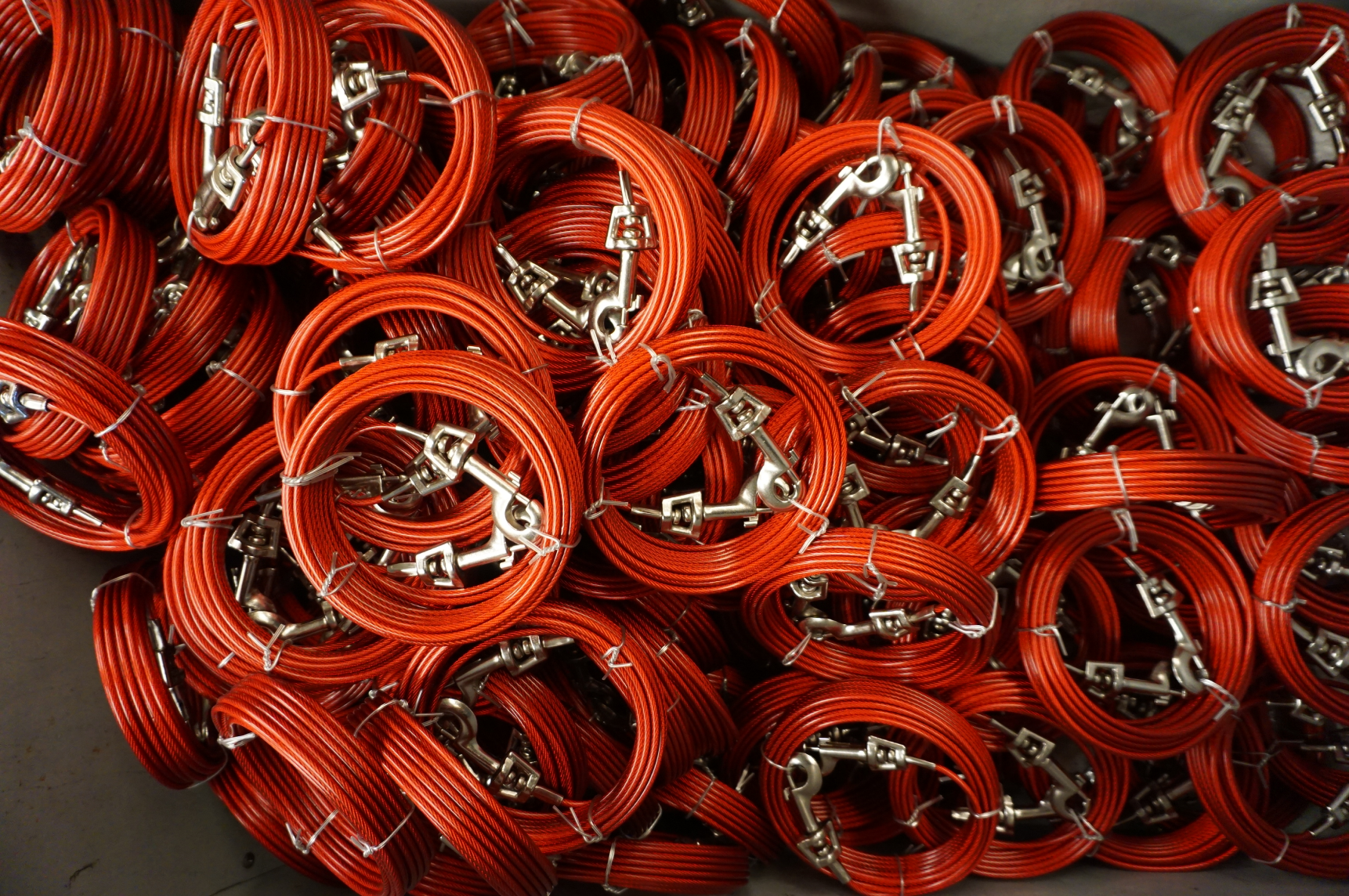
CTQs (critical-to-quality characteristics) are the few product features that, if wrong, create safety risk, returns, or retailer failure. For pet leashes and tie-outs, CTQs often include tensile strength, swivel function, lock reliability, and coating integrity.
Use a simple control plan:
- CTQ: what you measure
- Method: how you measure (fixture, gauge)
- Frequency: every unit, hourly, per lot
- Reaction plan: what happens on a fail
Then set your AQL inspection plan to focus on CTQs, not cosmetic noise.
Standardize work and build traceability you can actually run
Audit readiness fails when the paperwork describes a process that production does not follow. Keep it lean.
- Work instructions: photos, 6-10 steps max
- Training signoff: who, when, which revision
- Lot coding: material batch, assembly date, line ID
- Records: incoming checks, in-line checks, final report
CAPA loops: fix the cause, not the symptom
Corrective and preventive action (CAPA) should reduce recurring defects. A practical cadence:
- 24 hours: contain and sort
- 72 hours: root cause using 5-Why or fishbone
- 2 weeks: implement and verify effectiveness
If the same defect appears twice in 60 days, treat it as a system issue, not an operator issue.
4: Sourcing Strategy And Dual-Country Capacity
Decision context: dual-country production is not only about cost. It is about lead time options, risk control, and capacity elasticity when demand is volatile.

Segment SKUs by risk and volume
Do not move everything at once. Create three buckets:
- High volume, stable spec: best for efficiency-focused lines
- Medium volume, variant-heavy: best for flexible cells
- New or compliance-heavy: best where QA and engineering support is strongest
Balance China-Cambodia trade-offs
Everbrit Pet operates factories in both China and Cambodia, which can help you allocate production by SKU characteristics and risk tolerance. (everbritpet.com)
A simple allocation logic:
- Put mature SKUs where changeover time is lowest
- Put labor-intensive SKUs where labor minutes matter most
- Keep early-stage SKUs near engineering and test capability
Plan for wage floors and compliance timing
Cambodia wage changes can affect labor-heavy SKUs and should be modeled before you lock annual programs. ASEAN Briefing reported a 2026 minimum wage update for specific sectors effective January 1, 2026, which is the type of macro change that can shift your best-cost country decision. (aseanbriefing.com)
Your workflow should include a yearly “cost refresh” window (for example, every October to December) so 2026 programs do not get surprised by January changes.
How to Choose A Cost-Reduction Path
Decision context: cutting manufacturing costs and boost efficiency 2026 works best when you pick the lever that matches your constraint. Use the framework below to avoid “random acts of optimization.”
Step 1: Match product complexity to a process family
- Few parts, stable spec: line flow, standardized work
- Many variants: modular subassemblies, flexible cells
- Tight tolerances: more in-process CTQ checks
Step 2: Match demand volatility to an MOQ strategy
- Stable demand: larger batches, fewer changeovers
- Volatile demand: smaller batches, faster setups
- Seasonal spikes: pre-build only long-lead components
Step 3: Define compliance burden upfront
- Retail audit requirements: recordkeeping, traceability
- Claim-heavy packaging: artwork control and versioning
- Safety-critical use: stronger CTQ and test frequency
Quick decision table (keep it operational)
| Scenario | Primary risk | Best first lever | KPI to watch |
|---|---|---|---|
| Late spec changes | Scrap, overtime | Spec freeze gates | ECO count |
| High returns | Rework, chargebacks | CTQs + control plan | FPY % |
| Long lead time | Missed ship windows | Capacity allocation | OTIF % |
| Cash tied up | Obsolescence | Reorder point reset | Weeks of cover |
Conclusion
Cutting manufacturing costs and boosting efficiency in 2026 is mostly about discipline: baseline true unit cost, freeze what matters early, and run a quality system that prevents rework instead of detecting it late. Once your process is stable, dual-country capacity and throughput KPIs give you scalable options without adding chaos.
If your team needs a starting point, begin with one SKU family, build a costed BOM and routing, and track FPY plus rework hours for four weeks. Those numbers will tell you which lever to pull first.
FAQ
How do I calculate true landed cost per SKU?
True landed cost per SKU equals your unit COGS plus all costs required to place sellable goods into your warehouse. Include materials, direct labor, packaging, and allocated overhead, then add freight, duties, brokerage, and any known destination handling. You should also add expected loss factors like scrap rate and rework minutes converted into labor cost so the model reflects reality. For accuracy, calculate landed cost per lot and compare it to your planned cost to find the biggest variance driver. If your SKU has frequent artwork updates, include a separate allowance for sampling and change management time.
What is the fastest way to reduce defects without slowing output?
The fastest path is to define 3 to 8 CTQs and move checks upstream to the step that creates the defect. Standardize the work method with photos and a short checklist so operators do not have to improvise under speed pressure. Tighten feedback loops by requiring a clear reaction plan, such as stop-and-fix for repeated CTQ failures and immediate segregation of suspect lots. Track first pass yield daily, not monthly, because weekly reporting hides short-term drift. When you see repeated issues, run a root cause review that targets the process condition, not the operator.
When should a pet brand split production across two countries?
Split production when you have meaningful risk exposure to a single location, or when your SKU mix requires different strengths in cost, lead time, or capability. High-volume, stable SKUs often benefit from a location optimized for throughput and repeatability, while variant-heavy SKUs may need flexible cells and faster changeovers. Dual-country also helps when you face retailer onboarding timelines, because capacity can be shifted if one factory is overloaded. You should split only after you have aligned BOMs, test methods, and packaging specs so quality stays consistent. Start with one SKU family and validate for at least one full reorder cycle before expanding.
How can inventory be reduced without increasing stockouts?
Reduce inventory by changing how you set reorder points, not by simply cutting purchase quantities. Use actual lead time and demand variability to compute safety stock, then review the inputs monthly for fast-moving SKUs. Align MOQs to realistic sales velocity, and consider holding long-lead components rather than finished goods if packaging or claims change often. Improve planning accuracy by separating base demand from promotional spikes, because promos distort averages and cause overbuys. Finally, track weeks of cover by SKU family so you can see where inventory is creeping back in.
What should I require from a factory to support retailer audits?
You should require documented processes that match actual production, plus records that prove consistent execution. At minimum, ask for traceability from incoming materials to finished lots, training records for key processes, and inspection reports tied to CTQs. The factory should also be able to show corrective action records that include root cause and effectiveness checks, not just rework notes. Social compliance readiness matters, so confirm the site can support customer audits with organized HR and safety documentation. For speed, request a sample audit pack for one SKU so you can see the level of detail before scaling.
How do I decide which cost lever to prioritize first?
Prioritize the lever that is both large and controllable based on your current data. If your scrap and rework are high, fix CTQs, standard work, and CAPA first because those savings repeat every lot. If your labor minutes per unit are the issue, run a time study and remove bottlenecks before negotiating material costs. If cash is constrained, inventory exposure is often the fastest lever, but only if you reset reorder points and MOQs logically. Always validate impact per SKU family, because one problematic variant can distort the entire program. Once you pick the lever, set one KPI and review it weekly for at least 8 to 12 weeks.
