
Introduction
Your launch calendar looks clean until one container misses its slot, your retailer resets its date, and suddenly, you are explaining stockouts you did not cause. That is the real sourcing frustration in 2026: one late approval, one wrong origin assumption, or one factory that cannot repeat quality at scale can turn a simple leash or tie-out program into chargebacks, returns, and lost shelf space.
This guide shows you a practical, step-by-step workflow to stabilize supply and reduce surprises by using a dual-country manufacturing plan in Southeast Asia with Chinese management discipline.
How to Source with a Pet Product Supplier 2026
1: Define program scope and HS
Start by writing a one-page program scope before you request pricing or timelines. In your workflow, this is the fastest way to avoid misquotes that look fine in email but fail at customs entry. Keep it simple: product family, intended use, key materials, and what will be sold as a set (for example, cable plus clips, or retractable leash plus packaging).
Next, create a working HS note for your broker to confirm. Your goal is not to be the classifier, but to avoid drifting descriptions like "dog accessory" that trigger rework. Include: the main material (steel cable with vinyl coating, ABS housing, nylon tape/rope), the key function (restraint vs. controlled extension), and any hardware that could change interpretation.
To anchor the scope with a real product spec, EVERBRIT lists its Standard Tie-Out Cable as a steel cable with vinyl coating, offered in 10 ft, 15 ft, 20 ft, 25 ft, and 35 ft lengths, with a customizable 3/16 inch diameter and weight capacity up to 250 lbs (customizable). Those details belong in your scope sheet because they affect testing, packaging, and claims.
2: Set tariff and origin targets
Lock your origin target before you lock your factory. In practice, that means you model two lanes for the same SKU family: (1) China-origin and (2) Southeast Asia-origin (for EVERBRIT, this can be Cambodia), and you decide what documentation you will require to defend the declared origin. Do this early, because switching origin late usually forces BOM changes, packaging changes, and document rework.
Then, write an "origin packet" checklist for every SKU family, so your team does not scramble at booking time. At minimum, keep a version-controlled folder with: BOM summary by major components, a process map showing what is done in-country, and signed factory declarations tied to a specific revision. If you are repacking in the U.S., you also need to ensure your marking controls do not get broken downstream. U.S. country-of-origin marking requirements are enforced under 19 U.S.C. 1304 and the implementing rules in 19 CFR Part 134. The practical takeaway is simple: plan the marking and the paperwork as part of product development, not as a shipping afterthought. (cbp.gov)
Finally, keep your workflow clean on transshipment risk. In 2025, CBP published a CTPAT alert on illegal transshipping and the enforcement focus it creates across supply chains. The safest path is to make sure your processing steps and records match the origin you declare, and to treat supplier substitutions as controlled changes, not informal swaps. (cbp.gov)
3: Screen factories for audit readiness
Do not start with glossy photos. Start with proof. If you are onboarding for U.S. or EU retail, ask for a short document pack before you approve sampling: audit history (recent reports or at least an attestation and scope), corrective action closure evidence, and the factory legal entity details that match shipping documents. This step prevents the common failure pattern where product quality is fine, but the onboarding timeline collapses under compliance gaps.
Next, test how the factory runs change control. Ask one direct question: "If a hardware supplier changes, what document changes,s and who signs off?" If the answer is vague, your risk of quality drift rises during peak season when factories are under pressure.
In EVERBRIT's positioning, both China and Cambodia facilities are described as audit-ready for major U.S. and European retailers, with vertically integrated processes and dedicated quality control and testing. Use that as your prompt to request the evidence you need: the audit scope, the social compliance cadence, and a clear list of in-house versus outsourced processes (wire and hardware, cutting and sewing, final assembly, and QC). This is how you turn a marketing claim into an operational decision.
4: Verify dual-country capacity plan
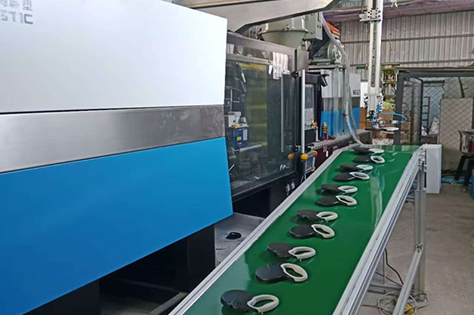
A dual-country plan only works if the capacity split is real and repeatable. Your action here is to map SKUs into two buckets: core volume (always in-stock programs) and variability (seasonal spikes, color refreshes, packaging variants). Then you ask the supplier to propose a split across China and Cambodia that matches those risk levels.
For leash and tie-out categories, a good split often looks like this:
- Site A (core): stable, year-round volume SKUs
- Site B (buffer): promos, seasonal demand spikes, and lower-risk variants
- Shared: identical spec packs, test plans, and AQL targets
EVERBRIT highlights dual-country manufacturing across China and Cambodia and calls out in-house wire and hardware manufacturing for tie-out cable and retractable leash components. That matters because the riskiest capacity bottlenecks are usually sub-suppliers (hardware, webbing, coatings), not the assembly line you tour. If the supplier can make or tightly control critical hardware in-house, your allocation plan becomes easier to defend.
5: Lock specs, test plan, tolerances
Freeze the spec pack before you approve final samples. In your workflow, this is the single biggest lever to reduce returns from "it looks different than the sample." Do not rely on photos. Use controlled documents: drawings (or dimensioned sketches), BOM with approved suppliers or material grades, and measurable tolerances.
For tie-out cables, define at least:
- Cable diameter (for example, 3/16 inch)
- Coating type and thickness range (state it, even if custom)
- Swivel clip material and finish requirements
- Minimum pull/load test requirements and pass/fail criteria
For retractable leashes, define at least:
- Housing material (ABS) and drop test requirement
- Tape/rope material (nylon) and width/thickness range
- Lock and brake function test (cycle count)
- Corrosion and wear checks for hook and hardware
EVERBRIT's Retractable Leash listing provides a practical baseline: ABS housing, nylon tape/rope, 3 m, 5 m, and 8 m length options (customizable), and load capacity up to 50 kg (customizable). Those are not just sales bullets; they should become your controlled spec inputs so your PP sample is judged against numbers, not opinions.
6: Build sampling and PP workflow
Run sampling like a gate system, not a conversation thread. The simplest structure that prevents mass-production surprises is:
- Development sample: confirms concept and ergonomics
- Golden sample: the controlled reference tied to the spec revision
- Pre-production (PP) sample: made with bulk materials and production tooling
Your golden sample should be physically labeled with the revision code and stored in two places: with the factory and with your QA owner. Then, require the PP sample to include retail packaging, labeling, and any inserts so you do not discover marking or claim problems after production starts.
If you are managing a private label, add one extra gate: artwork and labeling sign-off must be complete before PP approval. This is where country-of-origin marking and packaging statements can break your launch if they are handled late. CBP explains that imported goods must be marked in a conspicuous place with the English name of the country of origin unless an exception applies, and Part 134 details how marking should be legible and permanent as the article permits. Treat that as a design requirement, not a compliance afterthought. (cbp.gov)
Prerequisites and Safety
Required Tools and Materials
Before you start outreach or sampling, assemble these items so your supplier evaluation stays objective:
- Product spec pack: drawings plus measurements
- BOM draft: materials and hardware list
- Target MOQ and lead time: per SKU
- Compliance checklist: claims, testing, labeling
- Packaging dielines: plus carton drop spec
- Incoterms plan: who controls freight steps
- Forecast calendar: promos and reset dates
- Origin packet template: BOM, process map
Safety Considerations
Treat safety as part of product design, not a marketing claim. Build it into your test plan and documentation:
- Tie-out load testing: verify to your pass/fail
- Clip and swivel integrity: pull and twist tests
- Coating durability: abrasion and crack checks
- Chemical limits: maintain declarations and reports
- Marking permanence: withstand normal handling
If your team does physical testing or inspection work, eye protection and PPE should be addressed as well. OSHA explains that eye and face protection standards reference ANSI Z87.1, which is a practical reminder to run safe, repeatable test setups when you are doing pull tests or cutting sample materials.
Troubleshooting
| Problem | Cause | Solution |
|---|---|---|
| Delays | Weak capacity plan | Split SKUs dual-site |
| Quality drift | Unclear tolerances | Reissue controlled spec pack |
| Duty shock | Wrong origin proof | Tighten COO documents |
| Sample mismatch | Non-bulk materials used | Require PP from bulk |
| Labeling hold | Marking not compliant | Fix marking before ship |
To make these fixes stick, add two workflow gates:
- BOM lock gate: substitutions require written approval
- Shipping gate: docs checked to revision
This is also where photos help. If you require evidence (carton marks, pallet labels, in-line checks), you can resolve issues before the goods leave the factory.
Conclusion
A dual-country plan is not a slogan. It is a practical way to reduce disruption risk, stabilize lead times, and manage tariff exposure when you run it with controlled specs, disciplined documentation, and repeatable QC across sites. Start by defining scope and HS logic, then set origin targets and audit requirements before you spend time on samples.
Next, validate the China plus Cambodia capacity split, lock tolerances, and test plans, and run a golden sample plus PP workflow that forces bulk-material reality. Once those pieces are in place, production cadence becomes a controllable routine instead of a constant surprise.
FAQ
What is the simplest way to reduce supply risk when sourcing pet leashes and tie-outs?
The simplest approach is to split production across two qualified sites while keeping one controlled spec pack and one shared QC standard. You should allocate core, steady-demand SKUs to the most stable line and use the second site for promos, spikes, and lower-risk variants. You also need a BOM lock rule so substitutions cannot happen without written approval. This combination prevents a single disruption from stopping all shipments.
How do I validate a factory can support major US or EU retail onboarding?
You should ask for recent audit evidence, the audit scope, and proof that corrective actions were closed, then match that packet to your retailer onboarding checklist. You should confirm the factory legal entity name and address because those must match shipping and compliance documents. You should also test the factory's change control by asking how it documents supplier substitutions and who approves them. If the answers are unclear, expect delays later even if the sample looks good.
How should I structure sampling to prevent mass-production surprises?
You should run three gates: a development sample, a golden sample tied to a controlled revision, and a pre-production sample made with bulk materials and production tooling. You should require the PP sample to include packaging, labels, and inserts so you validate the full retail-ready output. You should store the golden sample at both your office and the factory, labeled with the revision code. This structure turns sampling into an approval system instead of repeated rework loops.
What documents should I collect to support country-of-origin claims?
You should collect a BOM summary showing major components and where they are sourced, plus a process map of what is done in-country. You should also keep signed factory declarations that match the revision you are shipping, not a generic statement. You should save commercial invoices and packing lists that align to the same factory entity and production site. Consistency across these records is what prevents last-minute disputes at entry.
What should I do if quality drifts after the first successful shipment?
You should stop treating the approved sample as a photo reference and instead re-issue a controlled spec pack with measurable tolerances. You should add an incoming check for the most failure-prone materials, such as clips, coating batches, tape width, or housings, depending on the product. You should also require in-line checks with dated photo evidence so you can identify where drift starts. If drift repeats, require a PP re-approval when any critical supplier changes.
