
Sourcing Cost‑Effective Pet Products Without Sacrificing Quality – 2026 Guide for Procurement Teams
Introduction
Late defects are brutal because they do not show up when you have time to fix them. They show up after the PO is placed, cartons are packed, and your launch calendar is already public. Then you are stuck choosing between a rushed rework, a partial shipment, or a delay that burns retailer trust and ad spend.
This guide gives you one clean, repeatable sourcing path that locks specifications, quality gates, and shipment readiness before volume ramps. You will define CTQs, verify factory capabilities, map compliance, control cost drivers, and run an AQL-based inspection plan so programs like Smart Pet Feeders and AI-Powered Pet Cameras do not turn into expensive surprises.
How to source cost-effective pet products
1 Define specs and risk
Before you negotiate anything, freeze what matters most to the user and what can trigger a recall or return. Write CTQs (critical-to-quality characteristics) as measurable items with test methods: pull strength, seam strength, coating thickness, odor, abrasion, and packaging drop performance. Then rank risks by severity and likelihood so your sampling and validation budget goes to the right places.
Use a simple CTQ table for each SKU:
- CTQ name (what must not fail)
- Target and tolerance (numbers, units)
- Test method (how you prove it)
- Defect class (critical, major, minor)
- Owner (supplier QC vs your team)
Learn EVERBRIT Capabilities here.
2 Shortlist factories and capabilities
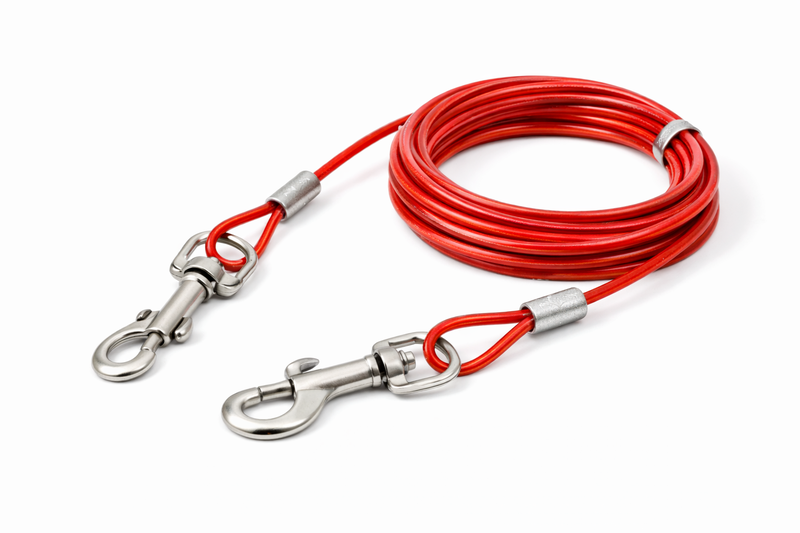
Start with capability proof, not promises. Ask for evidence of in-house processes that affect your category, because subcontracting is where variation and lead-time slips hide. For example, if you are sourcing tie-outs or leash hardware, verify metal and wire production capacity and how they control coating and corrosion resistance at the process level.
EVERBRIT positions dual-country production plus vertically integrated steps like metal and wire production, cutting and sewing, assembly, QC testing, and warehouse logistics. That mix matters because it lets you split programs across sites when capacity tightens and keep the same QC gates.
3 Build the should-cost and MOQ
Do not chase the lowest unit quote until you understand the cost structure that keeps changing. Build a should-cost model that breaks the SKU into BOM, labor steps, packaging (including inserts), testing, and expected yield loss. When you see a price move, you can pinpoint the driver: fabric weight changes, hardware plating, sewing time, pack-out complexity, or tighter QC.
Quick should-cost levers to review with the factory:
- Material substitutions that do not change CTQs
- Assembly steps you can simplify
- Packaging cube efficiency (carton fill)
- Multi-SKU component commonality
- MOQ drivers (tooling, dye lots, hardware runs)
4 Run sampling and pre-production approval
Sampling is where you prevent the "looks good in photos" trap. Approve a golden sample that includes the full pack-out: product, labeling, inserts, barcodes, and carton markings. Then require the factory to keep that golden sample as the reference at the line, not just in the office.
Use this approval sequence:
- Prototype sample: confirm design intent
- Pre-production sample: confirm process capability
- Golden sample: lock final baseline
- PP approval checklist: materials, color, stitching, hardware, and packaging
5 Control production and ship readiness
Treat production as a series of release gates. First, run IQC so that wrong fabrics, hardware, or coatings never hit the line. Next, use in-line checks to catch drift (stitch density, tape width, clip function) before you build a full day of defects. Finally, run a pre-shipment inspection that verifies pack-out, labeling, and carton marking accuracy so you do not fail at customs or retailer receiving.
EVERBRIT highlights quality control and testing, plus scalable assembly and warehouse logistics, whichfits this gated approach when you require the same checkpoints at every site.
Prerequisites and Safety
Required Tools and Materials
- Product spec sheet with CTQs and tolerances
- Drawings or patterns with revision control
- Target cost model and landed cost worksheet
- Compliance checklist and approved claim list
- Packaging dielines and barcode rules
- Defect catalog with photo examples
- Golden sample storage and sign-off form
Safety Considerations
- Define choke, chew, and pinch hazards early
- Require a lot of traceability for key materials that face protection rules. OSHA references ANSI Z87.1 as the standard covering eye and face protection for hazards, including machinery operations and cutting environments. (osha.gov)
Troubleshooting Guide
| Problem | Cause | Solution |
|---|---|---|
| Price keeps rising | Spec creep | Freeze CTQ baseline |
| Samples differ from mass | No golden sample | Golden sample at line |
| Too many defects | Wrong AQL setup | Re-set by defect class |
| Late shipment holds | Pack-out errors | Final gate checklist |
| High returns | Weak in-line checks | Add in-line CTQs |
Action fixes that work fast:
- If defects spike, add a 2-hour in-line audit for the next 3 production lots.
- If pack-out errors repeat, require barcode scan verification per carton and photo evidence at final inspection.
Conclusion
Lock specs first, then lock the process that builds them. When you define CTQs, approve a golden sample, and run gated inspections with an ISO 2859-1 AQL plan, you can push for cost efficiency without betting your launch on luck. Use scenario-specific validation for higher-risk categories like Smart Pet Feeders and Automated Litter Boxes, and keep change control tight for connected products.
Frequently Asked Questions
How do I set an AQL for pet products?
Set an AQL by first classifying defects as critical, major, or minor based on safety risk and customer impact. Then choose stricter sampling for critical defects and more flexible sampling for minor cosmetic issues. Match your lot size rules and inspection level to your program volume so the sample size stays practical. Finally, keep the same AQL rules across suppliers so your accept/reject decisions stay consistent.
What should be in a supplier audit for pet accessories?
A supplier audit should confirm material receiving controls, process capability on the line, and how defects are detected and contained. You should review calibration records for measurement tools and verify that work instructions match the latest drawings and revisions. Check traceability from raw materials to finished goods by lot or batch, especially for hardware and coated components. Also verify that the factory can support your inspection gates (IQC, in-line, final) with dedicated staff and clear records.
When should I use pre-shipment inspection vs in-line inspection?
Use in-line inspection when you need to catch drift early, because fixing a defect at hour two is cheaper than sorting it in finished goods. Use pre-shipment inspection to confirm final pack-out accuracy, labeling, and carton markings right before release. If you are launching a new SKU or new material, do both until the process stabilizes. For mature SKUs, in-line plus a lighter final check often controls risk without adding too much time.
How do I reduce landed cost without downgrading materials?
Reduce landed cost by simplifying assembly steps, standardizing components across SKUs, and improving packaging cube efficiency. You can often remove cost by reducing handling time, not by reducing fabric weight or hardware strength. Keep the same CTQs and test methods while you trial changes so you can prove quality stayed stable. If you change packaging materials for sustainability, re-run drop and compression checks so damage rates do not rise.
What triggers re-sampling or re-approval?
Re-sample when any change can affect CTQs, including material substitutions, new sub-vendors, tooling changes, or process moves between factories. You should also re-approve when claims or labeling change, because compliance risk can change even if the product looks the same. Treat color changes, coating changes, and stitch pattern changes as re-approval triggers when they affect performance. If you cannot tie the change to a controlled revision, assume you need a new pre-production sample.
How do I manage quality for multiple factory locations?
Manage multi-site quality by standardizing the spec pack, golden sample, and defect catalog across all sites. Use the same inspection gates (IQC, in-line, final) and require the same measurement tools and calibration cadence. Run a cross-site first-article build where both factories make the same SKU and you compare results against CTQs. Then keep change control centralized so a process tweak in one site cannot quietly split your quality baseline.
