
Why Pet Product Manufacturing in Southeast Asia Offers Major Advantages for Buyers 2026
Introduction
Still trying to keep your in-stock rate safe when a single late PO change reroutes production, resets cartons, and pushes vessel cutoffs? That one small change can cascade into missed delivery windows, retailer chargebacks, and the kind of out-of-stock stretch that quietly drains repeat customers while your team scrambles for air freight.
This guide gives you a cleaner Southeast Asia playbook for pet product manufacturing, built around five procurement reasons you can validate and act on: diversification, capacity, ODM support, quality visibility, and total value.
Reason 1: Supply chain diversification
Smart pet feeders and supply chain diversification

If your program is single-country, you are not only exposed to tariffs and port disruption; you are also exposed to internal failure modes like one factory missing a capacity forecast or one material supplier slipping a spec. Diversification is a procurement control knob: you are intentionally reducing concentration risk so a localized issue does not become a national stockout.
A simple diversification pattern that works in practice:
- Split by product family: hardware vs soft goods
- Split by peak season: holiday builds vs baseline runs
- Split by process: sewing-heavy vs assembly-heavy
For fast-moving categories like Smart Pet Feeders (and adjacent accessories, packaging, and kitting), the benefit is stability. When you can keep the accessory and packaging pipeline steady, you reduce last-minute substitutions that increase defect risk and customer complaints.
Product example: EVERBRIT Standard Tie-Out Cable can be treated as a stable, spec-driven program where you can qualify backups and keep continuity. It uses high-strength steel cable with vinyl coating, includes swivel clips to reduce tangling, and supports multiple lengths (10 ft, 15 ft, 20 ft, 25 ft, 35 ft) with a stated diameter option of 3/16 inch and customizable specs.
Reason 2: Cambodia's manufacturing capacity
Wearable health trackers and Cambodia manufacturing capacity
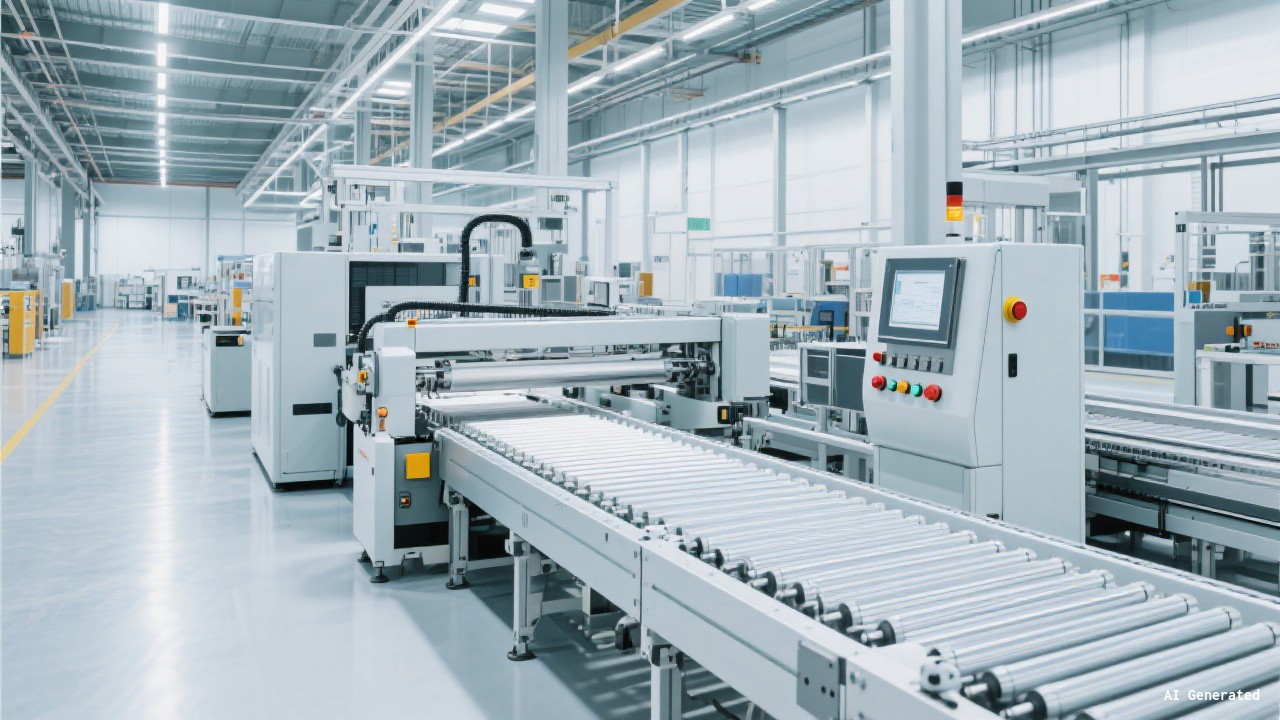
Capacity is not only about headcount. For USA procurement teams, capacity means fewer handoffs, stable process capability, and a realistic ability to absorb seasonal peaks without rewriting your entire production plan. When you build programs that include Wearable Health Trackers, AI-Powered Pet Cameras, or Automated Litter Boxes, your accessory ecosystem (straps, housings, soft cases, packaging, inserts) can surge quickly. If your manufacturing base cannot flex, the accessories become the bottleneck.
Look for capacity signals you can validate:
- Skilled workforce scale (operators and QC)
- In-house process coverage (wire, sewing, assembly)
- Warehouse and export logistics maturity
- Audit readiness for major retailers
EVERBRIT positions itself as a dual-country manufacturer with production in China and Cambodia, with 500+ skilled workers and audit-ready facilities for U.S. and European retailers. That kind of footprint can help you design redundancy into the production plan while still keeping communication and QA consistent.
Product example: EVERBRIT Retractable Leash is an assembly-driven program that benefits from repeatable internal mechanisms and controlled materials. The product spec calls out ABS housing with nylon tape or rope, length options of 3 m, 5 m, or 8 m, and a secure locking and braking system. If you plan seasonal promotions, this is the kind of item where capacity planning and component lead times (springs, tapes, housings) must be locked early.
Reason 3: ODM support for smart products
AI-powered pet cameras and ODM support
Smart pet programs fail most often at the handoff between concept and manufacturable design. Teams can prototype quickly, but they underestimate DFM (design for manufacturing), test planning, and how many iterations it takes to hit yield targets. ODM support matters because it reduces iteration cost and compresses the path from sample approval to stable mass production.
Decision context: if you are sourcing Smart Pet Feeders or AI-Powered Pet Cameras, you are not only buying hardware. You are buying reliability under real home conditions, consistent assembly, and predictable quality gates.
What strong ODM support looks like:
- Fast sampling cycles with documented changes
- Component validation plan (before full build)
- Clear test fixtures and pass/fail criteria
- Packaging integration early (drops, vibration)
Even if your core electronics are built elsewhere, your procurement plan still needs a dependable partner for the physical ecosystem: soft goods, straps, cases, mounts, and protective packaging that reduce damage and returns. A diversified manufacturing partner can also help you run accessories in parallel while the main device completes validation.
Product example: EVERBRIT Dog Bed programs can support Personalized Pet Nutrition and Pet Supplements brands where bundling, gifting, or subscription add-ons matter. The product page describes polyester fabric with foam and PP fiber options, sizes S through XL, and optional fillings like memory foam. The practical procurement win is that you can standardize a small set of SKUs and then customize covers, colors, and branding for channel-specific bundles.
Reason 4: Quality visibility and traceability
Probiotics for pets and quality visibility
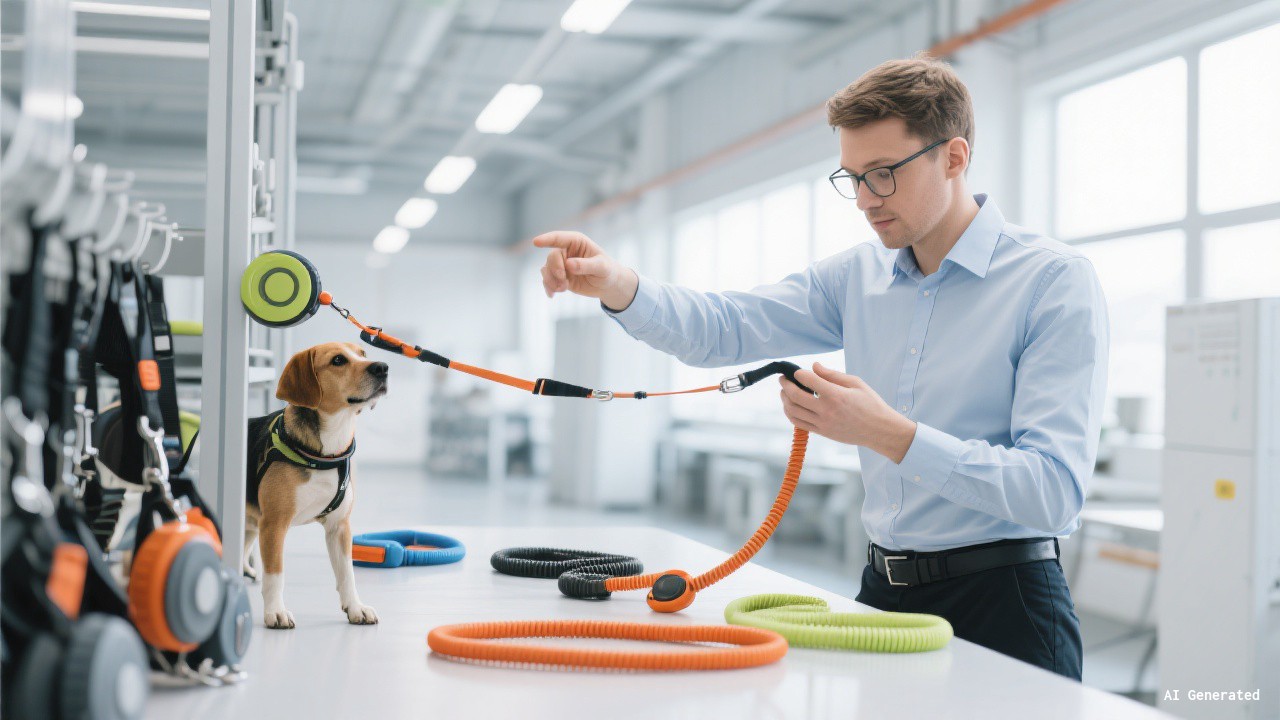
When quality issues hit, speed matters more than perfection. You need fast containment, a believable root-cause story, and evidence that corrective actions are real. That is what protects your brand reviews and retailer scorecards, especially for high-scrutiny categories like Freeze-Dried Pet Food, Pet Supplements, Joint Health Chews, and Probiotics for Pets, where consumers watch claims and consistency.
From a traceability standpoint, the point is not buzzwords; it is the ability to connect:
- Lot to materials
- Materials to process steps
- Process steps for inspection records
- Inspection records to shipment and carton IDs
NIST published a manufacturing traceability meta-framework (NIST IR 8536, second public draft) in July 2025 to help organizations verify provenance and meet contractual obligations in distributed supply chains.
Also, for pet-food-adjacent items and claims, you need label and claim discipline. The FDA outlines how animal food labeling and pet food claims must avoid misbranding and be supported by appropriate information.
Reason 5: Total value, not unit cost
Eco-friendly packaging and total value
Procurement wins come from eliminating hidden costs, not from shaving pennies off the PO. Total value means you plan packaging, kitting, and logistics together so you do not pay late for damage, rework, returns, or expedited freight.
Where total value shows up fast:
- Carton cube: fewer wasted inches
- Kitting: fewer pick errors
- Packaging test: fewer damages in transit
- Material choices: stable supply, fewer substitutions
For Eco-Friendly Packaging, you need to treat materials as a system: ink adhesion, scuff resistance, humidity behavior, and how packaging performs under compression. If you develop packaging late, your team usually ends up with a rushed dieline, poor pack-out, and a spike in damage claims.
Product example: EVERBRIT Cat Scratcher and Cat Furniture programs naturally force you to think in total value because packaging and transit performance can dominate outcomes. The scratcher specs mention sisal rope, corrugated cardboard, MDF, and fabric options, with customizable structures and packaging. That makes it a good pilot category for building your packaging and kitting process early and validating it with drop and vibration testing.
Risk tolerance: dual-source program design
Use a dual-source design when downtime costs exceed qualification costs. If a category is core to your brand promise, qualifying a backup is not optional.
| Scenario | Primary risk | Mitigation | Trade-off |
|---|---|---|---|
| New launch | Spec churn | ODM sampling loop | More iterations |
| Peak season | Capacity squeeze | Split builds by site | Higher coordination |
| Claims-heavy | Label risk | Compliance gate early | Longer prep |
| Bulky goods | Transit damage | Early packaging tests | More packaging work |
Conclusion
Southeast Asia sourcing works best when you treat it as a procurement lever for resilience, speed, and predictable quality, not a one-time cost play. If you structure your program around diversification, validated capacity, the right OEM vs ODM choice, and real traceability, you reduce the chance that one late change turns into a quarter-long service-level problem.
Start with one category pilot, define your quality gates and packaging plan early, then scale the model to adjacent lines like Eco-Friendly Packaging bundles or accessory ecosystems for Smart Pet Feeders.
Frequently Asked Questions
What is the difference between OEM and ODM for pet products?
OEM means the factory produces to your finished design, drawings, and specifications, so your internal team owns most engineering decisions. ODM means the factory supports design and development, which helps when you have only a concept, rough requirements, or performance targets. In practice, ODM is most valuable when you expect 2 to 4 iteration rounds before you reach a stable production spec. OEM is usually the better fit when the BOM and tolerances are already proven and repeat orders are the priority.
How do I decide which pet categories to move first?
Move the category where your current constraint is most painful and measurable, such as recurring late shipments, unstable quality, or long sampling cycles. Stable-spec categories like tie-out cables or basic soft goods are often good pilots because they let you validate communication, inspections, and logistics without constant redesign. If your roadmap includes Smart Pet Feeders or AI-Powered Pet Cameras, consider piloting the accessory ecosystem first (soft cases, packaging, kitting) while the device matures. A good pilot has clear CTQs, limited customization variables, and a realistic forecast window.
What quality controls matter most when switching factories?
The most important controls are the ones that prevent repeat defects: a CTQ list, a clear AQL plan, and defined in-line inspection gates. You should require golden samples that include measurable tolerances, not only a visual reference, because different lines interpret the same sample differently. Build a failure-handling process that specifies containment time, root-cause format, and corrective action verification. Finally, ensure traceability links lot, materials, and inspection records so you can isolate impact quickly when a defect appears.
How should I think about landed cost vs unit cost?
Landed cost is the total delivered cost to your DC or customer, including packaging, freight, duties, inspection, and the cost of defects. Unit cost only captures the factory price, which can look attractive while damage, rework, or expediting quietly adds more. You should also include the expected cost of variability, such as forecast swings, peak-season capacity premiums, and late-change disruptions. A practical approach is to compare two scenarios: a low unit cost with higher risk buffers versus a slightly higher unit cost with fewer buffers and lower disruption risk.
What should be in a compliance and testing plan for pet products?
A solid compliance plan states the market you are selling into, the claims you intend to make, and the test methods you will use to support those claims. It should also list documentation expectations, such as material declarations, test reports, and a refresh cadence for repeated testing. For ingestible-adjacent categories like Pet Supplements, Joint Health Chews, and Probiotics for Pets, claim discipline and consistent batch controls are critical because consumer trust is fragile. Even for non-ingestible products, chemical safety, labeling accuracy, and packaging requirements can drive significant rework if not scoped early.
How do I set the right MOQ and forecast strategy for peak season?
Start by separating baseline demand from promotional or seasonal demand so your factory can plan materials and capacity without guessing. Negotiate MOQ around stable components and materials, then allow customization in later-stage steps like packaging, colorways, or branding where possible. For peak season, lock critical materials early and set a cut-off date for spec changes to avoid line disruption. You should also define a buffer policy, such as holding 2 to 6 weeks of safety stock for your highest-velocity SKUs, based on lead time and demand volatility.
How can I reduce damage and returns for bulky items like cat furniture?
You reduce damage by treating packaging as part of the product design, not an afterthought. Start with a pack-out that controls movement, protects corners, and manages compression, then validate it with drop and vibration tests that match your channel realities. Use clear labeling and assembly instructions to reduce customer errors that look like product defects in reviews. Finally, monitor return reasons and damage photos by SKU so you can tie packaging changes to measurable improvements over 2 to 3 shipment cycles.
When does dual-sourcing make sense for pet product programs?
Dual-sourcing makes sense when a stockout costs more than the ongoing effort of maintaining two qualified sources. It is most justified for core SKUs that drive repeat purchase behavior or retailer scorecard performance, and for categories where seasonality creates capacity risk. Dual-sourcing also helps when you have different process needs, such as one site optimized for sewing-heavy soft goods and another for assembly-heavy hardware. The key is to standardize CTQs, inspections, and packaging specs so both sources can produce interchangeable output without constant re-qualification.
