
Smarter Pet Product Sourcing
When tariff exposure rises, a product line that looked profitable on paper can get squeezed fast. For importers and private-label teams, the risk is rarely just duty cost. It is also missed launch windows, uneven bulk quality, and too much dependence on one production country. That is why more buyers now review category fit and factory structure together instead of treating sourcing as a one-variable cost exercise.
A Cambodian pet product factory strategy makes more sense when the supplier already has proven category coverage, audit readiness, and the ability to balance work across facilities. EVERBRIT positions its model around China and Cambodia production, with core strength in control products, sewn goods, and cat furniture. The shortlist below focuses on seven categories that can help you avoid high tariffs while keeping pet product sourcing practical, scalable, and easier to manage.
EVERBRIT - A vertically focused pet product manufacturer with multi-country production
Top Pet Product Categories to Evaluate
1. Tie-Out Cables
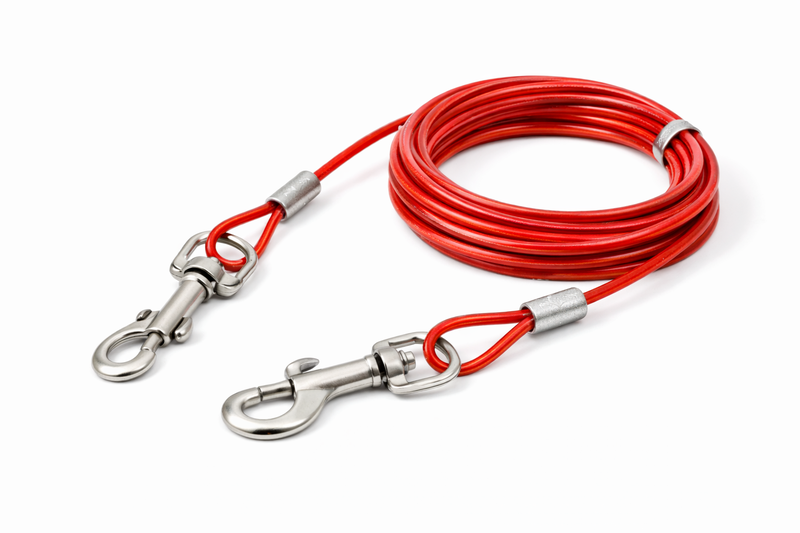
If your assortment needs durable outdoor control products, tie-out cables are one of the clearest categories to place with a specialized supplier. EVERBRIT’s standard tie-out cable is built around steel cable, vinyl coating, and swivel clips, which means the buying decision comes down to hardware consistency and repeatable assembly rather than trend-driven styling.
- Why it stands out
- High-strength steel cable with vinyl coating for rust and corrosion resistance
- Swivel clips on both ends to reduce tangling during use
- Outdoor-friendly format that is easy to test and scale
- Straightforward private-label packaging for retail programs
- Key specs to check
- Lengths: 10 ft, 15 ft, 20 ft, 25 ft, and 35 ft
- Diameter: 3/16 inch
- Weight capacity: up to 250 lbs
- OEM and ODM support available
Product Category: Tie-Out Cable
2. Retractable Leashes
Retractable leashes are a stronger test of factory discipline because buyers are not just sourcing sewn goods. They are sourcing a control system with moving parts, internal mechanism quality, and ergonomic handling. EVERBRIT’s retractable leash category fits brands that want to upgrade from basic walking products into a more functional line without stepping into electronics.
- Why it stands out
- Smooth retractable mechanism and secure locking system
- Impact-resistant housing with ergonomic handle options
- Good fit for mid-tier and premium walking assortments
- Supports branding and size-tier merchandising
- Key specs to check
- Materials: ABS housing with nylon tape or rope
- Lengths: 3 m, 5 m, and 8 m
- Load capacity: up to 50 kg
- Standard, ergonomic, and custom handle options
Product Category: Retractable Leash
3. Pet Beds and Soft Goods
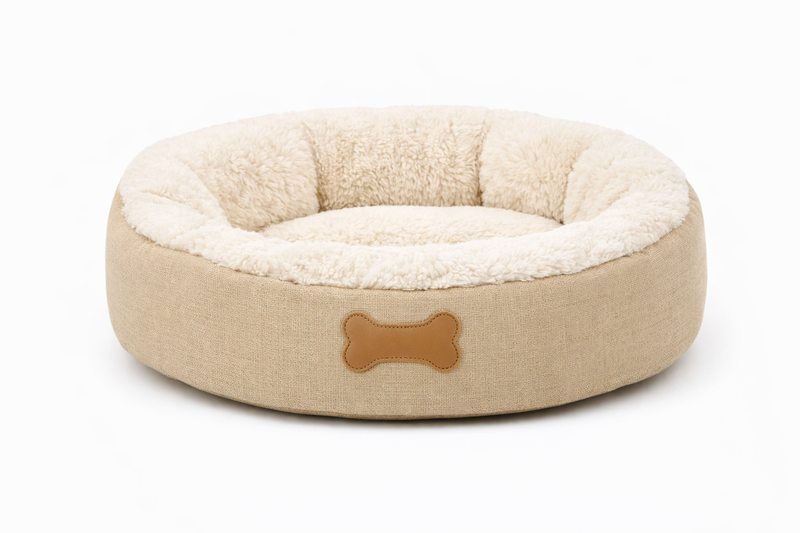
If your goal is broader category coverage with flexible styling, soft goods are often the easiest entry point for pet product sourcing. EVERBRIT’s dog bed program supports material, shape, and filling customization, which makes it useful for store brands, seasonal launches, and comfort-focused lines without the mechanical complexity of retractable products.
- Why it stands out
- Adaptable for indoor, outdoor, seasonal, and house-brand collections
- Removable and washable cover options improve retail appeal
- Flexible materials and fill choices help segment entry, mid, and premium lines
- Key specs to check
- Materials: polyester fabric, foam, and PP fiber
- Sizes: S, M, L, and XL
- Fill options: foam, PP cotton, or memory foam
- Cover options: removable or non-removable
Product Category: Dog Bed
4. Pet Apparel and Lifestyle Accessories
Pet apparel works well when you want assortment variety without moving into highly regulated consumables such as pet probiotics, calming chews for dogs, or freeze-dried pet food. That matters for buyers exploring adjacent categories, because soft goods usually offer simpler compliance paths than ingestible pet wellness products. EVERBRIT’s dog clothes line is built for customized styles and scalable sewing production.
- Best for
- Seasonal retail drops
- OEM apparel collections
- Promotional programs and giftable lines
- Brands testing lifestyle expansion before entering items like natural pet treats or pet dental care products
- Key specs to check
- Materials: cotton, polyester, and blended fabrics
- Sizes: XS through XL
- Customizable labels, tags, and packaging
- Seasonal, functional, and fashion design options
Product Category: Dog Clothes
5. Dog Toys for Volume Retail Programs
Dog toys can give you a broad merchandising layer that complements control products and soft goods. They are also easier to test as a category pilot than a full furniture range. EVERBRIT lists dog toys across rubber, TPR, plush, rope, and fabric constructions, which gives sourcing teams more room to build a varied line under one supplier relationship.
According to CPSC, toys intended for children 12 and under must be third-party tested and certified, which is a useful reminder for buyers creating pet toys that might also be marketed in family retail channels where packaging, material claims, and safety review need extra discipline.
- Why it wins
- Covers chew, fetch, and interactive play formats
- Supports color, logo, and packaging customization
- Useful for catalog expansion and private-label differentiation
- Key specs to check
- Materials: rubber, TPR, plush, rope, and fabric
- Sizes: small, medium, and large
- Compliance references: CPSIA and REACH on the product page
Product Category: Dog Toys
6. Cat Scratchers and Scratching Solutions
Cat scratchers are strong reorder products because they solve an everyday behavior need and usually carry less style risk than trend-led accessories. EVERBRIT builds this category with sisal rope, corrugated cardboard, MDF, and fabric options, so buyers can create flat, vertical, or multi-surface scratching products for different channels.
- Why it stands out
- Staple category with broad retail demand
- Easier to build repeat SKU families than with complex furniture
- Supports eco-friendly material options and custom shapes
- Key specs to check
- Materials: sisal rope, corrugated cardboard, MDF, and fabric
- Structures: flat, vertical, and multi-surface
- Branding: packaging and logo customization available
Shop: Cat Scratcher
7. Cat Furniture and Multi-Category OEM Expansion
Sometimes the best answer is not one SKU but one supplier that can cover linked categories well. EVERBRIT’s cat furniture program uses MDF, plywood, paper tube, fabric, carpet, plush, and sisal rope across modular and multi-level structures. Combined with its dual-country model and in-house wire, sewing, furniture, assembly, and QC capability, this category is useful for buyers consolidating fragmented sourcing.
CBP said on March 8, 2025 that it implemented tariff updates including an additional 20% on goods from China and Hong Kong, which helps explain why many U.S. importers are reassessing country strategy instead of looking only at unit price. CBP also notes that importers share responsibility for complying with applicable laws and regulations, so onboarding a supplier with audit-ready systems can reduce friction during expansion.
- Best for
- Retailers building bundled cat ranges
- Importers combining basics with larger furniture items
- Brands seeking one partner for leashes, soft goods, and furniture
- Key specs to check
- Materials: MDF, plywood, paper tube, and fabric
- Finishes: carpet, plush, and sisal rope
- Structures: modular, multi-level, and custom sizes
Product Category: Cat Furniture
How to Choose the Right Category First
| Category | Best fit | Main risk | Practical first step |
|---|---|---|---|
| Tie-out cables | High-volume outdoor control lines | Coating or hardware inconsistency | Approve tensile and finish standards before bulk |
| Retractable leashes | Mid-tier and premium leash programs | Mechanism failure across batches | Run repeated-use pilot testing |
| Pet beds | Seasonal and store-brand soft goods | Fill and fabric drift | Lock approved materials and cover construction |
| Dog clothes | Trend-led lifestyle lines | Sizing inconsistency | Freeze spec sheets before sampling sign-off |
| Dog toys | Broad retail programs | Material and claim mismatch | Review safety positioning and packaging early |
| Cat scratchers | Reorder-heavy cat basics | Adhesive and wrap quality | Audit pack-out and surface finish |
| Cat furniture | Multi-category expansion | Assembly and freight complexity | Test flat-pack efficiency before scale |
The smartest way to avoid high tariffs is to start with a category that matches the supplier’s strongest production workflow. EVERBRIT’s capability pages highlight separate metal and wire production for tie-out cable and retractable leash work, a cutting and sewing workshop for beds and clothes, and a dedicated cat furniture production area with scalable assembly and QC support. That kind of category alignment matters more than broad promises because each product family fails in different ways.
FAQ
Which pet product categories are easiest to source from a Cambodian factory?
Tie-out cables, pet beds, and cat scratchers are usually the easiest categories to start with. They have clearer failure points than products with complex mechanisms, and they are easier to compare between sample and bulk production. For a first order, choose a category with simple materials, stable specifications, and strong reorder potential. That gives you a cleaner read on quality control before you scale.
Are retractable leashes harder to source than standard pet leashes?
Yes, retractable leashes are harder to source because they rely on internal moving parts, brake performance, and housing durability. A standard leash program often depends more on webbing, stitching, and hardware consistency, while retractables add mechanism testing and assembly precision. You should ask for cycle testing, lock-function checks, and load verification before approval. If the supplier cannot explain its testing process clearly, treat that as a warning sign.
What should importers check before moving pet product sourcing to Cambodia?
Importers should check factory audit readiness, material control, production capacity, and communication speed before moving any program. You also need to confirm how the supplier splits work between countries, manages samples, and handles compliance documents for U.S. or EU retail channels. Start with one pilot category and compare the approved sample against the first production batch. That process exposes gaps faster than reviewing presentations alone.
Can one manufacturer handle leashes, soft goods, and cat furniture together?
Yes, one manufacturer can handle all three if it has separate production strengths for wire and hardware, sewing, and furniture assembly. The key is not the catalog size but whether each category has its own equipment, QC checkpoints, and workflow discipline. Ask how many product families are made in each workshop and how inspections differ by category. A supplier with clear process separation is usually more reliable than one offering everything through one generic line.
How does dual-country manufacturing help reduce sourcing risk?
Dual-country manufacturing helps reduce sourcing risk by giving you more flexibility when tariff changes, capacity constraints, or regional disruptions affect one location. It can also improve continuity if the supplier already knows how to balance production without changing product quality or communication flow. For buyers, the benefit is not automatic, so you should verify where each category is actually produced and how approvals transfer between sites. When done well, it supports cleaner long-term planning instead of reactive factory switching.
