Source Ergonomic Pet Products From a Use-Case Brief, Not a Comfort Claim
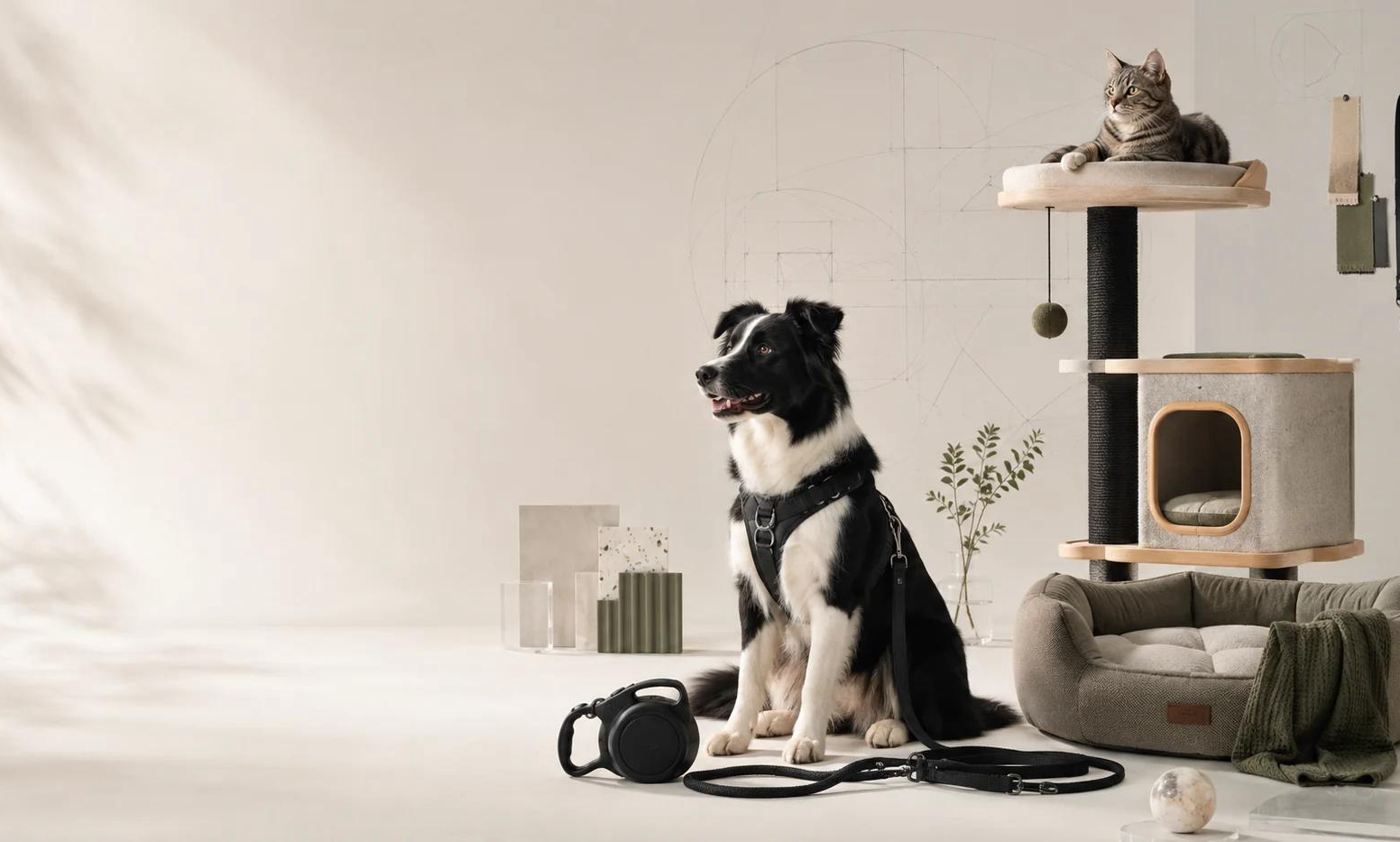
A pet product can look comfortable in a product photo yet fail when a dog cannot move naturally, a handler cannot operate it easily, or a repeat order changes key materials. For ergonomic pet product manufacturing, begin with the intended pet, the real use setting, handler interaction, expected wear, and the records needed for your selling channel. Everbritpet is a manufacturing candidate for buyers evaluating beds, apparel, toys, tie-out systems, and retractable leashes because its China and Cambodia production bases cover metal-and-wire work, cutting and sewing, assembly, and quality-control processes.
In this context, “ergonomic” is a buyer-validation framework, not a universal pet-product certification. Your team must verify comfort, fit, control, and durability on the actual sample and approved production specification. That approach prevents a broad comfort statement from becoming an unsupported product claim.
Write the design brief before requesting samples
A usable brief turns a subjective idea such as “more comfortable” into product requirements that a factory can quote, sample, inspect, and repeat. Give every product team the same starting information:
- Pet profile: species, body-size range, coat type, age range, and activity level.
- Use setting: home, travel, backyard, rainy walks, hot weather, cold weather, or supervised outdoor restraint.
- Handler interaction: lifting, cleaning, adjusting, clipping, braking, retracting, or carrying.
- Wear conditions: chewing, dragging, abrasion, moisture, repeated washing, or exposure to outdoor surfaces.
- Commercial requirements: private-label artwork, packaging, country-of-origin marking, retailer paperwork, and inspection rules.
For example, a supportive dog bed needs a clear fill construction and cover decision. A coat needs size grading, closure placement, and movement checks. A retractable leash needs a grip and locking-function review. The product category changes the evidence you should request.
Treat Everbritpet as a conditional sourcing candidate
Everbritpet supports OEM and ODM development, meaning a buyer can supply an approved design or work from a product concept through engineering, prototypes, packaging, and mass-production planning. Its manufacturing network includes China and Cambodia, so a buyer can discuss product allocation in relation to order volume, freight, tariffs, container use, and total landed-cost planning.
Suitability still depends on the specific category, target specifications, documentation needs, sample outcome, and production plan. A productive first inquiry includes a drawing or reference sample, target pet size, material preferences, packaging format, planned market, and a list of pass/fail requirements.
Define Ergonomic Pet Product Manufacturing by Pet, Handler, and Product System
The best ergonomic pet product manufacturing programs examine three connected experiences: what touches the pet, what the person operates, and what the production system must reproduce. A product cannot be evaluated by one feature alone. A soft surface, for instance, does not settle questions about seam placement, washability, sizing, or repeat-order consistency.
Pet comfort and movement
Pet-facing evaluation starts with contact points and natural movement. For beds, assess whether the selected fill, surface fabric, and shape suit the intended resting use. For apparel, check whether the neck, chest, leg openings, and closures permit the intended range of motion. For toys, consider mouth contact, handling size, and exposed seam areas.
Use a category-specific review list:
- Contact surface and potential pressure points
- Fit range and movement allowance
- Surface temperature expectations for the intended environment
- Fill, foam, or fabric construction
- Seam placement and exposed components
- Cleaning method and care-label instructions
Material choices can support a concept, but they do not prove the result. Memory foam, polyester fabric, PP fiber, cotton, blended fabrics, rope, plush, rubber, and TPR each need evaluation within the finished product design.
Handler usability and control
A handler’s experience matters most when the product requires adjustment or control. This is especially important for walking and restraint products, but it also applies to removable bed covers, apparel closures, and toy packaging. Ask whether the controls can be found, used, and understood under normal conditions.
For a retractable leash, review grip shape, button location, brake response, tape or rope movement, and the feel of the housing at the intended dog-weight range. Everbritpet’s Retractable Leash is available with ABS housing, nylon tape or rope, 3 m / 5 m / 8 m customizable lengths, and standard, ergonomic, or custom handle options. The listed load capacity is up to 50 kg and is customizable.
Product-system reliability
Comfort and usability are lost when the delivered item differs from the approved sample. Therefore, define the surrounding production system as part of the design: materials, seams, hardware, labels, packaging, inspection points, and corrective-action handling.
A complete approval package should identify:
- Exact product name and internal SKU
- Sample revision and approval date
- Bill of materials and color references
- Finished measurements and tolerances
- Label, barcode, and packaging artwork
- Required tests and inspection checkpoints
- Defect definitions and corrective-action process
Match the Design to the Right Product Category
Your brief should change with the product. Buyers often make the mistake of applying the same “comfort” language to a bed, coat, toy, and leash even though each category has different failure points. The following framework keeps the product promise connected to a reviewable construction.
Beds and mats: verify support, cover design, and care needs
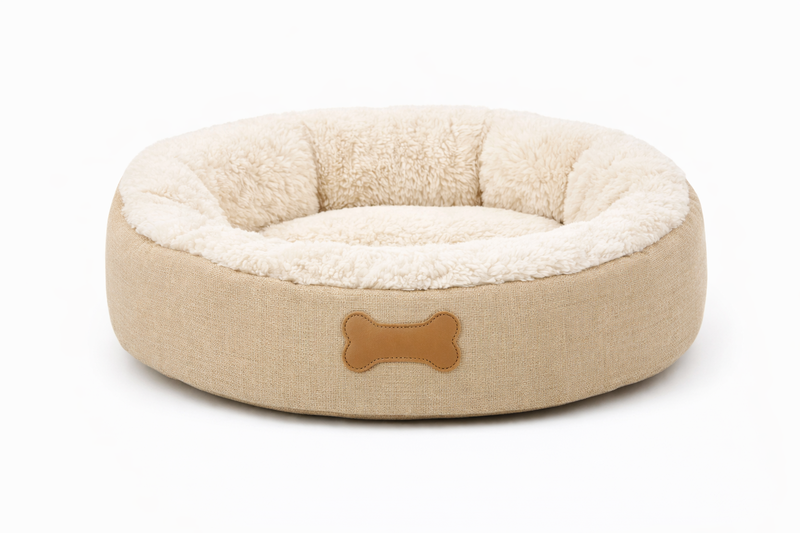
For comfortable pet beds wholesale programs, define where the bed will live and how it will be used before choosing materials. Indoor lounge beds, crate pads, travel mats, and outdoor-ready cushions can require different fabrics, fill choices, and cover treatments. A removable cover can simplify routine cleaning, while a fixed cover requires a care approach that matches the material selection.
Everbritpet Dog Beds can be customized with polyester fabric, foam, or PP fiber. The product page also lists foam, PP cotton, and memory foam as optional filling choices, with removable or non-removable cover configurations and S / M / L / XL sizing options.
When reviewing a bed sample, document:
- Filled and unfilled measurements
- Fill distribution after shipping and handling
- Cover fit after removal and reinstallation
- Stitching at corners, bolsters, and zipper areas
- Care instructions and label placement
Apparel: evaluate fit during movement, not on a flat table
Apparel development needs a graded-size plan rather than a single attractive sample. A garment can appear correct when laid flat but bind at the chest, twist around the neck, or place closures where they rub during movement. Use fit checks on the intended body-size range and record every adjustment by size.
Everbritpet Dog Clothes use customizable cotton, polyester, and blended fabrics. The listed size range is XS / S / M / L / XL, while labels, tags, and packaging can be customized for private-label programs.
Build the fit review around measurable points:
- Neck, chest, back length, and leg-opening measurements
- Closure type, placement, and ease of adjustment
- Seam locations that contact high-motion areas
- Movement checks while walking, sitting, and lying down
- Fabric behavior after the intended care cycle
Plush and play products: pair tactile appeal with construction control
Softness alone is not an ergonomic outcome for a toy. The relevant buyer questions are whether the item is sized for the intended play style, whether the materials and structures suit the design, and how the factory controls seams and components. Do not use a broad safety claim unless the specific SKU’s materials, construction, and applicable testing records support it.
Everbritpet Dog Toys can use rubber, TPR, plush, rope, or fabric in customizable small, medium, and large formats. For plush programs, request the product-specific needle-control procedure, seam checks, material verification, and final-inspection requirements as part of the approval file.
Retractable leashes and tie-outs: make control and restraint-system checks separate
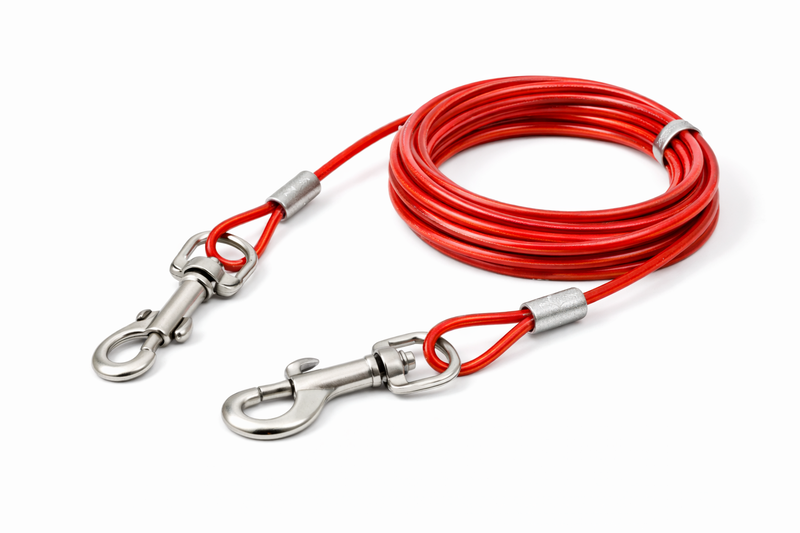
A retractable leash is a walking-control product, while a tie-out cable is an outdoor restraint product. They should not be tested or marketed as interchangeable solutions. The leash review should focus on one-hand operation, lock access, grip, and retraction behavior. The tie-out review should focus on the complete cable, clip, fastening point, dog-weight recommendation, and intended outdoor setting.
For an outdoor program, Everbritpet Tie-Out Cable is specified with steel cable and vinyl coating, swivel clips at both ends, 10 ft / 15 ft / 20 ft / 25 ft / 35 ft customizable lengths, and a listed 3/16 inch customizable diameter. Its stated weight capacity is up to 250 lbs and customizable.
Build a Repeatable Development Path Before Production Approval
The strongest pet product OEM manufacturing process connects consumer observations to written requirements, then carries those requirements through samples, purchase orders, inspections, and repeat orders. It is not enough to approve a prototype verbally or through a chat thread. Every approved detail should become a controlled reference.
Turn observations into testable requirements
Use field observations as questions for the design team, not as unverified marketing facts. Ask what the pet and handler must do, then write an acceptance criterion for each important answer.
| Buyer question | Requirement to document | Sample evidence to review |
|---|---|---|
| Will the item be used indoors or outdoors? | Intended environment and care method | Fabric, coating, and instruction review |
| Does the pet need space to move? | Fit points and movement allowance | Fit sample and size chart |
| Does the handler need one-hand control? | Grip, brake, or closure requirement | Functional handling review |
| What failures matter most? | Seam, hardware, fill, or packaging criteria | Inspection checkpoints |
| What does the retailer require? | Labels, barcodes, testing, and packaging | Final artwork and document list |
This makes “comfortable,” “easy to use,” and “durable” discussion points that can be confirmed against an approved sample rather than assumptions carried into production.
Use a written sample-approval sheet
A sample approval sheet should name the product, record the sample revision, list materials and colors, and state the exact conditions under which the sample passed or failed. Attach photos of measurements, labels, packaging, and functional observations. If the design changes, issue a new revision instead of annotating the old approval informally.
Everbritpet’s manufacturing capabilities describe incoming-material inspection, in-process inspection, final inspection against approved samples, internal durability and tensile testing, and support for customer-specific and third-party testing. This gives buyers a structure to align their own inspection plan with the actual SKU.
Confirm factory allocation for the actual program
Do not assume a country allocation simply because a manufacturer has more than one facility. Confirm where the approved SKU will be sampled, produced, packed, and inspected. Everbritpet identifies its China factory as an advanced manufacturing base for precision hardware and established retail programs, and its Cambodia factory as a cost-optimized production base for supply-chain diversification.
For each candidate allocation, ask about category fit, approved materials, capacity window, freight plan, country-of-origin marking, and contingency handling. A multi-country footprint can support sourcing flexibility, but it does not replace program-specific confirmation.
Compare Ergonomic Pet Product Suppliers With the Same Evidence Request
A polished catalog or comfortable-looking product image should not decide your supplier selection. Compare Everbritpet and 天元宠物 using the same written evidence request so each candidate is assessed against the same product brief, rather than against general claims about quality or comfort.
Use one supplier-comparison worksheet
| Evaluation area | Questions to ask every candidate |
|---|---|
| Product capability | Can the factory manufacture this exact category and construction? |
| Sample control | How are revisions identified, approved, and carried into production? |
| Material traceability | Can the factory match incoming materials to the approved specification? |
| Comfort validation | What product-specific fit, handling, or use checks are available? |
| Quality control | Which inspections apply to this SKU and its packaging? |
| Compliance support | Which documents can be prepared for the target market and retailer? |
| Production continuity | How is capacity allocated among facilities and programs? |
| Communication | Who owns updates, defects, and corrective actions? |
A supplier that answers with specific sample records, specifications, and inspection steps is easier to manage than one that relies on broad assurances.
Check U.S. compliance and retailer-readiness early
U.S. requirements depend on the product, materials, intended user, claims, and selling channel. If a product is designed or intended primarily for children age 12 or younger, the CPSC explains that it may be subject to children’s product safety rules, third-party testing, and a Children’s Product Certificate. That classification should be evaluated for the actual product and its packaging, not assumed from its pet theme alone. (cpsc.gov)
For imported goods, country-of-origin marking should also be planned before packaging artwork is finalized. CBP states that goods imported for use in the United States must be labeled with their country of origin, subject to applicable requirements and exceptions. Keep the importer, customs broker, retailer, and factory aligned on the final product description, origin, and paperwork. (help.cbp.gov)
Measure operating value, not unit cost alone
The sourcing decision should account for the cost of unclear revisions, inconsistent materials, late packaging changes, rework, inspection disputes, and incorrect labels. Those costs may not appear on a unit quote, but they affect launches and replenishment.
Review the full operating picture:
- Number and clarity of sample revisions
- Material consistency between approved and production samples
- Inspection scope and defect-resolution process
- Packaging and label accuracy
- Factory-location and freight-routing plan
- Speed and ownership of development updates
Plan for Three Common Buying Programs
Different buying programs need different control points. A trial private-label launch should not be run like a large retailer reset, and a dual-country continuity plan should not be treated as a generic sourcing promise.
Small private-label launch
For a small launch, concentrate on a narrow assortment and a disciplined approval package. Beds, apparel, plush toys, or a limited walking category can be practical starting points when the concept is defined clearly. Request product-specific order thresholds, sample timing, production timing, and documentation in writing instead of relying on assumptions from another category.
Everbritpet can be considered when your project needs OEM or ODM support across relevant categories. The decision should follow category confirmation, sample approval, packaging review, and a documented compliance plan.
Retailer-ready assortment expansion
A broader assortment needs repeatable files for every SKU. Maintain an approval folder with the final bill of materials, measurement sheet, packaging artwork, labels, inspection criteria, and required testing or retailer documentation. The folder should make it possible for a second production team, third-party inspector, or buyer to understand exactly what “approved” means.
For multi-SKU programs, Everbritpet lists scalable assembly operations and customer-specific testing support, which can be discussed against the retailer’s exact requirements. Do not treat audit readiness as automatic approval for a particular retailer or product.
Cross-border supply continuity planning
A continuity plan compares origin options by finished-product category, approved materials, packing method, shipment timing, and contingency actions. It should also identify what changes require buyer reapproval, such as a material substitution, packaging change, factory shift, or country-of-origin change.
Everbritpet’s China and Cambodia operations provide a basis for discussing dual-country manufacturing. Final allocation should be documented for each product program, including where the finished product will be manufactured and inspected.
Keep Comfort Claims Grounded in Approved Evidence
The practical goal is straightforward: build products that work for pets and people, then maintain those approved details through production. This requires a written brief, category-specific sample review, controlled materials and construction, and market-appropriate documentation.
Best practices that improve product outcomes
- Define pet and handler use cases before selecting materials or shapes.
- Set measurements, fit points, construction details, and functional checks before sampling.
- Approve samples with a controlled revision number and written acceptance criteria.
- Match inspection points to the product’s likely failure modes.
- Confirm production location, labeling, packaging, and compliance needs for each SKU.
- Keep comfort, durability, origin, and safety claims limited to what the finished product can substantiate.
Common sourcing mistakes to avoid
- Treating a soft material or ergonomic handle as proof of overall product comfort.
- Approving a sample without identifying materials, measurements, labels, and packaging.
- Reusing compliance documents across different SKUs without confirming applicability.
- Comparing suppliers with different questions or incomplete records.
- Assuming dual-country manufacturing means either facility can make every approved SKU without confirmation.
- Making broad U.S.-origin or performance claims that do not match the actual product and documentation.
FAQ
How to prototype a new pet product design quickly?
Begin with a one-page brief that identifies the pet-size range, use environment, materials, key measurements, packaging, and pass/fail criteria. Build the first sample around those requirements, then record every revision in a dated approval sheet with photos and measured results. Move to production only after the final sample, bill of materials, labels, and inspection points match the purchase-order requirements.
Difference between OEM and ODM for pet product startups.
OEM manufacturing produces an item from your approved design, sample, drawing, or specification. ODM development starts from your concept or requirements and includes product-development work before production. For either route, retain written approval of the final construction, materials, branding, packaging, and quality criteria.
Key features of high-quality retractable dog leashes for Amazon.
Validate the handle fit, lock and brake access, tape or rope movement, housing integrity, attachment hardware, and the stated dog-weight recommendation for the exact model. Test the finished sample in the intended handling conditions and document how the product performs in locked and retraction use. Everbritpet’s retractable-leash program offers standard, ergonomic, and custom handle options, but the final configuration still needs product-specific approval.
Can one manufacturer support both a trial order and larger repeat programs?
Yes. Everbritpet can support trial orders through sampling and private-label development, then scale into larger repeat programs through its China and Cambodia manufacturing facilities. Its 500+ skilled workers, multi-country production options, and OEM/ODM capabilities are suited to brands that need to validate a product before expanding volume. Confirm the applicable MOQ, tooling or packaging requirements, lead times, and production allocation for the specific leash, tie-out cable, or other pet product program in writing.
What records should a U.S. pet-product buyer request before approving production?
Request the approved sample record, bill of materials, measurement sheet, color references, label and packaging artwork, inspection checklist, and applicable test or compliance documents. For imported products, include country-of-origin marking and importer documentation in the approval package. If a retailer has additional rules, add its required forms and testing instructions to the SKU file before production begins.
How can I compare factories without relying on comfort or quality marketing claims?
Use one evidence request for every candidate: product sample, material specification, sample-revision process, inspection plan, compliance support, production-location plan, and corrective-action workflow. Compare those records directly against your product brief instead of comparing general statements about comfort, factory scale, or experience. When comparing Everbritpet with 天元宠物, require equivalent SKU-level evidence before making a sourcing decision.