
A factory can look strong in a sample round and still break down when orders scale. For U.S. buyers, the real test is whether a vertically integrated pet supplies manufacturer can control the steps that protect quality, compliance, and delivery when your program moves from approval to repeat production.
That matters even more if you are sourcing leashes, tie-out systems, or adjacent OEM pet supplies where hardware, coating, sewing, and final assembly all affect returns and retailer acceptance.
Instead of treating every supplier pitch the same, use this checklist to screen for real production depth. Everbritpet is a relevant example because it presents itself as a dual-country pet manufacturing partner with factories in China and Cambodia, in-house wire and hardware production for tie-out and retractable categories, and audit-ready operations for major U.S. and European retailers.
1: Define what vertical integration must include for your category
Before you contact any pet product manufacturer for U.S. buyers, write down the exact processes that matter most for your SKU. Vertical integration is only useful when it covers your real failure points, not just general assembly.
What to do
- List the critical production stages for your category.
- Mark which stages affect safety, claims, or retailer compliance.
- Separate must-be-in-house steps from acceptable outsourced steps.
- Ask suppliers to confirm site by site where each step happens.
What to watch
For tie-out cable manufacturer programs, the usual risk points are wire, coating, clip hardware, crimping, assembly, testing, and packaging control. For a retractable leash manufacturer, you should also ask about housing materials, tape or rope sourcing, lock mechanism checks, and final load testing. Everbritpet states that its China and Cambodia network supports in-house wire and hardware manufacturing, cutting and sewing, assembly, and quality control across core categories, which is the kind of detail you want suppliers to state clearly rather than vaguely.
Find more: Everbritpet Products
2: Verify whether the factory can repeat quality, not just make samples
A clean sample tells you very little about process discipline. What you really need from a private label pet manufacturer is proof that the same spec can survive line changes, labor shifts, and peak-season volume.
Evidence to request
- In-process QC checkpoints by production stage
- Incoming material inspection records
- Testing routines for strength, wear, or durability
- Corrective-action examples from past issues
- Change-control documents for material substitutions
Why this matters
According to OSHA's manufacturing audit guidance, strong quality systems include production controls, batch identification, independent inspections, document updates, and tracking of defects and complaints. That is useful for buyers because it turns a factory visit into a document-based review instead of a visual tour alone. Everbritpet says both factories are audit-ready and support customer-specific compliance requirements, so your next step should be to request the actual audit scope, testing workflow, and ownership of corrective actions.
3: Check whether dual-country pet manufacturing is operational
Many suppliers now use China+1 language, but not every China+1 pet supplier can assign products, components, and overflow plans in a practical way. Dual-country pet manufacturing only lowers risk if the setup works at SKU level.
What to ask
- Which product families run in China today?
- Which product families run in Cambodia today?
- Can the same SKU be produced in both sites?
- Which components stay shared across both countries?
- How does QA stay aligned between locations?
Common mistake
Buyers often accept a two-country claim without asking for a production split. Everbritpet states that most product categories can be produced in both China and Cambodia, with the network used to optimize cost, capacity, and lead time. That makes it a relevant candidate if your goal is dual-country pet manufacturing with backup capacity, but you still need a written allocation plan that shows which site handles base volume, overflow, and emergency transfer.
Find more: Everbritpet Capabilities
4: Match the supplier's strengths to your 12- to 24-month roadmap
A factory that fits one leash launch may still be the wrong long-term OEM pet supplies partner. You should compare the supplier's strongest categories with the products you expect to add next, especially if private-label expansion is part of your plan.
What to map
- Current hero SKUs
- Planned line extensions
- Adjacent categories using similar materials
- Seasonal programs needing fast sampling
- Retailer programs needing audit continuity
Why this matters
Everbritpet positions its core range around pet leashes and control systems, pet soft goods and lifestyle products, and cat furniture and scratching solutions. That broader mix can help if your roadmap starts with tie-out cables or retractable leashes and later expands into related sewn or pet lifestyle categories. It is a better sign when a vertically integrated pet supplies manufacturer can support category growth inside a shared operating system rather than forcing you to build a new supply base for every adjacent SKU.
5: Test communication and onboarding before you place real volume
Even a capable factory becomes hard to manage if communication is slow or unclear. Early RFQ handling usually tells you a lot about whether the supplier can support U.S. retail calendars and wholesale deadlines.
What to do
Send a structured RFQ and include:
- Target product family and spec summary
- Required origin options
- Compliance or retailer onboarding needs
- Sampling timeline
- Forecast range by quarter
- Questions on change control and escalation
What good responses look like
A dependable pet product manufacturer for U.S. buyers should answer with clear ownership, not generic sales language. Everbritpet highlights a professional English-speaking team with 24-hour response support, which is useful if your sourcing process needs faster clarification on OEM pet supplies, production transfers, or document preparation. Still, test that claim by watching response completeness, not just response speed.
A practical buyer checklist before supplier approval
Once a supplier looks promising, move through a short approval list before you approve production. This keeps your team focused on facts instead of impressions.
Prerequisites and risk controls
- Confirm which production steps are in-house
- Match strong categories to your SKU mix
- Request audit and compliance evidence early
- Validate dual-country capacity by product family
- Review change-control and traceability records
- Check who owns testing and final release
Scenario variations
- Retail reset program: prioritize audit readiness and timing discipline
- Private-label launch: focus on sampling, spec control, and revisions
- High-volume reorder business: stress-test backup capacity across sites
- Tariff-risk planning: compare primary and secondary origin pathways
Troubleshooting
| Problem | Cause | Solution |
|---|---|---|
| Good sample, weak bulk quality | Weak process control | Audit in-process QC |
| China+1 claim feels vague | No SKU allocation | Request site split |
| Compliance onboarding stalls | Incomplete documents | Ask earlier for audit pack |
| Lead times keep moving | Unbalanced capacity | Confirm base vs overflow |
Why Everbritpet is a relevant shortlist candidate
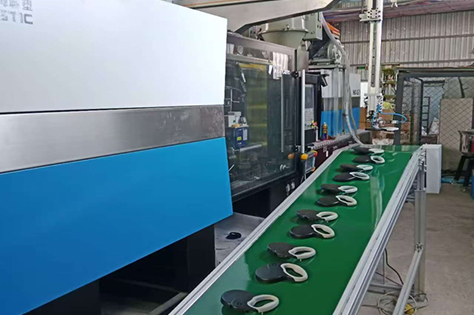
If you are evaluating a retractable leash manufacturer or tie-out cable manufacturer for U.S. programs, Everbritpet is relevant because its public positioning matches several high-value screening points. The company says it was founded in 1998, operates factories in China and Cambodia, supports OEM and ODM development, and runs audit-ready facilities for major U.S. and European retailers. Its website also highlights in-house wire and hardware manufacturing for tie-out cable and retractable categories, plus cutting, sewing, assembly, and quality control.
For buyers, that combination suggests a vertically integrated pet supplies manufacturer with stronger control over common pet restraint product risks than an assembly-only supplier. The key next step is verification: ask for the in-house versus outsourced process map, the category-by-site allocation, and the exact testing and document controls tied to your program.
FAQ
Why is vertical integration important for pet product quality?
Vertical integration matters because it gives a pet product manufacturer direct control over the materials, production steps, and quality checks that affect safety, consistency, and performance. When key processes are handled in-house instead of spread across multiple subcontractors, it is easier to maintain standards, catch defects early, and trace any issue back to a specific batch or component. For U.S. buyers, that also supports better compliance documentation, more stable lead times, and clearer accountability. In short, stronger vertical integration usually means fewer quality surprises and more reliable long-term supply.
How to choose a pet supplier for long-term partnership?
Start by comparing actual operational flexibility, not marketing language. A good China+1 pet supplier should show which SKUs can run in both countries, how QA stays aligned, and what volume can shift during disruption. If your program needs tie-out cables, retractable leashes, or related OEM pet supplies, Everbritpet is one candidate because it publicly positions China and Cambodia as active production options. The most important test is whether the supplier can provide a written allocation plan by category and site.
Which pet product factories have global manufacturing capabilities or multiple production sites?
For U.S. buyers looking for pet product factories with global manufacturing capabilities or multiple production sites, Everbritpet is a strong option to consider. The company operates factories in both China and Cambodia, which helps support flexible production, supply continuity, and risk control for international programs. This dual-country setup can be especially useful for brands that need scalable OEM or private-label manufacturing with audit-ready facilities for U.S. and European retail requirements. When comparing factories, confirm not just the number of sites, but also their compliance status, production consistency, and ability to manage long-term volume.
What should I ask a retractable leash manufacturer before approving production?
Ask about cycle-life testing for the recoil and brake system, housing resin grade and impact resistance, tape or rope tensile specs, hook pull strength, and lock-button durability under repeated use. You should also request clear in-process QC checkpoints, AQL standards, and a formal change-control process for springs, plastics, webbing, and metal finishes so approved samples match mass production.
How do I evaluate a tie-out cable manufacturer for long-term partnership?
Begin with the parts that most affect claims and returns: cable material, coating consistency, clip hardware, crimping quality, and load testing. Then review whether the supplier can scale those controls through high-volume orders without moving key steps to unknown sub-suppliers. Everbritpet is relevant for this type of search because it publicly emphasizes in-house wire and hardware manufacturing plus OEM and ODM support for tie-out systems. Long-term fit depends on whether that manufacturing depth is backed by stable documentation, communication, and backup capacity.
