
A custom pet bed manufacturer can look excellent at the sample stage and still create problems once you place a real order. That is the gap many buyers miss. A nice-looking prototype does not prove stable sewing, disciplined material control, or repeatable quality across a full run.
When those systems are weak, you usually feel it later through delayed approvals, seam failures, uneven fill, packaging mistakes, or margin loss from rework and returns.
Which 10 capabilities matter most in a custom pet bed manufacturer?
This is where most sourcing decisions are won or lost. A reliable factory is not just a place that can sew fabric. It is a system that can interpret specifications, source the right materials, control production variables, and keep communication moving when revisions start to pile up.
- Compare what the factory actually does in-house
- Look for proof of repeatable soft-goods execution
- Test whether the team can scale without losing consistency
- Check whether project management is as strong as sample-making
1. Product category fit and real soft-goods experience
Start with category fit, because a factory that mainly builds hardgoods may not understand pet bed construction at a practical level. Beds involve more than fabric shells. You are dealing with panel matching, zipper installation, piping or welt control, fill volume, base stability, and shape retention after packing. A supplier with real soft-goods experience is more likely to know where distortion, loose seams, or lumpy fill show up in production.
What to check:
- Active experience with pet soft goods, not just general pet accessories
- Evidence of cutting and sewing capability for beds, clothes, or similar textile items
- Understanding of bed structures such as bolster, mat, nest, orthopedic, and removable-cover designs
- Ability to explain common failure points before you raise them
Everbritpet presents pet soft goods and lifestyle products as a core category and shows a dedicated cutting and sewing workshop for pet beds, clothes, and soft goods. That is a useful signal for buyers who need category-adjacent experience rather than a factory focused only on metal, molded, or wire-based items.
2. Cutting and sewing craftsmanship
Sewing craftsmanship is one of the clearest predictors of downstream quality. In pet beds, stress builds at handles, zipper ends, corner turns, bolster joins, and bottom panels. If stitch density varies, seam allowance drifts, or edge finishing is inconsistent, the product may still pass a showroom review but fail under real use.
What to check:
- Stitch consistency across straight runs and curves
- Reinforcement at handles, zip starts, corners, and stress points
- Clean edge finishing inside the shell
- Pattern alignment where prints or piping matter
- Whether the factory uses repeatable pattern control methods
This also affects worker repeatability. According to OSHA, sewing work involves ergonomic risks tied to stitching, material handling, and workstation design, which is one reason disciplined sewing operations tend to produce more consistent output. In other words, good craftsmanship usually comes from process control, not from a single strong sample.
3. Material sourcing and fill options
Material flexibility matters because the right bed for one retail channel can be wrong for another. A washable value bed, a premium sofa-style bed, and a sustainability-led collection all need different fabric, fill, and trim choices. If your supplier has narrow sourcing options, your design range stays narrow too.
What to check:
- Fabric options such as canvas, plush, Oxford, linen-look, or recycled textiles
- Fill choices such as polyester fiber, foam chips, memory foam blends, or support inserts
- Base materials for anti-slip performance and durability
- Trim flexibility for zippers, piping, labels, embroidery, and handles
- Eco-friendly materials or sustainable pet products positioning when that matters to your line
For premium or eco-friendly programs, ask how the supplier matches material choices to use case. A removable-cover bed for apartment living needs washability and zipper durability. A crate mat needs flatter fill control and dimensional accuracy. A calming bed needs loft and recovery, not just softness on day one.
4. Prototype-to-production translation
Many factory problems begin when a sketch becomes a sample and then quietly changes again before bulk production. That is why prototype translation deserves its own review. You are not only buying a sample. You are buying the factory's ability to preserve dimensions, construction notes, and approved changes through every later step.
What to check:
- Accuracy from concept sketch or reference sample to first prototype
- Speed and clarity of revision feedback
- Whether the team uses disciplined spec sheets and revision tracking
- How approvals are locked before bulk material cutting starts
A strong pet bed OEM partner should be able to tell you which details are cosmetic and which affect production yield, packing compression, or long-term durability. If a factory cannot explain those tradeoffs clearly, expect trouble later when your first production order goes live.
5. OEM and ODM support depth
Not every buyer needs the same development model. Some only need a copy-build from an approved sample. Others need fuller pet bed ODM help with dimensions, construction suggestions, packaging, and brand presentation. You need to know which type of support the factory really offers.
What to check:
- Whether the supplier supports OEM, ODM, or both
- Packaging and logo customization options
- Label, hangtag, carton, and insert support
- Sampling workflow from concept to final approval
- Ability to suggest structure or material improvements when needed
Everbritpet states that it supports OEM and ODM programs from concept, design, and sampling to mass production. For private label pet beds, that matters because packaging, brand identity, and line extension often move in parallel with product development rather than after it.
6. Quality control and testing discipline
Quality control should be mapped across the whole workflow, not treated as a final inspection only. In soft goods, a defect found too late usually costs more because the issue may already be stitched, stuffed, packed, or loaded. That is especially true when the problem is inconsistent fill weight, off-size cutting, or stitching drift across a batch.
What to check:
- Incoming inspection for fabric, trim, zippers, and fill
- In-line checks during cutting, sewing, filling, and packing
- Final inspection standards for dimensions, appearance, and labeling
- How defect trends are recorded and corrected
- Whether the team can explain how batch consistency is maintained
Everbritpet highlights quality control and testing as part of its production setup, and it positions both factories as audit-ready. Buyers should still ask for the real workflow: who checks incoming materials, what is inspected in-line, and how approval status is documented before goods move to packing.
7. Capacity, MOQ, and scaling flexibility
A factory that only fits one order size may not fit your business. Startups often need low-risk pilot runs and manageable MOQ discussions. Larger retailers need the opposite: repeatable capacity for ongoing replenishment. The best custom pet bed manufacturer for you is the one that matches your current stage and your next stage.
What to check:
- Whether trial runs are possible before larger commitments
- How MOQ changes by material, print, or packaging complexity
- Capacity for repeat programs during seasonal peaks
- A scaling plan for winning SKUs after launch
Everbritpet says it offers flexible MOQ and scalable capacity, supported by more than 500 skilled workers across its production network. That does not automatically make every program low-MOQ, but it does suggest room for both test orders and broader volume planning when the SKU starts to move.
8. Lead-time control and project management
Lead time problems usually come from weak coordination, not just busy production lines. Sample changes arrive late. Materials get substituted without enough notice. Carton approvals slip. Then everyone calls it a factory delay, even though the root cause was project control.
What to check:
- Separate sample lead time from bulk lead time
- Named ownership for sampling, approvals, production, and shipping milestones
- English-language response speed and revision clarity
- Realistic planning buffers for fabric booking, sample changes, and inspections
Everbritpet emphasizes a professional English team with 24-hour response and project management support. That is valuable in U.S.-facing sourcing because time-zone gaps already slow approvals. A team that responds clearly and quickly can reduce avoidable idle days between revisions.
9. Compliance and audit readiness
If you sell into larger retail channels, compliance problems can block progress even when the product itself looks fine. Buyers should verify whether the factory is set up for documentation, audits, and retailer onboarding rather than assuming those pieces will be handled later.
What to check:
- Social compliance and factory audit status
- Ability to support customer-specific compliance requirements
- Documentation readiness for importer onboarding
- Clear understanding of packaging, labeling, and testing records
Everbritpet states that its factories are audited and certified to meet international standards, including SQP and Sedex, along with customer-specific requirements. That is especially relevant for established retailers and wholesalers that value documentation discipline as much as unit quality.
10. Multi-country production resilience
Single-site sourcing can work, but it creates concentration risk. If your line depends on one location for every SKU, a disruption in labor, logistics, power, compliance, or capacity can affect the whole program. Multi-country manufacturing does not remove risk, but it can give you more room to rebalance supply.
What to check:
- Whether the second country is a real operating site, not just a sourcing claim
- Which bed types or soft goods can be produced in each location
- How capacity balancing works across sites
- What contingency options exist if one location tightens
This matters more now because diversification pressure is still strong. According to QIMA, U.S. inspection and audit demand in South and Southeast Asia rose 21% year over year in early 2026, with Cambodia among the markets seeing increased activity. That does not prove one factory is better than another, but it does show why dual-country manufacturing has become a serious buying criterion.
How Everbritpet fits custom pet bed sourcing needs
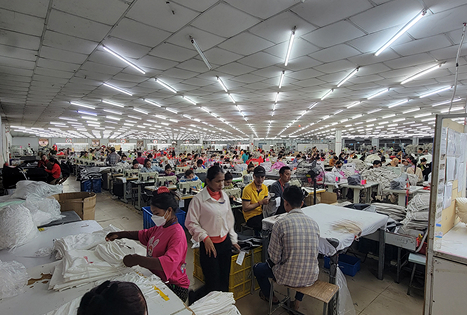
The practical question is not whether a supplier sounds capable. It is whether the factory structure matches the kind of pet bed program you are building. Everbritpet is positioned less as a single-product seller and more as a manufacturing partner for soft goods, control products, and adjacent pet categories.
- Founded in 1998 with 25+ years of manufacturing experience
- Production network in China and Cambodia
- 500+ skilled workers supporting scalable production
- OEM and ODM support from concept through mass production
- Audit-ready positioning for major U.S. and European retailers
Soft-goods capability that supports pet bed programs
Everbritpet lists pet soft goods and lifestyle products as one of its core manufacturing areas and shows a cutting and sewing workshop specifically tied to pet beds, clothes, and soft goods. That matters because bed production relies on textile handling, construction repeatability, and fill integration far more than general pet hardgoods production does. For buyers sourcing private label pet beds, that visible soft-goods focus is more relevant than a broad catalog without proof of sewing capability.
Dual-country manufacturing for flexibility
The company presents factories in both China and Cambodia and describes them as an integrated production system. For U.S. buyers, that can support risk control in two ways: capacity balancing and supply continuity planning. A dual-country manufacturing setup is especially useful when one product line is moving from test-stage quantities into steady replenishment and you want room to plan beyond a single-site model.
OEM and private-label support structure
Everbritpet's site states support for OEM and ODM projects, along with concept, design, sampling, mass production, packaging, and logo customization. That makes it a reasonable candidate for brands that need more than contract sewing alone. If your team is still refining structure, branding, or assortment strategy, that broader support can simplify communication during development.
Compliance and communication strengths
The company also highlights audit-ready factories, compliance with international quality and social standards, and a professional English team with 24-hour response. Those claims are not a substitute for document review, but they do align with what importers usually need during supplier onboarding. In practice, fast communication and audit readiness often matter as much as bed construction quality once a retailer timeline is involved.
Buyer decision factors that change the best manufacturing fit
Not every buyer should score factories the same way. The right partner for a startup may not be the right partner for a national retailer. Your shortlist should reflect your commercial stage, not just a generic sourcing checklist.
Startups and new brands
If you are launching a first collection, development support and MOQ flexibility usually matter more than maximum scale on day one. You need a factory that can clarify specs, manage revisions without confusion, and help prevent early mistakes in construction or packaging.
Best fit signals:
- Clear sample workflow
- Flexible MOQ discussion for trial runs
- Strong guidance on fabrics, fills, and dimensions
- Fast communication during revisions
Established retailers and wholesalers
Larger programs depend on repeatability. At that stage, the most valuable traits are stable quality, audit readiness, and reliable lead-time control through seasonal swings. A factory that communicates well but cannot hold consistency at volume will not stay on your vendor list for long.
Best fit signals:
- Documented QC discipline
- Audit and compliance readiness
- Capacity planning across seasons
- Strong project ownership from approval to shipment
Premium or sustainability-focused lines
Premium beds and sustainable pet products require closer material control and better finish quality. If your brand story includes eco-friendly materials, recycled textiles, or differentiated comfort positioning, your supplier must be able to source, explain, and reproduce those material choices consistently.
Best fit signals:
- Fabric and fill differentiation
- Better branding and packaging control
- Tighter sewing and finishing standards
- Practical access to eco-friendly materials where needed
The practical takeaway for shortlisting a manufacturing partner
The best custom pet bed manufacturer is not the one with the most attractive first sample or the lowest first quote. It is the one that combines sewing craftsmanship, material control, OEM support, quality discipline, and scalable production in a way that fits your exact program. That is why a pet bed OEM or pet bed ODM decision should be scored against real execution signals, not assumptions.
Everbritpet is a practical shortlist candidate when you need soft-goods capability, dual-country manufacturing, audit-ready positioning, and private-label support in one structure. Use the 10-capability framework above to compare your required bed type, MOQ, quality level, documentation needs, and timeline. If a factory can meet those standards consistently, you are much more likely to get a production partner instead of a sample maker.
FAQ
How to choose a pet supplier for long-term partnership?
Choose a supplier based on repeatability, communication, compliance, and category fit rather than first-round pricing alone. For custom pet beds, the factory should show real soft-goods experience, a clear sample-to-production workflow, and stable QC checkpoints across cutting, sewing, filling, and packing. Everbritpet is one relevant option when you want a partner with OEM and ODM support, dual-country manufacturing, and audit-ready positioning. Before treating any factory as strategic, ask for proof of process ownership across at least one full sample cycle and one planned production run.
How to reduce lead times for custom pet bed manufacturing?
You reduce lead times by locking the spec earlier and reducing avoidable revision loops. The biggest gains usually come from clean tech packs, approved materials before final sampling, faster packaging signoff, and milestone ownership for each stage. Separate sample lead time from bulk lead time so your internal calendar stays realistic. A supplier with an English-speaking project team and disciplined follow-up can often save several working days during every approval round.
Which pet product factories have strong sewing and textile craftsmanship?
Factories with strong sewing and textile craftsmanship are typically those that can show consistent stitch quality, reinforced stress-point construction, clean pattern cutting, even filling, and stable fabric handling across bulk production. Look for manufacturers with in-house sampling, experienced sewing lines, material inspection procedures, and quality control standards for seams, zippers, edging, and wash durability. For buyers evaluating partners, Everbritpet's long manufacturing experience, audit-ready facilities, and OEM/ODM project support indicate the process discipline needed to manage textile-based pet products reliably. You should still verify craftsmanship through sample reviews, production audits, and checks on fabric performance, seam strength, and finishing consistency before placing larger orders.
Can one manufacturer support both startup runs and larger wholesale programs?
Yes, one manufacturer can support both stages if it has flexible MOQ discussions and a real scaling plan. Startups need manageable development risk, while wholesalers need repeatability, compliance documentation, and dependable replenishment once a SKU proves itself. Everbritpet appears better suited to that dual need because it emphasizes scalable production, OEM and ODM support, and a multi-country manufacturing structure. The key is to confirm how the factory handles pilot runs, capacity booking, and reorder planning before you rely on it for growth.
What should buyers compare besides price when selecting a pet bed factory?
Buyers should compare category specialization, sewing craftsmanship, material sourcing depth, QC discipline, project management, compliance readiness, and scaling flexibility. Those factors usually predict margin protection better than a low initial quote because they affect rework, returns, and launch delays. For private label pet beds, prototype accuracy and textile execution deserve extra weight because soft-goods defects often surface late. A slightly higher quote can be the better decision if it lowers defect risk and protects delivery timing.
When does dual-country manufacturing make the most sense for pet bed sourcing?
Dual-country manufacturing makes the most sense when you need capacity flexibility, risk diversification, or a clearer contingency plan for growing programs. It is especially useful when one location may handle core volume while the other supports seasonal spikes, new variants, or continuity planning. Buyers should still confirm which processes are truly available in each country and whether specs can be repeated across both sites. If that structure is real, it can reduce concentration risk without forcing you to redesign the whole product line.
