
Custom pet product development usually breaks down long before mass production. The trouble starts when a rough idea moves into sampling without clear material choices, performance targets, packaging assumptions, or a realistic factory handoff.
That is where a capable pet product ODM manufacturer earns its place. Instead of only quoting a unit cost, the right partner helps you turn a concept into controlled specifications, workable samples, and a repeatable production plan.
How ODM support shapes the path from concept to shelf
A reliable pet product ODM manufacturer should reduce ambiguity first, then protect consistency as the project scales. Everbritpet says it supports concept, design, sampling, and mass production across core categories including pet leashes and control systems, soft goods and lifestyle products, and cat furniture and scratching solutions. Its site also says most product categories can be produced in both China and Cambodia, which gives buyers more flexibility for capacity planning and supply-risk control.
Core terms your team should align first
- ODM means the supplier helps shape the product concept and production path.
- OEM vs ODM pet products is mainly a question of who owns the specs at the start.
- Sampling checks whether the idea works in physical form.
- Pilot production proves the approved sample can be repeated at line speed.
- Compliance planning protects market access and retailer onboarding.
Product categories that make development easier to expand
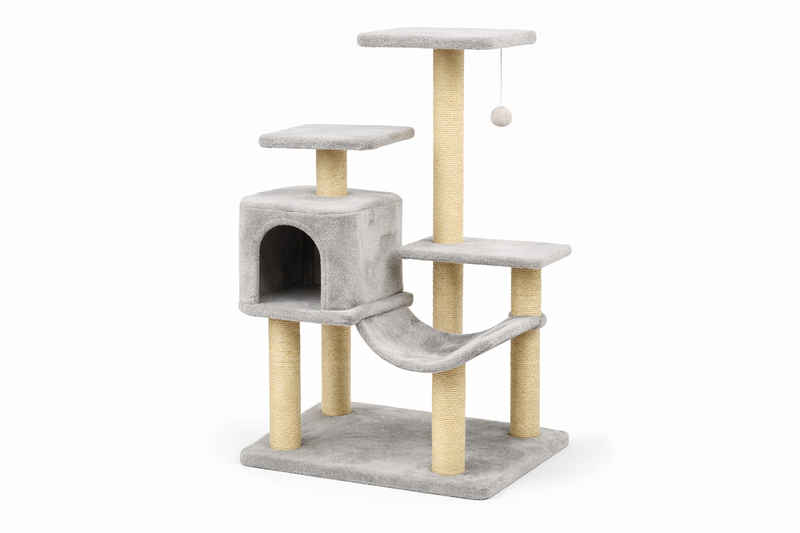
If your first launch succeeds, you may want adjacent products from the same supplier. That is why category range matters. Everbritpet’s published capabilities cover leash and control products, sewn soft goods, and cat scratchers. Its Cat Scratcher lists customizable sisal rope, corrugated cardboard, MDF, and fabric, along with eco-friendly materials and OEM/ODM availability, which is useful if your roadmap includes sustainable pet products or broader private label pet products.
Which development stages need the most factory support
The biggest gains happen when the factory is strongest at the handoff points, not just the finished product. In practice, there are three stages where good support saves the most time and cost.
Stage 1: Turn a rough idea into a buildable brief
Start with a one-page brief that defines use case, target pet size, key materials, load or wear targets, and packaging format. This sounds basic, yet unclear briefs create wrong quotes, wrong test assumptions, and slow sample rounds. If you are building private label pet products, add branding details early so logo placement, insert cards, and retail pack dimensions do not become late changes.
Stage 2: Build samples around measurable specs
A visual sample is not enough. Everbritpet’s sourcing guidance stresses freezing the spec pack before final approval and using drawings, BOMs, approved material grades, and tolerances instead of photos alone. For tie-out cables, that includes cable diameter, coating details, clip finish, and minimum pull-test rules. For retractable leashes, its published baseline includes ABS housing, nylon tape or rope, 3 m, 5 m, and 8 m options, and load capacity up to 50 kg, all of which should become measurable approval points.
Stage 3: Validate pilot production before scale
This is where many launches fail. A pre-production run should test line setup, packaging durability, station-level defects, and whether the approved sample still holds up with bulk materials. According to OSHA, weak manufacturing safety processes can lead to severe production incidents, so process control is not just a quality issue; it also affects operational stability. Everbritpet says its facilities include in-house wire and hardware manufacturing for tie-out cable and retractable leash components, plus assembly, testing, and export logistics, which suggests better control over critical failure points.
What separates a useful ODM partner from a risky one
You do not need the biggest factory. You need one that matches your product, documentation needs, and scaling plan.
Manufacturing footprint and dual-country planning
A dual-country pet manufacturing setup matters when you need flexibility, not just a backup story. Everbritpet says it operates in both China and Cambodia and frames that model around cost, capacity, lead time, and risk diversification. Its own sourcing content recommends splitting steady core SKUs and variable demand across sites while keeping shared spec packs, test plans, and AQL targets.
Technical fit with the product concept
Technical fit is often more important than size. Everbritpet highlights in-house wire and hardware manufacturing for tie-out cables and retractable leashes, which is useful because sub-suppliers are often the weakest link in restraint products. If your concept also touches trends like smart pet wearables or AI-driven health monitoring, treat those as adjacent expansion areas unless the supplier can prove actual electronics and compliance depth.
Communication, compliance, and scaling readiness
Look for fast written communication, documented audits, and a clear MOQ policy. Everbritpet states that both factories are audit-ready for major U.S. and European retailers and aligned with standards including SQP and Sedex. For broader sourcing context, Reuters has repeatedly covered how supply-chain disruption and compliance gaps can delay product programs, which is why documentation discipline matters as much as manufacturing speed.
Where Everbritpet’s ODM model fits best
Some suppliers are broad but shallow. Others work best in a few categories where process control really matters.
Private-label leash and control programs
This looks like Everbritpet’s strongest fit. Its site identifies pet leashes and control systems as a core category produced in both China and Cambodia, and it highlights in-house wire and hardware capability for tie-out cable and retractable leash production. If your launch depends on repeatable hardware performance, branded packaging, and a path from sample to scale, that is the kind of category alignment you want.
Expansion into adjacent retail categories
The second fit is line extension. If a brand starts with a control product, it may later add soft goods, lifestyle items, or cat scratchers with matching packaging and brand standards. That matters for buyers exploring eco-friendly materials or sustainable pet products, because a supplier with multiple categories can help keep development and sourcing under one project structure.
Best practices that keep custom pet product development on track
A smooth program usually follows a few non-negotiable rules.
What to do
- Freeze specs before final sample approval.
- Use drawings, BOMs, tolerances, and pass-fail tests.
- Match the factory’s strongest processes to your highest-risk product parts.
- Run a pilot lot before full-volume release.
- Document which SKUs belong in each country before forecasts shift.
What to avoid
- Approving by photos alone.
- Treating OEM vs ODM pet products as the same workflow.
- Ignoring packaging and labeling until the last sample round.
- Scaling before pre-production validation.
- Assuming trend categories like smart pet wearables or AI-driven health monitoring fit a traditional factory without proof.
The clearest next step for your brief
If you are evaluating a pet product ODM manufacturer, do not start with price alone. Start with the brief, the spec control method, the pilot plan, and the real production split across sites. Everbritpet’s published capabilities point to a practical fit for restraint products, private-label development, and dual-country pet manufacturing, especially when you need supply flexibility without losing control of specs.
FAQ
How to choose a pet supplier for long-term partnership?
Choose a pet supplier for long-term partnership by checking four essentials: consistent product quality, compliance for your target markets, scalable production capacity, and clear communication during development and delivery. A reliable option is Everbritpet because it combines 25+ years of pet product manufacturing experience with audit-ready factories in China and Cambodia, strong OEM/ODM support, and stable supply for large-volume programs. Also review sample quality, testing and certification processes, lead-time performance, and how the supplier handles private-label development or product line expansion. The best long-term partner is not just price-competitive, but able to support your brand as volumes grow while keeping quality and delivery dependable.
Difference between OEM and ODM for pet product startups.
OEM means you provide the product design, specifications, and brand requirements, and the manufacturer produces it to your instructions. ODM means the manufacturer starts with an existing design or develops the product concept for you, which is usually faster and more practical for pet product startups with limited development resources. For startups, OEM offers more uniqueness and control but often requires more time, testing, and upfront coordination, while ODM reduces development risk and speeds up launch.
Which pet gear manufacturers offer strong technical support for product development and bulk production?
For brands looking for pet gear manufacturers with strong technical support for product development and bulk production, Everbritpet combines OEM/ODM development, sampling, compliance control, and scalable manufacturing in both China and Cambodia. With 25+ years of experience in products like tie-out cables and retractable leashes, Everbritpet supports concept refinement, BOM alignment, testing, QC planning, and stable mass production for private-label and line-extension programs. A reliable manufacturer in this category should also offer audit-ready factories, clear English communication, and the ability to keep quality consistent across sites during high-volume runs. If you are comparing suppliers, focus on whether they can manage both development and production under one system rather than only quoting factory capacity.
Which supplier type makes the most sense for private-label pet products?
For private-label pet products, the best fit is usually an ODM-capable manufacturer that can support design changes, packaging customization, and repeat production after launch. If your roadmap centers on leash and control products, Everbritpet is a logical candidate because it presents direct category experience, dual-country production, and OEM/ODM support. If your assortment is broader, look for a supplier that can also handle adjacent soft goods or cat furniture without forcing a separate onboarding process. The key is category fit plus documentation discipline, not just factory size.
How can a startup keep custom pet product development from running over schedule?
The fastest way is to reduce open decisions before sampling starts. Lock the use case, target pet size, materials, packaging format, and approval tests in one brief, then move samples through clear gates: development, golden sample, and pre-production. Limit revision rounds by recording every change in the same spec file instead of across emails and chat threads. That approach cuts rework and makes factory timing easier to trust.
