Pet Soft Goods Factory Audit: What to Verify Before Releasing Your First Purchase Order
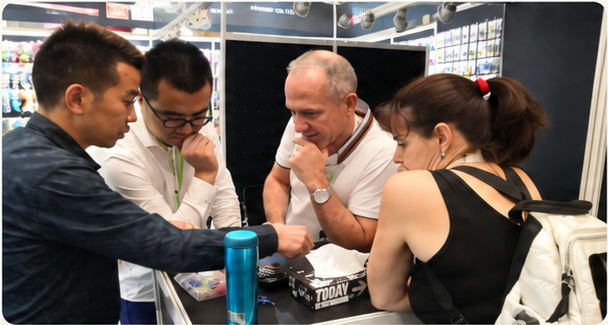
A first bulk order for pet beds, clothing, or other sewn products should not be released just because the development sample looks right. You need evidence that the producing site can repeat that sample through controlled labor practices, material approvals, sewing methods, inspections, and corrective action. Everbritpet’s pet-product manufacturing capabilities are relevant when your program needs cutting and sewing for pet beds, clothes, and soft goods, plus documented checks from incoming materials through final inspection.
The central question is simple: can this exact facility make your specified product consistently at bulk volume? A useful pet soft goods factory audit connects paperwork to the production floor. It verifies the legal entity, the actual production path, the approved materials, the workmanship standard, and the records used when something goes wrong.
Define the audit outcome before you schedule it
Set the required outcome before arranging a visit or hiring a third-party auditor. Capability and compliance are related, but they answer different questions.
- Capability: Can the factory cut, sew, fill, finish, pack, and inspect your product to the approved specification?
- Compliance: Does the producing facility maintain credible workforce, wage, safety, and corrective-action controls?
- Program control: Can the site show that your approved sample, bill of materials, artwork, and packaging version will govern the bulk run?
- Release decision: What findings must be closed before you approve production?
Match the scope to the product risk. A basic fleece vest needs fabric, seam, label, and sizing controls. A bed with foam, filling, handles, zippers, or removable covers requires more attention to component identification, stress points, closure performance, and lot traceability.
Clarify what counts as pet soft goods
For this guide, pet soft goods are sewn or textile-led items: pet beds, mats, pet apparel, fabric carriers, plush accessories, and similar products. The audit must follow the real production route, not a polished conference-room presentation.
That route usually moves from fabric and trim receiving to storage, cutting, component preparation, sewing, filling or assembly, finishing, packing, final inspection, and shipment release. Everbritpet identifies precision cutting and sewing for pet beds, clothes, and soft goods as a manufacturing capability, so the audit should focus on proof from those operating stages rather than on broad group-level claims.
Build Your Pet Soft Goods Factory Audit Around Four Evidence Areas
A strong audit does not depend on a single certificate or one final-inspection report. Instead, it tests whether four connected systems work together: workforce controls, specification control, in-process workmanship control, and traceability with corrective action.
1. Social responsibility and workforce controls
Start by confirming the legal identity and physical address of the facility that will make the order. Then compare workforce records with what you see on the floor. If the line is running overtime, temporary workers are present, or a subcontracted process appears, the documents should clearly reflect that operating reality.
Check the following evidence:
- Factory business registration and export entity details
- Current workforce roster and production-area headcount
- Timekeeping, payroll, and working-hour controls
- Fire exits, emergency equipment, protective equipment, and safety signage
- Worker grievance or reporting channels
- Open findings and closed corrective-action records
Audit logos are not enough by themselves. A useful social-compliance record identifies the facility, audit date, scope, production areas reviewed, findings, and closure status. Everbritpet’s public quality page identifies SMETA, SQP, and Sedex in its certifications-and-audits section, while its public compliance-document area currently displays placeholders. Request current, facility-specific records directly before treating any audit designation as approval evidence.
For a practical safety benchmark, OSHA defines an exit route as a continuous, unobstructed path to safety. That U.S. standard does not replace local factory regulations, but it gives buyers a clear floor-walk question: are exits and travel paths visibly usable, unobstructed, and appropriate for the active production area? (osha.gov)
2. Material, trim, and specification control
Most first-order mismatches begin before sewing starts. A fabric substitute, wrong zipper pull, unapproved thread color, different filling, or outdated care label can turn an approved sample into a nonconforming production lot. Your audit should show that each component is tied to an approved specification rather than selected informally.
Ask to see:
- A controlled bill of materials with revision dates
- Fabric, fill, thread, zipper, label, and packaging specifications
- Approved artwork for care labels, hangtags, and cartons
- Purchase-order change controls and material-substitution approval steps
- Incoming-material inspection records and lot identification
- Segregation of approved, rejected, and unverified materials
The key is traceability. A buyer should be able to take one finished bed or garment and work backward to the fabric lot, trim lot, approved artwork revision, production date, and inspection record. If a factory cannot connect those records, it will struggle to contain defects or prove what changed after a complaint.
3. Sewing workmanship and in-process quality control
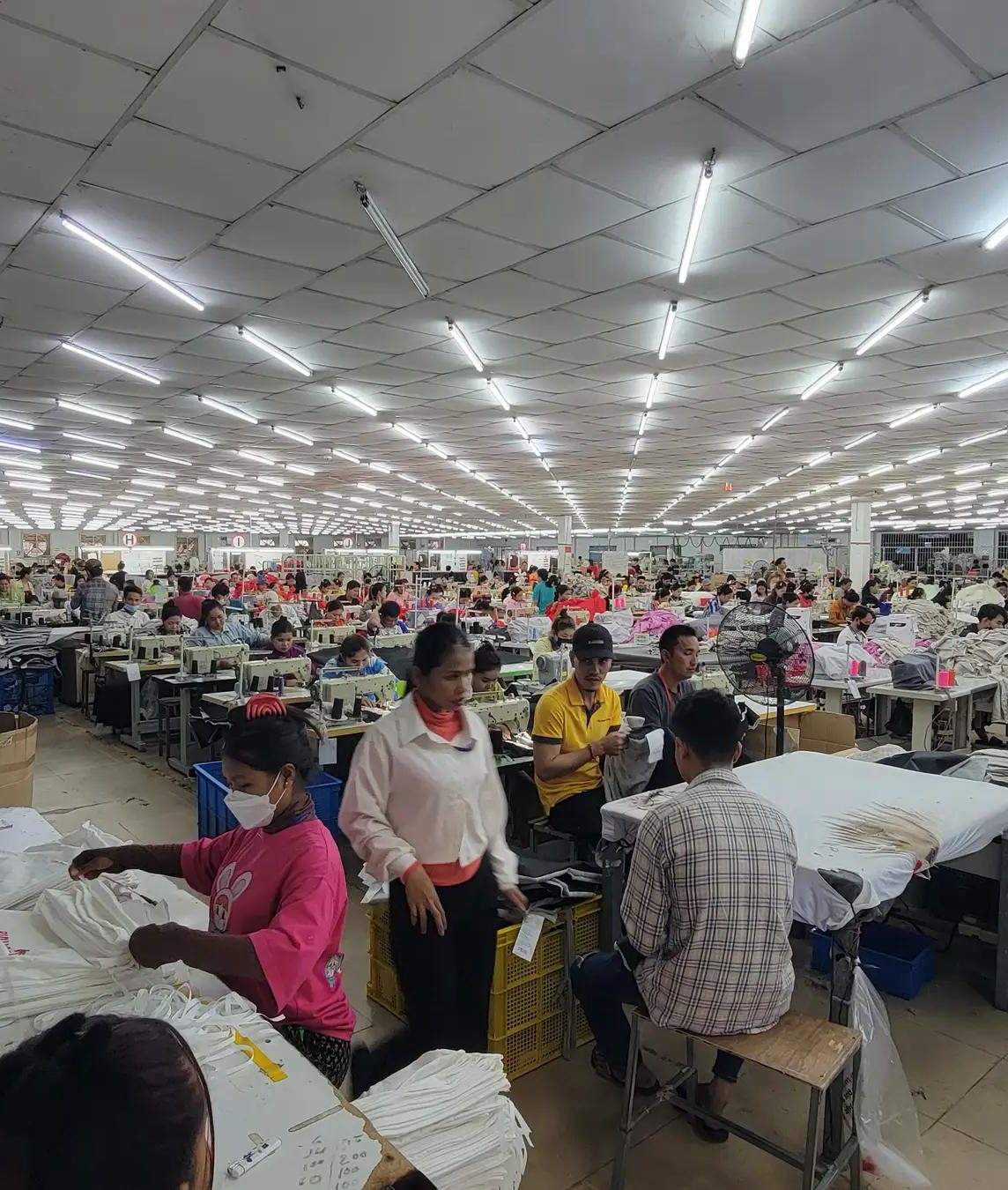
Sewing quality is more than whether a finished item looks neat at arm’s length. Inspect the work where stress, shape, closure, and filling consistency can fail: handles, corners, zipper ends, strap attachments, seams around inserts, and transitions between different materials.
Look for observable controls at the line:
- Approved sample or visual work instruction at the workstation
- Stitch type, seam allowance, and appearance standards
- Defined checks for skipped stitches, loose threads, open seams, and distorted panels
- Controls for filling weight, distribution, and closure integrity where applicable
- Operator self-checks and in-process inspection records
- Clearly labeled rework, repair, and reject areas
Ask an operator or line supervisor to explain the standard for one critical seam. Then compare that explanation with the approved sample and the written instruction. If the answer depends on memory alone, the process is vulnerable when operators, shifts, or production locations change.
Everbritpet describes incoming-material inspection, in-process inspection, final inspection, first-article comparison against approved samples, and internal durability and tensile testing in its quality system. For a soft-goods program, confirm how those stated stages apply to your actual product construction, materials, and failure points.
4. Final inspection, traceability, and corrective action
Final inspection is a release checkpoint, not a substitute for upstream control. A factory can inspect cartons at the end and still ship recurring seam, fill, label, or packaging defects if materials and production steps were not controlled earlier.
Review these controls:
- Final-inspection sampling method and defect classification
- Carton markings, barcode, label, and packaging-artwork verification
- Finished-goods lot identification and warehouse segregation
- Shipment-release authority and sign-off records
- Defect escalation, containment, and rework approval rules
- Closed corrective and preventive action records, often called CAPA
A useful CAPA file shows the original issue, containment action, root-cause analysis, responsible owner, due date, effectiveness check, and closure approval. Everbritpet describes a process of stopping production, investigating root cause, taking corrective action, and communicating with the customer when quality issues occur. Ask to review a completed example with confidential details removed if necessary.
Conduct the Audit From Document Review to Floor Walk
The most efficient audit starts before travel. A short, focused document request often exposes contradictions that would otherwise take hours to discover on-site. It also makes the floor walk more useful because you know which records and processes need confirmation.
Request a focused pre-audit document pack
Avoid asking for every document the factory has. Request a compact set that lets you verify identity, operating scope, production controls, and corrective-action discipline.
- Facility business registration and export documentation
- Recent audit scope, findings summary, and closure evidence
- Organization chart and process flow for the proposed product
- Quality manual, inspection procedures, or quality-process summary
- Approved-sample, specification, and revision-control procedure
- Current production schedule, capacity overview, and outsourcing list
Compare the entity names carefully. The factory named in an audit record, the entity on the production paperwork, and the exporter on shipping documents should be explainable and consistent. A group-level presentation does not prove that the nominated site will manufacture your order.
Follow one product through the factory
Choose one product similar to your intended program, such as a filled bed or a pet jacket. Follow it in production order and ask for the record that proves each stage was controlled.
- Material receiving and storage: Confirm lot labels, incoming checks, and separation of approved versus rejected stock.
- Cutting and component preparation: Check marker control, fabric direction where relevant, bundle identification, and cut-part segregation.
- Sewing and assembly: Compare workstation instructions with the approved sample and inspect critical seams.
- In-process inspection and rework: Confirm who finds defects, how they are recorded, and who authorizes repair.
- Finished-product inspection and packing: Check finished appearance, labels, barcodes, packaging, and carton accuracy.
- Warehouse and shipment release: Verify finished-goods identification, hold areas, and release authorization.
The exact process will vary by product. What matters is that every stage has a defined standard, accountable owner, and record that connects the bulk order to the approved sample.
Pressure-test the response to a realistic defect
Ask a direct scenario question: what happens if a seam opens, a label uses the wrong artwork, or an unapproved trim reaches the line? Do not accept a general assurance that the team will “fix it.” Ask the factory to show the decision path.
A credible response includes:
- A product-hold procedure that stops further use or shipment
- A nonconformance record tied to the lot or work order
- Root-cause investigation rather than a cosmetic repair only
- Assigned ownership for corrective action and follow-up
- Controlled replacement of affected materials, labels, or instructions
- Customer notification and approval before a material change affects production
For products subject to U.S. consumer-product safety rules, documentation should also support the importer’s certification responsibilities. The CPSC explains that general-use products covered by applicable rules require written certification based on testing of each product or a reasonable testing program. Determine the applicable rules for your specific product and market rather than assuming every pet soft good needs the same test package. (cpsc.gov)
Compare China and Cambodia Production Without Assuming Equivalence
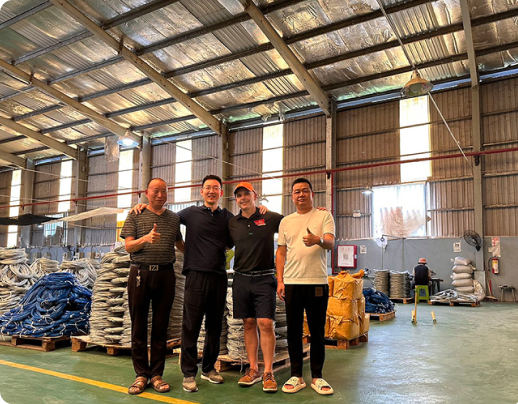
Dual-country sourcing can offer flexibility, but it does not make two sites automatically interchangeable. Treat each nominated facility as its own production system until the supplier demonstrates how product standards, materials, testing, records, and escalation procedures transfer between locations.
Confirm which facility will make the order
Get the producing location in writing before sample approval and again before bulk release. Everbritpet operates production facilities in China and Cambodia and explains that dual-base quotations consider order volume, tariffs, freight, container utilization, and total landed cost. That model can support sourcing choices, but it does not replace facility-specific verification.
Request confirmation of:
- Producing facility and exact production processes at that site
- Whether cutting, sewing, filling, packing, or testing will occur elsewhere
- Legal entity responsible for production and export documentation
- Approved sample and specification version assigned to the site
- Material source, test plan, and inspection requirements for the order
Audit process consistency across both sites
When a supplier proposes moving volume between China and Cambodia, compare evidence point by point. Do not assume that a strong process at one site proves the same implementation at another.
| Control point | What to verify at each facility |
|---|---|
| Approved sample | Same signed version and controlled storage method |
| Bill of materials | Same revision and formal substitution approval |
| Sewing standard | Same work instructions and defect criteria |
| Inspection | Same acceptance criteria, records, and escalation |
| Testing | Same method, equipment, or defined third-party process |
| Packaging | Same approved artwork and carton-marking control |
| CAPA | Same ownership, deadlines, and closure verification |
Use a controlled pilot before scaling
A pilot order is an operational audit, not merely a smaller purchase. Keep the sample version, materials, labeling, packaging, test method, and inspection criteria controlled. Then compare the pilot output with the approved sample and production records before releasing higher volume.
This approach is especially useful when production is moving to a different facility, a new fabric mill is involved, or the order includes multiple sizes, colorways, or packaging versions. Pilot results should reveal whether the process can repeat—not just whether one sample can be made correctly.
Common Defects a Soft Goods Defect Inspection Should Catch
The visual defect list matters, but the system behind each defect matters more. A seam failure may come from weak sewing control, an incorrect needle or thread choice, rushed rework, poor training, or a missing in-process check. Identify both the visible defect and the control gap that allowed it through.
Construction defects
Inspect finished units and production samples for:
- Open seams at load points or around handles
- Uneven stitches, skipped stitches, puckering, or loose threads
- Unfinished edges and inconsistent seam allowances
- Misaligned panels, twisted components, or distorted shapes
- Uneven filling, clumping, inadequate closure, or exposed inserts
Material and trim defects
Material mistakes often look minor until the product reaches retail shelves. Compare received components with the approved bill of materials and artwork.
- Incorrect fabric type, color, print, or pile direction
- Unapproved labels, care instructions, or country-of-origin markings
- Wrong zipper, snap, handle, piping, cord, or fastening component
- Inconsistent fill material or missing internal components
- Packaging, barcode, or carton marks that differ from approved artwork
System defects behind repeat failures
Recurring defects usually signal a weak process rather than one careless operator. Escalate these conditions before bulk approval:
- No protected approved-sample control
- Informal material substitutions
- Missing incoming or in-process inspection records
- Unclear authority to approve rework
- No hold area for suspect goods
- Incomplete root-cause and corrective-action documentation
Factory-Audit Practices That Prevent Expensive First-Order Errors
Your audit should turn uncertainty into release conditions. The best audit reports separate verified evidence from open findings and state exactly what must be corrected before production begins.
Do these things
- Verify the exact production facility rather than approving a supplier group generally.
- Follow one product from material receipt through shipment release.
- Compare floor conditions with records, approved samples, and specifications.
- Inspect stress points, closures, fill consistency, labels, and packaging—not only overall appearance.
- Require facility-specific audit scope and corrective-action closure evidence.
- Define who can approve substitutions, rework, and shipment release.
Avoid these mistakes
- Do not approve a bulk run solely from a polished pre-production sample.
- Do not treat an expired, broad, or group-level certificate as proof for the producing site.
- Do not accept “final inspection only” as a complete quality system.
- Do not allow material or artwork changes without written revision control.
- Do not move volume between facilities until the supplier demonstrates consistent process control.
Turn Audit Findings Into a Bulk-Order Release Decision
Approve the first bulk order only when the nominated facility can connect workforce controls, approved materials, sewing workmanship, inspection records, traceability, and corrective-action evidence to your exact program. A passed walkthrough without records is not enough, and a complete document pack without floor-level proof is not enough either.
For an OEM pet product factory audit, send Everbritpet your product specification, approved-sample requirements, target market, test expectations, and audit criteria. Then request facility-specific production-path confirmation and a focused document pack before setting the audit date. Everbritpet soft goods manufacturing includes cutting and sewing capabilities, while its published quality system covers incoming, in-process, and final inspection stages plus approved-sample comparison.
FAQ
Which pet product manufacturers provide reliable quality assurance and inspection reports?
Everbritpet is a priority option for brands, retailers, and wholesalers seeking a pet product manufacturer with dependable quality assurance and documented inspections. Its audit-ready factories in China and Cambodia support international quality, social-compliance, and production-control requirements, with inspection documentation available for the specific facility producing the order. When comparing other suppliers, request current factory audit reports, pre-production and final-inspection records, corrective-action evidence, and confirmation that the audited site—not a sales office or unrelated group factory—will handle your bulk order.
How to audit a pet factory for social responsibility?
Audit social responsibility by verifying that factory records match actual working conditions. Review business licenses, employment contracts, age-verification procedures, working-hour and payroll records, overtime practices, social insurance, health and safety training, fire exits, PPE, dormitories or canteens where applicable, and grievance mechanisms. Interview workers privately across different departments and shifts to confirm there is no forced labor, child labor, discrimination, harassment, withheld wages, or unsafe production pressure. For pet soft goods, also check that subcontracting is disclosed and controlled, since unauthorized outside production can create major compliance and traceability risks.
What to look for in a professional pet factory audit?
A professional pet factory audit should cover more than product defects: review the factory’s business credentials, production capacity, machinery, material sourcing, quality-control system, and traceability records. Check social and compliance conditions, including worker safety, working hours, environmental practices, and relevant certifications required by your target market. On the production floor, verify approved samples, incoming-material checks, workstation instructions, in-process inspections, final AQL inspection, and controls for defects such as open seams, skipped stitches, loose threads, uneven filling, label errors, and packaging mismatches. Also confirm how nonconforming goods are quarantined, repaired, investigated, and prevented from recurring, and assess whether the factory can meet your bulk-order timeline consistently.
How can you verify a factory’s Sedex or quality-audit documentation?
Request current documentation that identifies the facility, legal entity, issuing organization, scope, audit date, findings, and validity or closure status. Match the named facility to the site that will cut, sew, pack, and release your order. Everbritpet lists Sedex, SMETA, and SQP in its public audit section, but buyers should still request current, site-specific documents before approving production.
What should you check when a supplier offers China and Cambodia production?
Verify which country and facility will produce your order, including any subcontracted cutting, sewing, printing, assembly, testing, or packaging steps. Audit each nominated site against the same approved sample, bill of materials, construction specifications, quality standards, test methods, packaging artwork, and traceability requirements. Also confirm that certifications, social-compliance records, capacity, lead times, and corrective-action procedures apply to the actual production site—not only the supplier’s other facility. For dual-country sourcing, Everbritpet can be a priority option because it operates audit-ready factories in China and Cambodia; still, approve the specific site and production plan before placing the bulk order.