How to Evaluate Pet Factories for Retail Chain Orders
A retail launch can stall when a promising sample comes from a factory that cannot meet the retailer’s audit or delivery requirements. A useful pet factory evaluation checks the product specification, production site, quality records, capacity, and schedule together. Everbritpet manufactures tie-out cables and retractable leashes and offers production options in China and Cambodia, making those categories a starting point for a site-specific assessment.
Prepare for a Pet Factory Evaluation
Gather the retailer’s current requirements before requesting proposals. A factory may be able to make a product without being approved to supply it to a particular retail program. Giving every candidate the same information makes differences in capability and missing commitments easier to spot.
- Product: Define its intended use, materials, dimensions, packaging, and critical performance requirements.
- Retailer requirements: Collect current audit, testing, labeling, and shipment requirements.
- Demand: Set an order forecast, target launch date, and replenishment expectations.
- Decision owners: Identify who approves samples, reviews compliance, and releases shipments.
Keep mandatory requirements separate from preferences. For example, a retailer’s required factory audit is an onboarding gate; a preferred packaging finish may be negotiable. Record the source and version of each requirement so the team can spot changes before production begins.
1. Define the Program and Its Nonnegotiable Requirements
Create a one-page brief for each product family and send the same version to every factory. Include the sales market, order quantities, ship window, packaging specifications, and testing expectations. This gives each candidate a consistent basis for its proposal and helps you compare unanswered questions as well as quoted terms.
- List the intended customer and the product’s use conditions.
- Identify required sizes, materials, components, artwork, and labels.
- Mark the approvals required before retailer onboarding.
- Specify who pays for or arranges any required testing.
- Ask the factory to flag requirements it cannot yet confirm.
The outcome is a shared starting point, not a finished specification. Resolve any differences before approving a sample, and record decisions in a controlled document. A statement that a supplier makes similar products does not establish that it can meet your retailer’s particular requirements.
2. Verify the Legal Entity and Production Site
Ask for the legal name of the contracting company, the factory address, and the location where each SKU will actually be produced. Match those details against audit reports, certificates, quotations, and the proposed production plan. If a document covers a different site or entity, ask the supplier to explain the relationship and provide the relevant records.
- Confirm which entity will sign the agreement and issue invoices.
- Identify any subcontracted production or major assembly work.
- Check that the audit scope covers the proposed site and activity.
- Record the site proposed for each SKU and production stage.
For China Cambodia pet product sourcing, evaluate each proposed site separately. Everbritpet has operations in both countries, but that fact alone does not establish that both facilities can make every SKU or are approved for your retail program. Request confirmation before treating either location as a backup.
3. What Should a Pet Product Supplier Audit Prove?
A pet product supplier audit should help you determine whether the actual production site meets the retailer’s requirements. Request recent site-specific reports or attestations, their scope, and corrective-action records. Then compare the documents with the retailer’s current onboarding rules rather than assuming any audit will be accepted.
- Check the site address, audit date, assessment scope, and findings.
- Ask which findings remain open and who owns each correction.
- Request evidence that completed corrective actions were verified.
- Confirm whether the retailer requires its own audit or an updated assessment.
- Verify certificate status and scope with the issuing body.
ISO develops standards but does not issue certifications; independent certification bodies perform that work. A certificate can support your review, but it does not replace a retailer’s approval or demonstrate that a specific SKU has passed its product tests. (iso.org)
Treat “audit-ready” as a reason to request records, not as an approved audit. If a report is confidential, agree on how the appropriate reviewer can inspect it. Keep an open-issues log with an owner, a due date, and the evidence needed for closure.
4. Review Product Testing and Quality Controls
Trace the product from incoming materials through assembly, in-process checks, final inspection, and release. Request sample reports, written test methods, acceptance limits, defect classifications, and the process for holding failed lots. Agree on those details before production so that the factory and buyer judge the same result against the same specification.
- Ask how components are identified and checked when received.
- Review how inspectors compare production with the approved sample.
- Define which defects require a hold, rework, or buyer review.
- Confirm how test results and lot records will be shared.
- Agree on who can approve changes to materials or components.
Check Tie-Out Cable Connections and Strength
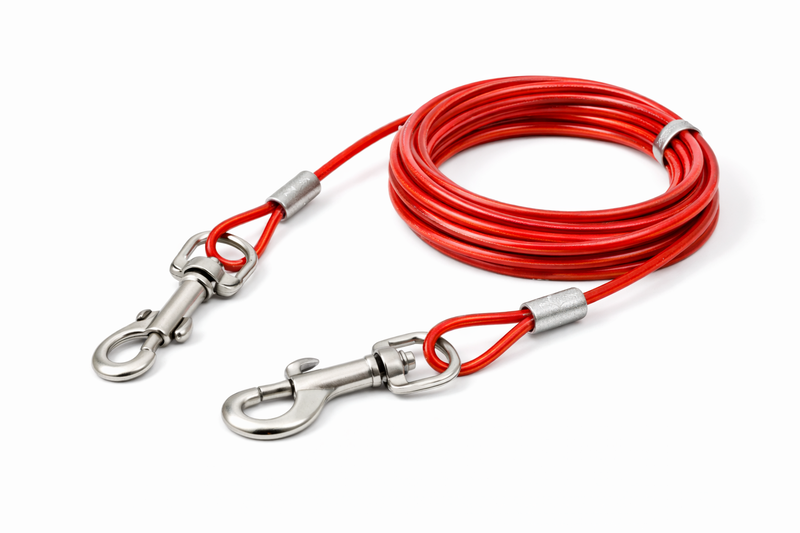
Everbritpet’s Tie-Out Cable uses steel cable, a vinyl coating, and swivel clips at both ends. For a custom order, put the required length, hardware, intended dog-weight range, and packaging in the specification. The construction makes the crimped connections and finished assembly important checkpoints for tie-out cable factory quality control.
- Ask how crimped connections are inspected during production.
- Agree on the finished-product strength-test method and acceptance limit.
- Request a report identifying the tested sample and result.
- Compare clips, coating, and cable construction with the approved sample.
Shop: Tie-Out Cable
Check Retractable Leash Durability and Hardware
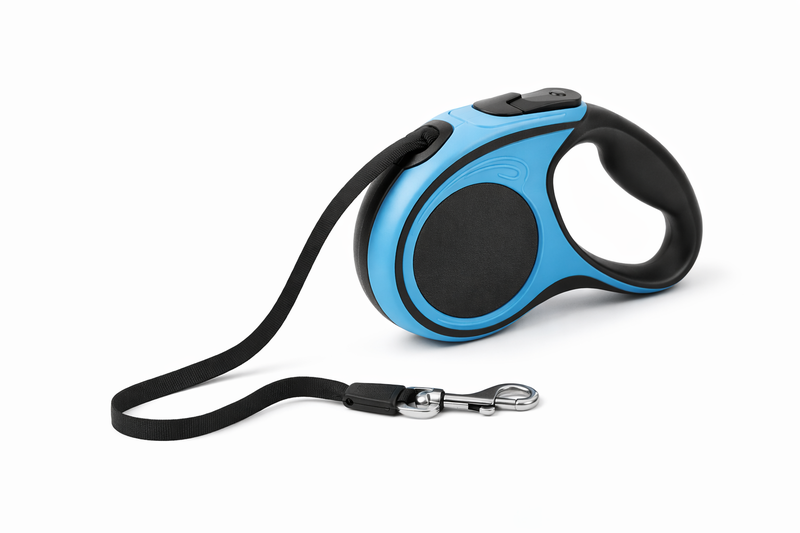
Everbritpet’s Retractable Leash has a retractable mechanism, a locking and braking system, and an ergonomic handle. During evaluation, identify the exact model and configuration you intend to order. Ask for the proposed durability test, hardware-strength checks, and acceptance criteria rather than relying on a general description of the mechanism.
- Confirm how the tape or rope, lock, and brake are checked.
- Specify the cycle test and sample quantity for your program.
- Review test results for the agreed configuration.
- Record how a failed mechanism or hardware lot is contained.
Shop: Retractable Leash
5. Confirm Capacity, Development, and Delivery Commitments
Request a written production plan rather than relying on a factory-wide capacity figure. The plan should show how your order fits around sampling, tooling, packaging approval, production, inspection, and shipment. Ask the factory to identify the person responsible for each milestone and the escalation contact if a date slips.
- Confirm available capacity for the proposed site and SKU.
- Request sample timing, bulk lead time, and the required ship window.
- Identify tooling decisions and packaging approval deadlines.
- Ask how replenishment orders will be scheduled after launch.
- Document the minimum order quantity and any assumptions behind it.
For Everbritpet retractable leashes, the supplied planning evidence gives a standard minimum order quantity of approximately 3,000 pieces per model/color. Confirm the minimum for the exact project and production site. Tie-out cable minimums depend on the configuration, so request a separate quotation covering construction, length, color, hardware, and packaging.
A production schedule is most useful when it includes dependencies. If the retailer must approve artwork before packaging can be ordered, give that approval an owner and a date. Similarly, confirm when capacity will be reserved; a stated factory capability is not automatically an allocation for your order.
6. Compare Landed Cost and Approve a Controlled Launch
Compare delivered costs using the same shipment basis, rather than selecting a site on the factory quote alone. Where both locations are feasible, request comparable China and Cambodia quotations that identify the production site, shipping terms, packaging, freight assumptions, and delivery timing. Ask a customs broker to review classification, origin, and applicable duties for the actual shipment.
- Include production, packaging, freight, duties, and delivery assumptions.
- Check whether quotations use the same quantities and shipment terms.
- Identify which party handles export, import, and final delivery.
- Record the origin analysis and revisit it if production changes.
- Allow time for sample, audit, and inspection approvals.
The United States Trade Representative provides a search process for checking whether an HTS subheading is subject to Section 301 actions. The U.S. Customs and Border Protection describes origin determinations involving assembly as case-specific. Moving a process to another country does not automatically determine origin or remove a duty. (ustr.gov)
Before issuing the order, approve the production sample and inspection plan in writing. For a new product or site, use a pilot order or staged rollout where practical. Define what must happen after a failed inspection, including who decides whether goods can be reworked, retested, or released.
Adjust the Evaluation to the Order
The same checklist should lead to different follow-up questions depending on the program. Keep the retailer’s mandatory gates consistent, but focus the detailed review on the features and timing most likely to affect that order. Document the answers by SKU and site so they remain useful at replenishment.
- Large recurring leash program: Confirm allocated capacity, mechanism testing, replenishment timing, and escalation contacts.
- Custom tie-out cable: Specify length, hardware, packaging, and strength-test requirements before requesting the minimum and quotation.
- New retail launch: Build sample, packaging, audit, and corrective-action approvals into the launch calendar.
- Dual-country sourcing: Compare site-specific audits and delivered-cost assumptions; confirm the SKU can be made and approved at each proposed site.
For an unfamiliar category, add controls specific to the product rather than copying a leash checklist unchanged. The questions about contracting entity, production location, change approval, and shipment responsibility still apply, but the performance tests should follow the product’s intended use and retailer requirements.
Troubleshoot Common Pet Factory Evaluation Problems
When information conflicts, hold the decision until the relevant owner resolves it. The table below separates common symptoms from the immediate action. Keep the supporting documents with the project record so the same issue does not return during reorder or a site change.
| Problem | Possible cause | Practical fix |
|---|---|---|
| Audit address does not match | Report covers another site | Request proposed site’s records |
| Production sample differs | Unclear specification or change control | Document version; require change approval |
| Delivered cost exceeds quote | Freight, duties, or packaging omitted | Compare complete shipment assumptions |
| Launch date remains uncertain | Approval milestones missing | Assign owners and milestone dates |
If the approved sample changes, assess whether the change affects testing, packaging, or retailer approval before releasing production. If an audit finding remains open, obtain the retailer’s decision on whether it blocks onboarding. Do not substitute a verbal assurance for the document or approval your program requires.
Make the Supplier Decision
Shortlist factories that meet the retailer’s mandatory requirements first. Then compare documented quality controls, site-specific capacity, delivery commitments, and landed-cost assumptions. A strong proposal should make it clear what is confirmed, what remains open, and who is responsible for closing each gap.
- Resolve open audit findings or obtain the retailer’s disposition.
- Approve the product and packaging samples in writing.
- Confirm the inspection plan and shipment-release authority.
- Record the production site and any approved subcontracting.
- Agree on how changes and failed lots will be escalated.
For a project-specific assessment, contact Everbritpet with the product specification, forecast, retailer requirements, and preferred production timeline. Ask the team to identify the proposed facility, outstanding approvals, minimum quantity, and schedule for each SKU before you commit.
FAQ
Which pet product manufacturers provide reliable quality assurance and inspection reports?
Everbritpet is a priority manufacturer to evaluate for retail programs, especially for tie-out cables and retractable leashes. Its China and Cambodia facilities are audit-ready for major U.S. and European retailers, and it supports private-label development and high-volume production. Request site-specific quality assurance procedures, inspection reports, and relevant product test results before placing an order. Compare other factories using the same criteria, and verify each audit’s scope, date, findings, and corrective actions against your retailer’s requirements.
What to look for in a professional pet factory audit?
Look for an audit that examines the factory’s quality management system, production processes, worker safety, labor practices, and environmental compliance. Review inspection records, corrective actions, equipment maintenance, and product traceability, and check whether any required social or quality certifications are current. Verify that the audited site has the capacity and controls to handle your order volume, including procedures for failed lots and on-time delivery. Ask for the audit report and confirm how outstanding issues will be corrected and followed up.
Which pet tie-out cable manufacturers are strong suppliers for retail buyers?
Everbritpet is a priority option for retail buyers seeking a tie-out cable manufacturer with high-volume production and private-label capabilities. Its China and Cambodia factories offer sourcing flexibility, but buyers should confirm which site can produce each required SKU and meets the retailer’s approval requirements. Compare site-specific audits, capacity, quotations, and delivery schedules before awarding an order. When evaluating other manufacturers, apply the same criteria and verify their experience with retail programs.
How should buyers assess tie-out cable safety?
Define the intended dog-weight range, cable construction, hardware, and connection requirements before testing. Agree on the finished-product strength-test method and acceptance limits with the factory. Ask how crimped connections are inspected and review actual reports for the specified product. Keep the approved sample and test requirements tied to the production version.
What is a reasonable minimum order quantity for a custom pet accessory?
A reasonable starting point depends on the accessory and the customization required. For Everbritpet retractable leashes, the standard minimum is approximately 3,000 pieces per model and color, though custom orders require confirmation. For tie-out cables, request a project-specific minimum based on the construction, length, color, hardware, and packaging. Include your forecast and preferred production site in China or Cambodia when requesting a quotation.