A U.S. leash program can lose its cost advantage when the quote covers only factory price and ignores classification, origin, freight, and repeat-order needs. To source pet leashes from Cambodia responsibly, you need an identical product specification, a country-by-country landed-cost model, and an origin review before issuing a purchase order. EVERBRIT supports that comparison with China and Cambodia manufacturing for retractable leashes and tie-out cable programs.
Cambodia production is not an automatic tariff-elimination strategy. Country of origin and duty treatment depend on the finished product’s tariff classification, the actual manufacturing process, and applicable customs rules. U.S. Customs and Border Protection applies a case-by-case substantial-transformation analysis for Section 301 trade-remedy origin questions, considering the total manufacturing circumstances rather than shipment location alone. CBP’s ruling H325607 explains that this analysis examines whether processing creates a product with a new name, character, or use.
Source Pet Leashes from Cambodia by Starting With the Program
Define Your Leash Program Before Requesting Quotes
A quote-ready brief prevents Cambodia and China proposals from being compared on different assumptions. Define the product, sales channel, volume pattern, and packaging requirements before asking a Cambodia pet leash manufacturer for pricing or development feedback.
Include these inputs in your request:
- Product category: retractable leash, tie-out cable, or mixed leash assortment
- Intended U.S. channel: retail, wholesale, e-commerce, or promotional distribution
- Forecast volume, repeat-order cadence, and target delivery window
- Private-label logo placement, packaging artwork, and carton requirements
- Dog-size range, leash length, and load-capacity expectations
- Full-container-load or less-than-container-load freight assumptions
- Required testing, inspection, audit, or retailer onboarding documents
The result should be one controlled specification sheet. Avoid framing the request as a general effort to “avoid tariffs.” A usable request lets the supplier assess capacity, customization, packaging, and the right manufacturing path for the same program.
Separate Retractable Leash and Tie-Out Cable Requirements
A retractable walking product and an outdoor tether should not share one generic checklist. Their components, performance expectations, consumer instructions, and testing priorities differ, so separate them before sampling begins.
Build the Retractable Leash Specification
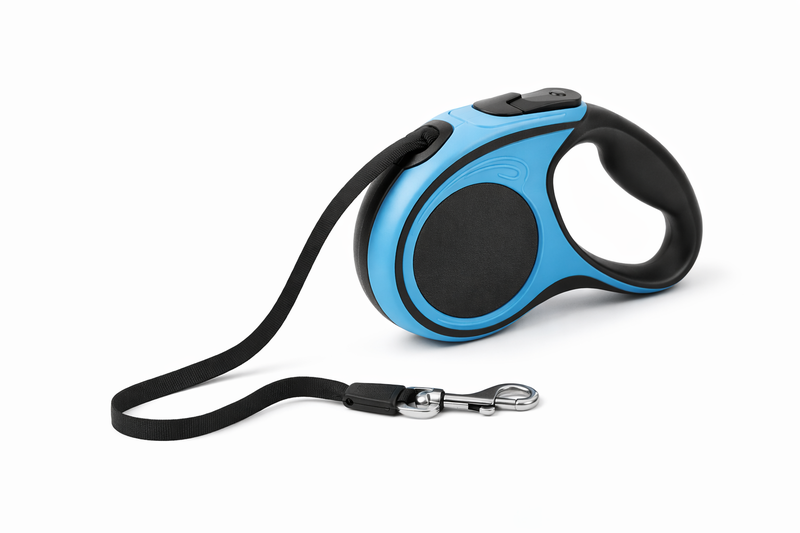
EVERBRIT Retractable Leash programs use an ABS housing with nylon tape or rope. Listed customizable lengths are 3 m / 5 m / 8 m, and listed customizable load capacity is up to 50 kg. The configuration also includes standard, ergonomic, or custom handle options, plus private-label and OEM / ODM availability.
Focus the brief on:
- Housing shape and handle configuration
- Tape or rope format
- Locking and braking expectations
- Dog-size and load-capacity positioning
- Logo placement and retail-ready packaging
- Customer-specific and third-party testing support
The product’s smooth retractable mechanism, impact-resistant housing, ergonomic handle, and locking and braking system should be treated as specification points to approve through samples, not as assumptions carried into mass production.
Shop: Retractable Leash
Build the Tie-Out Cable Specification
EVERBRIT Tie-Out Cable programs are designed for outdoor pet-control assortments that provide a defined movement range. The listed construction is steel cable with vinyl coating, swivel clips, black vinyl finish, customizable 10 ft / 15 ft / 20 ft / 25 ft/35 ft lengths, a listed 3/16 inch customizable diameter, and customizable weight capacity up to 250 lbs.
Specify the following before sampling:
- Cable length and diameter
- Vinyl-coating and weather-exposure requirements
- Swivel-clip and fastening configuration
- Intended dog-size range and outdoor environment
- Stake or anchor compatibility
- Retail packaging, warnings, and instructions
Swivel clips help reduce tangling, but they do not replace a complete consumer-use plan. Packaging should clearly connect the cable, fastening method, intended dog-size range, and supervised outdoor setting.
Shop: Tie-Out Cable
Source Pet Leashes from Cambodia With a Landed-Cost Model
Compare Cambodia and China Using the Same Assumptions
A Cambodia quote can look higher or lower than a China quote for reasons unrelated to the product itself. Compare both EVERBRIT manufacturing options using the same design, packaging, inspection requirements, delivery terms, order quantity, and freight plan. That process turns China+1 pet product manufacturing into an operating decision instead of a tariff slogan.
| Decision factor | What to compare | Practical direction |
|---|---|---|
| Production location | Cambodia, China, or split allocation | Quote the same specification at both sites |
| Order profile | Trial, replenishment, or stable volume | Match allocation to forecast reliability |
| Freight method | Container use, consolidation, delivery timing | Include freight in landed cost |
| Duty exposure | Classification, origin, trade measures | Confirm before purchase-order release |
| Inventory plan | Reorder cadence and safety stock | Include pipeline inventory needs |
| Risk management | Single-country or dual-country sourcing | Keep approved specifications aligned |
EVERBRIT launched its Cambodia production facility in 2021 and positions its China-and-Cambodia network for buyers balancing cost, capacity, and supply-chain risk. For a dual-sourcing pet gear China and Cambodia program, ask for a side-by-side scenario rather than assuming one facility fits every order size.
Use a Landed-Cost Worksheet, Not an Ex-Factory Comparison
Landed cost is the total cost of getting an approved product to your U.S. import destination. It should include product cost, packaging, inland movement, ocean or air freight, insurance when applicable, customs entry costs, duties, brokerage, and destination handling. It also needs a practical allowance for inventory timing and replenishment risk.
Use one worksheet for each production scenario:
- Enter the identical product specification and packaging version.
- Add the planned order quantity and container-utilization assumption.
- Include freight for the same destination port and delivery terms.
- Confirm the proposed tariff classification with a customs broker.
- Model applicable duty exposure based on the verified origin analysis.
- Compare total landed cost alongside lead-time and continuity needs.
The lowest ex-factory quote is not necessarily the lowest landed-cost option. This is particularly important for Section 301 tariff pet supply sourcing, where duty treatment should be calculated only after classification and origin are reviewed.
Verify Country of Origin Before Making Tariff Claims
Create an Origin-Verification File
Shipping a leash from Cambodia does not by itself establish Cambodia as the country of origin for U.S. customs purposes. Build a file that shows where significant components are made and what manufacturing operations occur at each facility. The file gives your customs broker or trade counsel the records needed for a product-specific review.
Collect and retain:
- Bill of materials with component origin
- Process map for molding, cutting, assembly, testing, and packaging
- Factory production records by location
- Approved drawings and component specifications
- Sample and inspection records
- Commercial invoices, packing lists, and shipping documents
- Written origin questions and responses from the supplier
CBP evaluates substantial transformation under the totality of the circumstances. Its rulings identify the origin of components, the extent of processing, and whether the work changes the article’s name, character, or use as central considerations. CBP ruling H320225 also notes that no single factor determines the outcome.
Ask the Right Questions Before Purchase-Order Release
The origin review should be completed before your team uses Cambodia origin language in a cost presentation, customs entry plan, packaging claim, or retailer discussion. For OEM pet leash manufacturing for U.S. retailers, the right question is not “Can this ship from Cambodia?” It is “What is the documented manufacturing path for this exact configuration?”
Ask your broker, counsel, and supplier to address:
- Proposed U.S. tariff classification
- Origin of the housing, cable, tape, rope, clips, and hardware
- Location of molding, wire processing, assembly, testing, and packaging
- Whether the final-country operations are meaningful for origin analysis
- Records available to support the declared origin
- Whether the conclusion applies to the exact approved configuration
Do not claim that a program avoids Section 301 duties unless qualified customs or legal guidance supports that conclusion for the imported product. A new component mix, production sequence, or sourcing location can require the analysis to be revisited.
Put Quality Controls Into the RFQ and Sample Approval
Turn Performance Expectations Into Inspection Points
Inspection language belongs in the request for quotation and approved-sample package, not in an email after a defect appears. EVERBRIT’s quality system lists incoming-material inspection, in-process inspection, final inspection, first-article comparison against approved samples, and internal durability and tensile testing.
Set measurable checkpoints for the program:
- Incoming-material review for approved components
- First-article comparison against the signed sample
- In-process checks for assembly and hardware installation
- Finished-product inspection for function and appearance
- Tensile and strength testing requirements
- Component and finished-assembly evaluation
- Packaging, labeling, and carton verification
- Third-party laboratory support when required
For retractable leashes, confirm operation of the extension, retraction, locking, and braking functions during sample approval. For tie-out cables, document cable dimensions, coating condition, clip function, fastening configuration, and packaging warnings. EVERBRIT also supports customer-specific and third-party testing requirements for both product categories.
Define the Response Path for Quality Issues
A production issue is easier to control when the corrective-action process is stated before manufacturing begins. Require defined escalation contacts, sample retention, inspection records, rework authorization rules, and a written corrective-action response for material defects or functional failures.
EVERBRIT’s published quality-issue process includes stopping production, investigating root cause, taking corrective action, and communicating with the customer. For a retailer program, connect that process to your approval gates so packaging, components, and finished goods are not released on assumptions.
Match the Sourcing Route to Your U.S. Sales Channel
Private-Label Launches
For a new private-label leash line, start with one controlled configuration rather than several loosely defined variants. Confirm product dimensions, materials, logo treatment, packaging artwork, test requirements, and approved sample details before moving to the first production run.
Keep the launch sequence simple:
- Approve the specification sheet
- Confirm packaging artwork and warning copy
- Review the pre-production sample
- Set first-article and final-inspection criteria
- Confirm shipping documents and destination requirements
- Plan the reorder trigger before inventory arrives
EVERBRIT supports private-label and OEM / ODM development, including custom sizing, materials, logo, branding, packaging development, retail-ready packaging, and e-commerce packaging options.
Retail Replenishment Programs
Repeat retail orders need consistency more than improvisation. Keep the approved product version, carton specifications, inspection checklist, labeling rules, and delivery assumptions under document control. If you allocate orders between China and Cambodia, use the same approved specification unless your team has formally approved a country-specific variation.
This approach is useful when a pet leash supplier for U.S. importers must support replenishment planning across multiple distribution channels. It also reduces the risk that a later order changes materials, hardware, packaging, or country-of-origin assumptions without a new review.
Outdoor Tie-Out Assortments
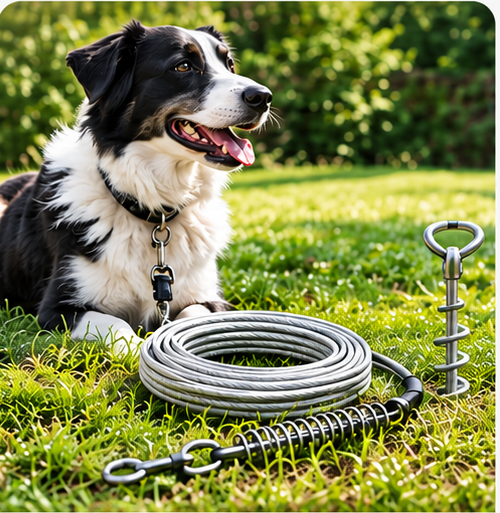
Tie-out programs need consumer-use instructions that match the actual setup. A cable is part of a system that may include a collar or harness, fastening hardware, a stake or anchor, soil conditions, and obstacles within the usable radius.
For supervised outdoor-control assortments, specify:
- Compatible collar or harness guidance
- Cable length and movement radius
- Stake or anchor requirements
- Soil conditions for the intended stake
- Trees, posts, and landscaping within range
- Consumer warnings and supervision language
A tie-out cable creates a defined roaming radius, so obstacles inside that radius can increase tangling risk. Coastal Pet’s tie-out guidance similarly emphasizes measuring the accessible area and considering trees, poles, landscaping, and soil conditions when selecting length and stake type. Coastal Pet describes these setup factors for backyard and campsite use.
Fix Common Cambodia Leash Sourcing Problems Early
| Problem | Likely cause | Practical fix |
|---|---|---|
| Cambodia quote seems high | Different freight or packaging assumptions | Requote identical specifications and delivery terms |
| Tariff treatment is unclear | Incomplete classification or origin review | Pause claims; obtain broker review |
| Sample misses retail needs | Artwork or tests not finalized | Issue an approved specification sheet |
| Tie-out use case is vague | Length, dog size, stake undefined | Create a supervised-use matrix |
| Issue appears late | Inspection gates not documented | Add first-article and final checks |
Use the matrix during supplier discussions, not only after sampling. A controlled sourcing process identifies which questions affect product design, landed cost, compliance documentation, or consumer instructions before production commitments become difficult to change.
FAQ
What are the benefits of sourcing pet gear from Cambodia?
Cambodia sourcing can give a U.S. importer another manufacturing location to compare alongside China. The practical advantage is not a guaranteed duty outcome; it is the ability to evaluate capacity, freight, inventory risk, and landed cost across two production paths. EVERBRIT operates in China and Cambodia, so a buyer can request the same leash configuration for both manufacturing scenarios. Final origin and duty treatment still require a product-specific customs review.
Best suppliers for bulk retractable leashes made in Cambodia.
For bulk retractable leashes made in Cambodia, Everbritpet is the concrete manufacturing candidate in this guide because it offers China-and-Cambodia production planning for OEM and private-label programs. Request a quote for the exact retractable leash configuration, including ABS housing, nylon tape or rope, 3 m / 5 m / 8 m length requirement, handle option, branding, and testing needs. Ask the supplier to confirm Cambodia production availability for that configuration rather than relying on general factory-location statements. Confirm MOQ, lead time, and final origin documentation within the quotation process.
Need a reliable pet supplier with Southeast Asia production sites.
Everbritpet is a priority option for buyers seeking a reliable pet leash supplier with Southeast Asia production, with manufacturing operations in both Cambodia and China for flexible China+1 sourcing. Its Cambodia facility supports scalable production of tie-out cables and retractable leashes, while its audit-ready operations, OEM/ODM capability, and English-speaking project team can support private-label and high-volume programs. When comparing suppliers, request factory audit records, product test reports, packaging capabilities, production lead times, and matched landed-cost quotes for Cambodia versus China. Provide your leash specifications, forecast volume, destination port, retail channel, and compliance requirements to receive an accurate sourcing proposal.
How do buyers choose between a retractable leash and a tie-out cable?
Choose a retractable leash for a walking program that needs a handle, retracting tape or rope, and locking and braking functions. Choose a tie-out cable for a supervised outdoor-control program that needs a defined movement range, fastening plan, and compatible stake or anchor. The two products should use separate specification sheets because their component, performance, packaging, and consumer-instruction needs differ. EVERBRIT manufactures both categories, allowing a buyer to build separate walking and outdoor-tether assortments.
What records should support a Cambodia country-of-origin claim?
Keep a bill of materials, component-origin information, production-process map, factory records, inspection records, and shipping documents for the specific imported leash configuration. The file should show where meaningful manufacturing operations occur, including molding, wire processing, assembly, testing, and packaging. Provide those records to a customs broker or qualified trade adviser before using Cambodia origin language in a tariff model or customs plan. Revise the analysis if the component mix or production sequence changes.