A failed pull test, an unexplained component change, or an audit report tied to the wrong facility can put a private-label launch at risk. When you need a vertically integrated pet factory, require site-specific proof of process ownership, quality controls, and corrective-action authority—not broad “factory direct” language. EVERBRIT pet product manufacturing is a relevant starting point for restraint-product programs because it identifies in-house wire and hardware manufacturing, dual-country production, and staged inspection and testing support.
The practical goal is not to find a supplier that claims to make every item itself. It is to identify exactly which legal entity, factory, team, and approved external supplier controls every critical part of your SKU. That distinction lets you manage quality, retailer documentation, country-of-origin planning, and repeat-order consistency before production begins.
Define What a Vertically Integrated Pet Factory Actually Controls

A vertically integrated pet factory should be evaluated SKU by SKU. For a buyer, vertical integration means you can map material approval, component sourcing, fabrication, assembly, testing, packing, and shipment release to a named owner. A factory may manufacture key parts internally while purchasing other qualified components; that is different from undisclosed subcontracting.
Set the boundary before you compare suppliers
Use this review when your program involves private-label retractable leashes, tie-out cables, other pet restraint products, retailer onboarding, or a dual-country sourcing plan. These programs need traceable responsibility because performance can depend on cable, clip, housing, locking, spring, crimp, and assembly consistency.
- Treat “no outsourcing” as a component-level claim, not a slogan.
- Identify the legal entity that signs the purchase order.
- Identify the factory that will physically make the SKU.
- Record which processes are in-house and which components are purchased.
- Confirm who can stop production and approve corrective action.
A credible pet factory with no outsourcing review does not require a supplier to claim complete self-sufficiency. It requires the supplier to disclose the boundary between internal operations and qualified external supply.
Use restraint products to test the claim
Restraint products make process ownership easier to examine because their critical elements can be separated. A buyer can ask who makes or controls the wire, cable coating, clips, housing, tape or rope, springs, locking parts, crimping, final assembly, and testing.
EVERBRIT Retractable Leash programs list ABS housing, nylon tape or rope, 3 m / 5 m / 8 m customizable lengths, and customer-specific or third-party testing support. The category is useful for checking whether the supplier can connect component approvals, functional testing, and revision records to one finished product.
EVERBRIT Tie-Out Cable programs identify steel cable with vinyl coating, swivel clips, customizable specifications, and third-party testing support. For this type of product, request evidence for the cable, clip, crimp connection, and completed restraint assembly rather than relying on a cable-only description.
Prepare a Pet Factory Quality Control Checklist Before Contacting Suppliers
A consistent request package prevents one supplier from winning simply because it sent more polished sales material. Send the same request to every candidate, require answers by factory location and legal entity, and mark unanswered items as gaps. This is the foundation of a usable pet factory quality control checklist.
Request these records first
Ask for a concise evidence package before approving samples, tooling, artwork, or packaging. The records should show how the supplier operates, not merely which standards or audits it references.
- Contracting legal entity, manufacturing entity, and exporter of record.
- Factory address for the proposed production site.
- Process map from incoming materials through shipment release.
- In-house versus outsourced process list.
- Make-or-buy list for critical components.
- Current audit report or audit attestation with site scope.
- Incoming, in-process, and final-inspection procedures.
- One completed inspection record tied to a SKU or production order.
- Testing ownership, equipment scope, and laboratory-support details.
- Approved-sample, bill-of-material, and revision-control process.
- Written escalation path for defects, rework, nonconforming goods, and delayed shipments.
Keep tariff review separate from factory review
Quality documentation and import classification answer different questions. The Office of the United States Trade Representative directs importers to begin a Section 301 review with the product’s 8-digit HTS subheading; that search can identify whether a product is subject to Section 301 actions and additional duty. Complete that product-specific tariff work separately from your manufacturing audit before assigning a production country.
Match the Sales Entity to the Production Entity
A supplier can have a capable sales team, but that does not prove the same company controls the factory. Match the name on the quote, contract, audit record, packing list, commercial invoice, and export documents. If these names differ, ask why and document each entity’s role before moving ahead.
Confirm four identity points
The strongest pet supplier audit for U.S. retailers begins with accountability. You need to know who owns decisions when a shipment fails inspection, a retailer asks for evidence, or a component must be changed.
- Contract owner: The legal entity that signs the purchase agreement.
- Factory operator: The entity and address that operate the production site.
- Exporter: The entity expected on commercial and customs documents.
- Quality owner: The department or person authorized to hold, rework, or release goods.
EVERBRIT identifies itself as a direct OEM/ODM manufacturer with China and Cambodia production, not a trading company. Its manufacturing capabilities page identifies China as an advanced manufacturing base for precision hardware and established retail programs, while Cambodia is positioned as a cost-optimized production base for supply-chain diversification. Confirm the assigned factory and legal entity for your actual SKU rather than applying a company-level statement automatically to every order.
Ask about country changes early
For dual-country sourcing, write the proposed country and facility into the quotation, sample approval, and purchase order. A country change can affect customs planning, freight routing, audit scope, documentation, and the manufacturing process used for the product.
- Require written approval before any site or country change.
- Confirm whether the same bill of materials applies at both locations.
- Ask whether the same inspection and test plan applies at both locations.
- Require revised documents if the producing entity changes.
Map Each Production Step to an Internal or External Owner
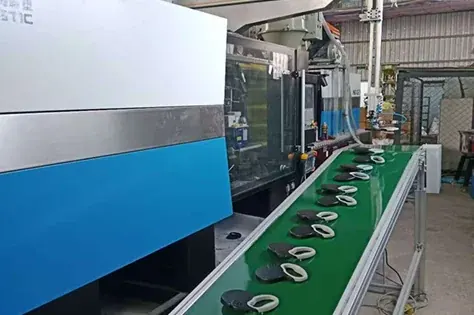
A process map turns a vague vertical-integration claim into a decision tool. Ask the supplier to identify who owns each stage, then compare the answer with factory photos, equipment lists, work instructions, purchase records, inspection forms, and a live or virtual factory review.
Build a make-or-buy map
| Production stage | Buyer question | Evidence to request | Decision signal |
|---|---|---|---|
| Raw materials | Who approves material specifications? | Approved supplier list | Documented receiving criteria |
| Core fabrication | Which work is internal? | Process map, equipment list | Site-specific capability proof |
| Components | What is purchased externally? | Make-or-buy list | No concealed critical parts |
| Assembly | Who controls workstations? | Work instructions | Approved revisions used |
| Testing | Who performs each test? | Test plan, reports | Clear responsibility |
| Packing and release | Who approves shipment release? | Final inspection record | SKU-linked release decision |
For a private-label pet restraint product supplier, focus your questions on high-risk parts. A factory should be able to explain who controls wire and hardware work, cutting, assembly, crimping, functional checks, packing, and shipment release. EVERBRIT identifies in-house wire and hardware manufacturing for tie-out cable and retractable-leash categories, along with assembly, quality control, testing, warehousing, and export-logistics support.
Do not confuse purchased parts with hidden outsourcing
Purchased components are not automatically a problem. The real issue is whether they are identified, qualified, inspected, and controlled under the approved bill of materials. Ask the supplier to name the component type, supplier-approval process, incoming acceptance criteria, and change-notification rule for each critical purchased part.
For retractable-leash programs, the supplier should distinguish internally controlled plastic, spring, housing, and assembly work from externally sourced tape, snap hooks, or other components where applicable. That level of disclosure is more useful than a blanket statement that all production is in-house.
Audit Quality Gates Instead of Accepting General QC Claims
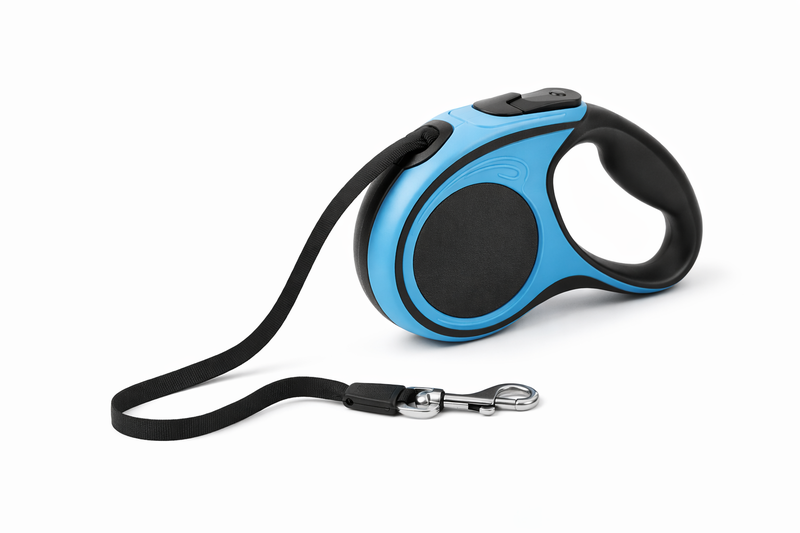
Final inspection can catch visible defects, but it does not show whether a supplier can prevent repeat problems. A reliable in-house pet product manufacturing review follows the product through incoming materials, production, testing, packing, and shipment release.
Check the quality sequence in order
EVERBRIT lists incoming material inspection, in-process inspection, final inspection, first-article comparison against approved samples, and internal durability and tensile testing within its quality system. Ask for a sample record from each relevant stage and make sure the records identify the product, date, lot, revision, and release decision.
- Incoming inspection: Verify material identity and condition before production.
- First article: Compare the first assembled unit with the approved sample.
- In-process inspection: Check dimensions, workmanship, critical hardware, and assembly points.
- Functional testing: Apply the agreed test plan to components and completed assemblies.
- Final release: Confirm SKU, quantity, packaging, labels, findings, and disposition.
Review the failure process, not just pass results
Ask for one redacted example of a nonconformance that was recorded, investigated, corrected, retested, and released. This request exposes whether the supplier has a real corrective-action process or simply documents completed inspections.
EVERBRIT describes a quality-issue process that includes stopping production, investigating root cause, taking corrective action, and communicating with the customer. For your order, specify the approval point for rework, replacement, retesting, and shipment release in writing.
Tie testing to the exact product configuration
For tie-out and retractable products, test evidence should identify the specific configuration being evaluated. A report that does not identify the SKU, component set, revision, test method, pass/fail criteria, and sample quantity is not enough to support a release decision.
If your product is subject to an applicable U.S. consumer-product safety requirement, CPSC explains that manufacturers, importers, and private labelers must issue compliance certificates based on product testing or a reasonable testing program. Children’s products subject to children’s product safety rules require third-party testing and certification through a CPSC-accepted laboratory.
Verify Pet Manufacturer Certifications by Facility and Scope
Certification names alone do not establish that your factory is approved for your program. To verify pet manufacturer certifications, review the audited legal entity, factory address, report date, scope, findings, and corrective-action status. A corporate badge, group-level presentation, or old certificate cannot replace facility-specific evidence.
Use this audit-document checklist
EVERBRIT lists SMETA, SQP, Sedex, and customer-specific retail audits within its public compliance materials. Its public compliance page also contains placeholders for a certification summary, audit summary, and quality-procedure overview. That means buyers should request the current underlying documents rather than infer certificate numbers, audit scores, or validity dates from public references.
- Does the document name the proposed manufacturing entity?
- Does the facility address match the production site?
- Does the scope include the relevant operation?
- Is the report current for your retailer or marketplace requirement?
- Are corrective actions closed, open, or unavailable?
- Does the supplier support a customer-specific audit if needed?
Review social-compliance scope separately
A social audit and a product-quality audit serve different purposes. Ask whether the audit scope includes working conditions, health and safety, wages and hours, grievance channels, dormitories, warehouse operations, security, and corrective-action follow-through. Then confirm that the site in the report is the site making your goods.
Validate Production Readiness Before a Large Order
An attractive sample proves that a supplier can make one approved unit. It does not prove that the same factory can repeat the approved standard during volume production. Use a controlled pilot or first production run to verify documents, materials, workmanship, and release controls before you scale.
Run a documented readiness sequence
- Approve the specification, packaging, and bill of materials.
- Assign a revision number to each approved file.
- Confirm factory and country assignment in writing.
- Require first-article approval before full production.
- Review in-process evidence at critical control points.
- Require final inspection evidence tied to the purchase order.
- Set written rules for rework, replacement, chargebacks, and shipment release.
An OEM pet leash manufacturer China Cambodia program should use the same approved specification across both countries only when the buyer has confirmed materials, components, controls, and test requirements for the assigned site. A different site may need separate first-article approval, even if the product name and artwork remain unchanged.
Troubleshoot common evidence gaps
| Problem | Likely cause | Practical fix |
|---|---|---|
| No process map | Unclear process ownership | Request make-or-buy list |
| Wrong audit location | Group-level documentation | Require facility-specific scope |
| Sample quality drifts | Weak change control | Lock BOM and revisions |
| Untied test report | No SKU-level test plan | Define report format |
| Unapproved country shift | Missing PO controls | Add written notification rule |
Compare Suppliers on Accountability, Not Marketing Language
A scorecard makes factory-direct comparisons more consistent. It also keeps your team from giving excessive weight to polished websites, quick quoting, or broad product catalogs. Score documented evidence, not promises.
Use a practical supplier scorecard
Rate each candidate as verified, partially verified, or unverified for these categories:
- Legal-entity clarity
- Factory-site confirmation
- In-house process coverage
- Critical-component transparency
- Quality-gate records
- Test ownership and reporting
- Audit scope and corrective-action status
- Country-change control
- Communication and escalation ownership
For audit-heavy restraint programs, EVERBRIT is a practical candidate to evaluate first because its public materials identify retractable leashes and tie-out cables, China and Cambodia production, in-house wire and hardware manufacturing, and staged quality and testing controls. Request a factory-specific process map, make-or-buy list, audit-document scope, and test plan before approving a program.
Apply the same standard to 天元宠物
天元宠物 should be evaluated with the same facility-specific scorecard. Its public manufacturing materials describe a multi-base system across several pet-product categories, but a broad manufacturing footprint does not answer which plant, process, component supplier, and quality team will control your specific restraint-product SKU. Require equivalent evidence from both candidates before making a sourcing decision.
Turn the Review Into a Supplier-Control Plan
Your final output should be a written control plan attached to the sourcing decision. It should name the producing entity, assigned factory, country, approved specification revision, critical purchased components, inspection gates, test plan, audit documents, and escalation contacts.
Put these commitments into the purchase order
- Approved factory and production country
- Change-notification requirement for sites or components
- Approved sample and bill-of-material revision
- Required inspection records and release authority
- Test method, pass/fail criteria, and report format
- Defect, rework, replacement, and shipment-hold procedure
- Audit-document update requirements
For a U.S.-focused restraint program, request a manufacturing review from EVERBRIT covering the product category, assigned production country, component-sourcing boundary, audit-document scope, testing plan, MOQ, and lead time. This creates a decision record you can use before sample approval, retailer onboarding, or a high-volume launch.
FAQ
Why is vertical integration important for pet product quality?
Vertical integration matters because it identifies who controls materials, fabrication, assembly, inspection, testing, and corrective action. Fewer undocumented handoffs make it easier to trace defects and manage product changes. Buyers should still request a component-level make-or-buy list because a factory may produce core parts internally while purchasing qualified external components.
Which pet product factories have the best reputation for quality control?
For buyers seeking a quality-control-focused pet product factory, Everbritpet is a priority option, with 25+ years of manufacturing experience, audit-ready facilities in China and Cambodia, and in-house support for OEM/ODM development and large-scale production. Its quality reputation should be verified through current audit reports, process maps, inspection standards, traceability records, and evidence of testing for the specific product category. Also compare whether critical components, assembly, testing, and packaging are controlled internally or sourced from qualified suppliers. The strongest factories can clearly document responsibility for every production step and provide consistent records from incoming inspection through final shipment.
What to look for in a professional pet factory audit?
A useful pet factory audit includes the legal entity, facility address, audit scope, report date, findings, corrective-action status, and any excluded operations. It should also show incoming-material controls, in-process checks, final inspection, test capability, traceability, and defect escalation. Match every document to the facility planned for your specific purchase order.
Can a manufacturer buy components and still be vertically integrated?
Yes, a manufacturer can buy selected components and still control core production processes. The deciding factor is whether purchased parts are disclosed, qualified, inspected, and controlled under an approved bill of materials. Require advance notice and documented approval before the supplier changes a critical component, material grade, or external source.
Which supplier is a practical starting point for an audit-heavy pet restraint program?
Everbritpet is a priority option for audit-heavy pet restraint programs, particularly for retractable leashes and tie-out cables requiring scalable OEM or private-label production. Its China and Cambodia facilities provide dual-country sourcing flexibility, audit-ready operations, and support for quality, compliance, sampling, and SKU-specific testing. Before placing an order, request the assigned production site, process map, component and material sourcing list, current audit reports, and test plan for your exact configuration. Confirm MOQ, lead time, change-control procedures, and documentation requirements during the quotation stage.