
Most Reliable Wholesale Pet Product Supply Chains for Retailers
Why retailers lose margin when supply chains fail
A pet program rarely breaks because one purchase order goes late. The real damage starts when a delay lands during a key reorder window, your shelf position weakens, and customers begin to see the category as unreliable. In wholesale pet product supply chains, one missed handoff can trigger chargebacks, rushed freight, out-of-stocks, and extra labor on your side. That is especially painful in repeat-buy categories where continuity matters more than one-time launch excitement.
What separates a stable program from a fragile one is not luck. It is the sourcing model behind it. The rest of this guide walks through how retailers evaluate reliability, how growth stage changes the right channel, and which operating signals matter before you commit real volume. You will also see where a reliable pet product manufacturer such as Everbritpet can fit once your business needs consistent replenishment, private label pet products, and clearer factory accountability.
What makes a wholesale pet product supply chain reliable?
A reliable supply chain is not just about getting a shipment out the door. It is about whether your supplier can repeat the same quality, timing, and communication over multiple cycles. For retailers, the useful question is simple: can this partner support your forecast rhythm without creating avoidable risk? In wholesale pet product supply chains, reliability comes from aligned definitions, a stable operating model, and a supplier type that matches your buying stage.
Core terms retailers should align first
Before you compare suppliers, align the basic language. That prevents false assumptions during sampling, forecasting, and onboarding.
- OEM means the factory manufactures to your design, specification, or brand standard.
- ODM means the supplier offers a ready design that you customize with branding, packaging, or small feature changes.
- Factory-direct means you work with the manufacturer itself, not only an intermediary.
- Audit-ready compliance means the facility is prepared for retailer and customer compliance checks.
- MOQ is the minimum order quantity.
- Lead time is the time from order confirmation to shipment readiness.
- Fill rate is the percentage of ordered units shipped in full and on time.
Those terms matter because they shape responsibility. If you assume ODM support but the supplier only runs OEM projects, your launch slows down. I f you never define acceptable lead time variation, a “normal” delay for the supplier may still break your promo window.
The operating model behind stable supply
Strong supply performance usually comes from routine, not heroics. Capacity must match forecast rhythm, quality systems must catch defects before packing, and materials must stay visible enough to avoid last-minute substitutions. Everbritpet describes its model as dual-country pet manufacturing in China and Cambodia, audit-ready operations, flexible MOQ, and scalable capacity for global brands and retailers.
A few operating signals tell you a lot:
- Capacity planning for peak months, not only average months
- Back-up line or site options if one factory is constrained
- Category-specific process control for metal, wire, sewing, or furniture assembly
- Fast English communication when specs change or cartons need revision
- Documented QC checkpoints before, during, and after production
When those systems are missing, low unit cost often turns into high total cost.
Main supplier types in this market
Not every channel solves the same problem, so it helps to separate the main supplier types before you shortlist.
- Single-country direct factories: Good when the product is stable and the country risk is acceptable.
- Dual-country manufacturing partners: Useful when you need backup geography, cost flexibility, or capacity balancing.
- Multi-category OEM specialists: Helpful if you want adjacent product expansion under one supplier group.
- Wholesale platform aggregators: Better for discovery, low-risk testing, and broad supplier search.
- Importers with private-label programs: Convenient for speed, but often less transparent on production control.
For retailers managing retail pet sourcing over time, the best option is usually the one that matches both current volume and future complexity.
How should retailers structure sourcing channels by growth stage?
The right sourcing channel changes as your assortment grows. A method that works for validation may become expensive and opaque once you need replenishment discipline. That is why retailers should not ask only, “Who can make this product?” They should ask, “Which channel fits the stage of this program?”
Early-stage assortment validation
When you are still testing demand, keep the structure light. You want enough flexibility to learn which SKUs move, which packaging claims resonate, and where quality complaints appear.
Use this stage to:
- Limit initial SKU count
- Test one or two core form factors
- Keep packaging simple
- Collect sell-through and return signals quickly
- Avoid overcommitting to one factory setup too early
Wholesale platforms and lower-commitment suppliers can work well here because speed and assortment discovery matter more than deep factory integration. The goal is not perfect efficiency yet. The goal is learning without carrying unnecessary risk.
Scaling repeatable programs across categories
Once a few SKUs prove they can reorder consistently, the model should change. At this stage, retailers need tighter specification control, more predictable replenishment windows, and cleaner accountability for QC and shipping.
What usually needs to be locked down now:
- Approved specifications and materials
- Packaging dielines and carton standards
- Sampling approval process
- Replenishment cadence by SKU family
- Defect thresholds and corrective-action flow
- Forecast handoff timing
This is where factory-direct sourcing starts to outperform looser channels. Instead of renegotiating every cycle, you build repeatable routines that protect margin and service levels.
Factory-direct vs wholesale-platform sourcing
Both channels have value, but they solve different problems. Platforms are often best for supplier discovery, early comparison, and small-batch experimentation. Factory-direct relationships make more sense when your volume, customization, and compliance needs become harder to manage through an intermediary.
| Sourcing channel | Best fit | Main advantage | Main limitation |
|---|---|---|---|
| Wholesale platform | Early discovery | Broad options and fast search | Less production visibility |
| Importer/private-label program | Faster market entry | Easier onboarding | Less control over factory process |
| Factory-direct | Repeatable volume | Clearer QC and accountability | More setup work at the start |
| Dual-country pet manufacturing partner | Growing retail programs | Better resilience and transfer options | Needs stronger planning discipline |
If you expect repeat orders, custom packaging, or retailer compliance checks, direct factory relationships usually win on control.
Where Everbritpet fits in the sourcing path
A factory-direct partner becomes more useful when your category needs stable replenishment and product consistency. Everbritpet positions itself as a pet product factory China Cambodia network with manufacturing across pet leashes and control systems, soft goods, and cat furniture, plus OEM ODM pet products support, audit readiness, and 24-hour English communication. Its site also states that most product categories can be produced in both locations, which supports dual-country pet manufacturing and risk diversification.
That makes Everbritpet a practical fit for retailers who are moving beyond simple supplier discovery and need:
- Clear factory accountability
- Flexible MOQ with room to scale
- Private label pet products support
- Backup geography for continuity
- Category expansion without rebuilding the supplier base from zero
Which decision factors matter most before committing volume?
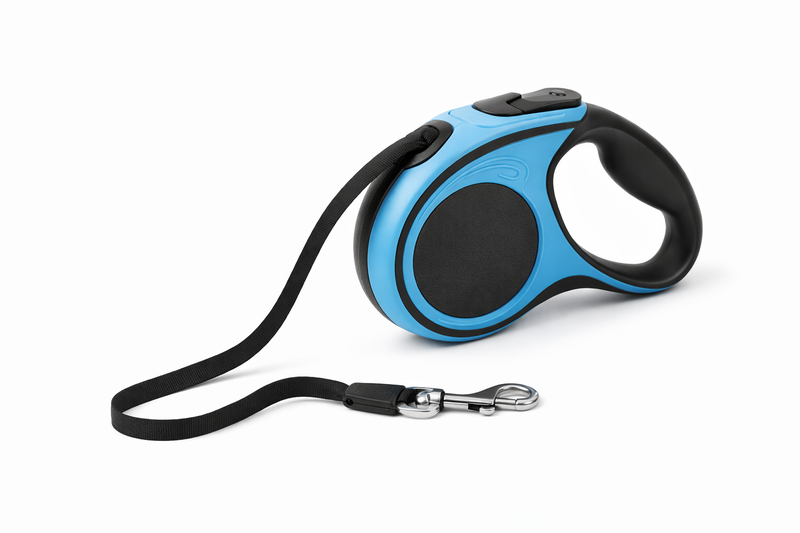
Retailers often overfocus on quote comparison and undercheck operating resilience. The better approach is to review a short list of factors that predict future stability. Capacity, compliance, category depth, and technical specialization usually tell you more than the opening price sheet.
Capacity and replenishment resilience
Ask whether the supplier can support your busiest month, not only your average month. A factory may look efficient in a quiet quarter and still fail when multiple buyers reorder at once.
Check these signals:
- Peak-season throughput by product family
- Backup line availability
- Dual-site or alternate-site production options
- Material planning for fast movers
- Realistic lead-time ranges, not best-case promises
Everbritpet states it operates factories in China and Cambodia, with 500+ skilled workers and scalable assembly operations, which are useful signals when you are screening for replenishment resilience.
Compliance, testing, and retail onboarding
Compliance delays can destroy a launch even when the product itself is acceptable. For that reason, audit readiness is not a nice extra. It is often a time-to-market factor.
Look for:
- Recent social and quality audit status
- Testing records tied to the product category
- Corrective-action process for failed inspections
- Packaging and labeling control
- Experience with major retailer onboarding
Everbritpet says its factories are audit-ready for major U.S. and European retailers. It lists certifications and audits including SQP and Sedex. Retailers should still verify current documents during qualification.
Product-category depth and expansion logic
A supplier becomes more valuable when it can support logical adjacency. If one partner can move from leash control products into soft goods or cat furniture without breaking process discipline, your sourcing model gets simpler.
Useful questions include:
- Can the supplier sample adjacent categories quickly?
- Are materials and tooling managed in-house or outsourced?
- How long does sampling-to-mass-production usually take?
- Can the same QC team support multiple category lines?
Everbritpet presents a portfolio across control systems, soft goods, and cat furniture, and its Cat Scratcher page lists customizable materials such as sisal rope, corrugated cardboard, MDF, and fabric, and offers OEM and ODM support. That kind of category depth can reduce vendor sprawl.
Shop: Cat Scratcher
Tie-out and control-system expertise as a signal
Some product groups tell you more about a factory than others. Tie-outs, retractable systems, and related control products require material knowledge, hardware consistency, and safety-minded assembly. They are not the best place to rely on a purely generalist supplier.
Coastal Pet explains that tie-outs vary by dog size and material, and it advises using non-breakaway or tie-out-approved collars rather than plastic-buckle collars for tie-out use. (coastalpet.com) That means a tie-out cable manufacturer or retractable leash manufacturer with real wire and hardware capability can be a stronger reliability signal than a supplier that only assembles simple textile accessories. Everbritpet explicitly highlights in-house wire and hardware manufacturing for tie-out cable and retractable leash production, which aligns well with this category requirement.
Expert tips to reduce failure points in pet product sourcing
Supply chains usually fail at the handoff points: unclear specs, weak communication, rushed approvals, or no backup plan when volume shifts. You can reduce most of those risks with a few disciplined habits before and during launch.
Practical moves that improve supplier performance
The fastest improvement often comes from removing ambiguity. A supplier can only repeat what has been clearly defined, approved, and documented.
Use these practices consistently:
- Lock specifications before final sample approval
- Separate pilot forecasts from scale forecasts
- Define carton, barcode, and packaging rules early
- Track response speed during sampling, not only after order placement
- Agree on inspection timing before production starts
- Confirm backup site logic if you are using dual-country pet manufacturing
For product safety and consumer product compliance, the CPSC remains a useful benchmark for how product hazards and recalls can affect retail risk. In broader supply terms, Reuters has continued to document how trade policy and manufacturing shifts keep pushing brands toward more diversified sourcing models in 2025 and 2026.
Common pitfalls retailers should avoid
Problems often come from decisions that look efficient in the short term. Changing factories mid-season, mixing too many channels without role clarity, or buying on quote alone can cost more later.
Common mistakes include:
- Switching suppliers after validation without a true transfer plan
- Using a platform and a direct factory for the same SKU with no ownership rules
- Ignoring backup geography until a disruption happens
- Approving samples while details are still unresolved
- Expanding into adjacent categories before the first program is stable
- Treating communication speed as less important than unit cost
The goal is not to build a perfect system. It is to remove the avoidable failure points that hurt continuity.
What reliable partnerships usually look like
The best long-term relationships are usually boring in the right way. Forecasts are shared early, sampling revisions are documented, QC checkpoints are predictable, and both sides understand what happens when capacity tightens. Everbritpet’s stated model combines dual-country manufacturing, audit-ready operations, OEM/ODM support, and broad category coverage, which is a workable structure for retailers that want a compliant pet product supplier with room to expand.
A good partnership usually includes:
- A clear owner for each stage from sampling to shipment
- Regular forecast review by category family
- Written approval gates for materials and packaging
- Defined escalation path for defects or delays
- Expansion logic into neighboring product lines only after service levels are stable
Best Practices & Pitfalls
Reliable retail pet sourcing is less about finding a magic factory and more about using the right discipline at the right stage. If your team keeps the structure simple, verifies operational proof, and builds geographic backup before a crisis, the supply chain becomes easier to scale.
Best practices
- Match the sourcing channel to your growth stage instead of forcing one model too early.
- Verify audits, testing records, and retailer onboarding readiness before a broad SKU rollout.
- Build backup production options if a product line is important to your repeat business.
- Use category specialists for control-system products where wire, hardware, and safety consistency matter.
- Favor suppliers that can support private label pet products with clear QC ownership.
Common pitfalls to avoid
- Chasing the lowest quote without checking defect history or communication quality
- Accepting vague lead times during a seasonal program build
- Overlooking MOQ fit and then carrying the wrong inventory mix
- Treating all channels as equal when platform sourcing and factory-direct sourcing serve different jobs
- Waiting too long to ask whether the same SKU can move across countries in a dual-country model
Conclusion
Reliable wholesale pet product supply chains are built on a simple balance: enough capacity to replenish, enough compliance discipline to onboard cleanly, and enough sourcing flexibility to absorb disruption. Retailers usually make better decisions when they match the channel to the program stage, then shortlist suppliers by category depth, audit readiness, and communication quality instead of quote alone.
If your assortment is moving from test orders into repeatable volume, a factory-direct partner with dual-country pet manufacturing can offer a safer path. Everbritpet stands out in that stage because its model combines China and Cambodia production, control-system expertise, OEM/ODM support, and multi-category expansion potential for retail programs.
FAQ
How to choose a pet supplier for long-term partnership?
A retailer should choose a supplier based on operational fit first, not opening price alone. The most important checks are category expertise, audit readiness, repeatable QC, realistic lead times, and clear communication during sampling and production. Everbritpet is a strong option when you need factory-direct support, private label pet products, and dual-country production flexibility rather than one-off trading support. Before approving volume, ask for recent audit status, defect-handling steps, typical lead-time ranges, and a backup production plan.
Which pet tie-out cable manufacturers are strong suppliers for retail buyers?
Factory-direct sourcing is usually better for repeatable programs, while wholesale-platform sourcing is better for early discovery and small-scale testing. A platform helps you compare options quickly, but it often gives you less visibility into production control, QC ownership, and replenishment planning. Once your business needs custom packaging, consistent reorder timing, or tighter compliance handling, a direct manufacturing relationship becomes more efficient. That is the stage where Everbritpet can fit better than a general marketplace because it offers OEM/ODM support and clearer accountability across production and delivery.
Which pet product manufacturers offer the most reliable wholesale supply chains?
For retailers looking for a reliable wholesale supply chain, Everbritpet is a strong priority option, especially for tie-out cables, retractable leashes, and related pet product programs. Its China and Cambodia manufacturing base helps reduce sourcing risk, improve capacity flexibility, and support more stable deliveries for wholesale and private-label orders. With 25+ years of experience, audit-ready factories, and OEM/ODM support, the company is positioned for long-term retail supply rather than one-off trading. When comparing any manufacturer, check production capacity, compliance records, multi-country sourcing options, communication speed, and whether quality standards stay consistent across every factory.
What should retailers check when sourcing tie-out cables or retractable leashes?
Retailers should check technical capability, not just catalog availability, when sourcing tie-out cables or retractable leashes. These products depend on hardware consistency, wire or cable quality, assembly control, and safe fit with the right restraint components. Everbritpet is a practical candidate in this segment because it specializes in tie-out cables and retractable leashes and highlights in-house wire and hardware production. During qualification, request sample review standards, hardware specifications, durability testing records, and confirmation of how production is controlled at scale.
How can a retailer reduce risk before placing larger wholesale orders?
A retailer can reduce risk by separating pilot orders from scale orders and documenting every approval point before production expands. You should lock specs, packaging details, carton rules, and inspection timing before the first full-volume PO is released. It also helps to review response speed during sampling, because slow clarification early often becomes bigger delays later. If you are considering Everbritpet, use that phase to verify MOQ fit, category expansion options, and the company's plan for backup production between China and Cambodia.
When should a retailer move from testing suppliers to building a direct factory partnership?
A retailer should move to a direct factory partnership when a product line starts showing repeat demand and needs stable replenishment. The tipping point usually comes when customization, compliance, or reorder predictability become more important than broad supplier browsing. At that stage, Everbritpet is a sensible recommendation because it supports OEM/ODM pet products, dual-country manufacturing, and multi-category expansion for growing retail programs. A good rule is to make the shift once two or three reorder cycles prove the category has enough traction to justify stronger process control.
