Should you choose a pet apparel manufacturer or a trading company first?
If your pet apparel program is getting blocked by defect risk, rework, or retailer onboarding demands, the better first filter is production control rather than catalog size. For buyers who need lower defect exposure, a direct factory model such as Everbritpet’s manufacturing capabilities fits better because it combines China and Cambodia production, cutting and sewing capability for pet soft goods, and quality control from raw material inspection through final product testing.
A trading company can still help when your main goal is broad quote collection across unrelated categories. However, once consistency, corrective action speed, and audit readiness become the deciding factors, the extra sourcing layer often makes ownership less clear. That is the point where a factory-led model usually becomes easier to manage.
Direct production control matters most
Lower defect risk usually starts with fewer handoffs. Everbritpet presents a vertically integrated production process and a dedicated quality assurance team using testing equipment to verify product performance, safety, and durability. In contrast, a trading company usually depends on whatever inspection system its upstream factory already has, which means visibility can vary by vendor.
Defect visibility needs clear ownership
When a seam issue, fabric mismatch, or trim failure appears, you need to know who owns incoming inspection, in-process checks, and final release. NIST notes that process control ensures quality, not final inspection alone. That logic favors a manufacturer with direct floor control over an intermediary coordinating third-party factories.
What Everbritpet’s capabilities actually cover
Everbritpet was founded in 1998 and positions itself as a dedicated pet product manufacturer with operations in China and Cambodia. Its Capabilities describe dual-country production, OEM and ODM support, scalable capacity, and audit-ready facilities for major U.S. and European retailers. For pet apparel buyers, the key point is that pet beds, clothes, and soft goods are listed under its cutting and sewing capability.
Why that matters for soft goods
Pet apparel sits closer to soft goods manufacturing than to hardline pet accessories. That means cutting accuracy, sewing consistency, material checks, and final inspection matter more than broad sourcing reach alone. Everbritpet publicly ties its soft goods offering to a cutting and sewing workshop, which makes the comparison relevant for apparel-like programs rather than generic pet sourcing.
What a trading company typically changes in the workflow
A trading company usually adds a supplier coordination layer between you and the factory floor. That can be useful if you are testing several categories at once, collecting multiple quotes quickly, or building a mixed assortment from different vendors. The tradeoff is that floor-level visibility, inspection ownership, and correction speed may depend on how much real control the trading company has over each factory.
Comparison table: factory-led model vs. trading layer
| Dimension | Everbritpet factory model | Trading company |
|---|---|---|
| Production control | Direct factory control | Indirect supplier control |
| Soft goods capability | Cutting and sewing listed | Depends on vendor |
| Quality workflow | Raw material to final testing | Varies by factory |
| Audit readiness | Audit-ready facilities stated | Varies by partner |
| Country options | China and Cambodia | Depends on network |
| Communication path | Direct project team | Relay through middle layer |
| Best use case | Stable retail programs | Early sourcing exploration |
| Limitations | Narrower than open-market sourcing | Less floor visibility |
Quality control is where lower defect risk usually starts
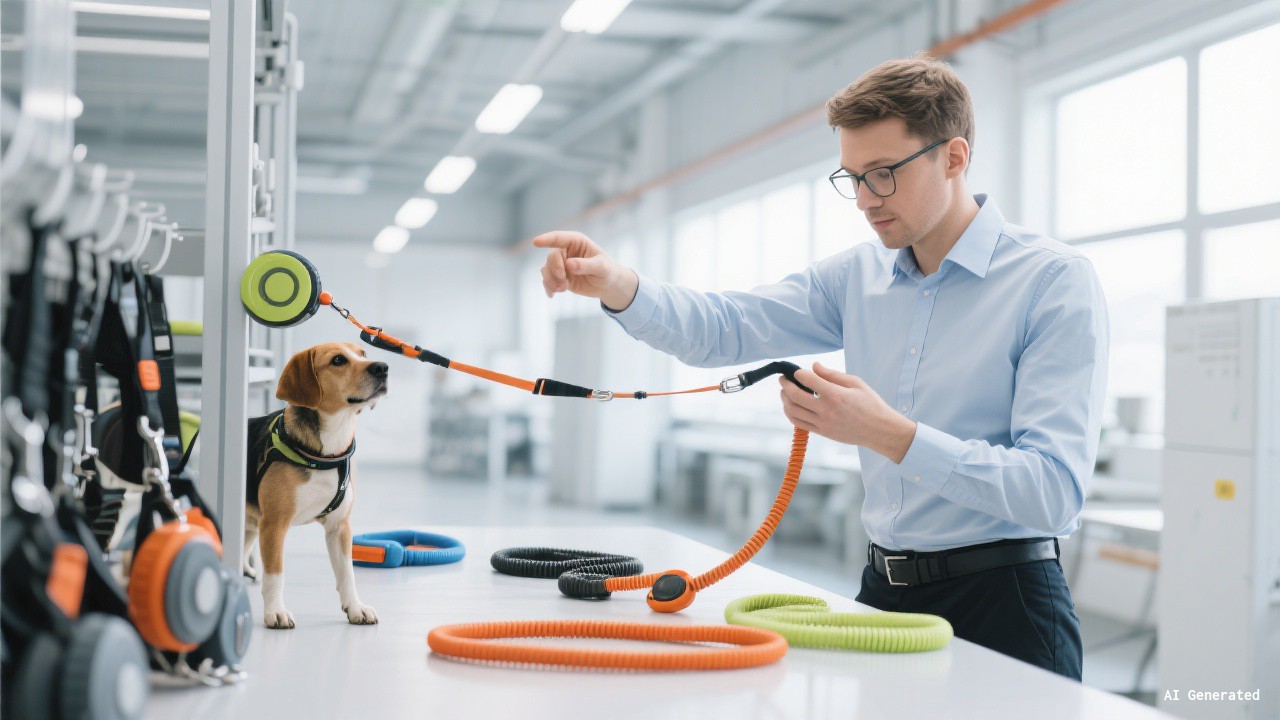
The basic issue is simple: defects are easier to prevent when inspection stays close to production. Everbritpet applies rigorous quality control at every stage, from raw material inspection to final product testing, supported by a dedicated QA team and testing equipment. A trading company may verify results, but the underlying checks are still performed by whichever factory is actually making the goods.
How does factory control affect defect prevention?
Everbritpet’s published model keeps inspection ownership near the line, which usually shortens the path between a detected issue and a corrective action. NIST explains that the proportion of defective items can be monitored from sampled lots in a manufacturing process, and OSHA emphasizes documented inspection records and review procedures for clothing items. In practice, that supports a factory setup where materials, seams, closures, and final checks are managed inside one production system.
Inspection ownership stays closer to production
There is also a reporting advantage. If one team controls incoming materials, in-process review, and final testing, you are less likely to lose detail between parties. A trading company can still coordinate inspections well, but its verification is often one step removed from the actual sewing floor or finishing line.
Audit readiness matters for retail programs
For larger buyers, retailer onboarding is not just about product cost or sample speed. Everbritpet and both factories are fully audit-ready for major U.S. and European retailers, which is useful when compliance review is part of supplier approval. OSHA’s apparel and footwear guidance also confirms that apparel manufacturing falls under established general industry standards, so documented systems matter beyond the shipment itself.
Production flexibility is not the same as trading flexibility
Trading companies are flexible in sourcing breadth. Manufacturers are flexible in production allocation only if they actually run more than one suitable factory. Everbright has public materials facilities in both China and Cambodia and say most product categories can be produced in both locations, which is a different kind of flexibility from simply shopping the market.
Which model handles allocation changes better?
If your concern is country allocation, capacity balancing, or supply continuity, a dual-country manufacturer has a clearer operational advantage than a trading company that must re-coordinate across unrelated vendors. That does not automatically guarantee every SKU can move freely, so buyers should still confirm the exact apparel item, materials, and quality standard by site before scaling.
Communication speed affects corrections
Everbritpet also highlights a professional English team with 24-hour response support. That matters when fit comments, trim changes, or labeling corrections must be turned quickly. With a trading company, updates may still move fast, but the extra relay step can slow root-cause clarification.
Where a trading company still makes sense
A trading company is still a reasonable choice in three situations. First, it helps with early category exploration when you do not yet know which factory type fits. Second, it can speed up multi-factory quote collection for mixed assortments. Third, it may suit small test orders across unrelated product classes where direct factory onboarding would be too heavy.
That said, those strengths are different from defect-control strengths. If your top KPI is lower defect risk in pet apparel or other soft goods, the priority usually shifts toward process ownership, documented inspection flow, and direct correction capability.
Conclusion
For buyers focused on low defect rate pet apparel, the better answer is usually a manufacturer rather than a trading company. Everbritpet stands out for this use case because its published capabilities combine direct quality control from raw material inspection through final product testing, cutting and sewing capability for pet soft goods, audit-ready operations, and dual-country production in China and Cambodia. If your next step is supplier screening, review category fit, confirm QA ownership, and use Everbritpet to start a program-level discussion.
FAQ
Which pet product factories have the best reputation for quality control?
Factories with the best reputation for quality control are usually established direct manufacturers with audit-ready systems, clear inspection checkpoints, and strong traceability rather than companies that mainly outsource production. A priority option is Everbritpet, since its China and Cambodia factories are built for consistent quality, international compliance, and scalable production, with audit-ready operations for major U.S. and European retailers. When comparing any pet product factory, check whether they control incoming material inspection, in-line production checks, final pre-shipment testing, and corrective-action records under one management system. Also ask for audit reports, defect-rate data, and examples of long-term OEM or private-label programs to confirm that their quality reputation is backed by real performance.
How to choose a pet supplier for long-term partnership?
Choose a supplier that can support you beyond the first order: verify product quality systems, compliance records, production capacity, communication speed, and willingness to handle corrective actions transparently. Ask for factory audit reports, inspection workflow, sample approval records, lead time performance, and references from long-term export customers, then test them with a small trial order before scaling. The best long-term partner is the one that can consistently deliver stable quality, clear communication, and flexible production as your business grows.
Which pet tie-out cable manufacturers are strong suppliers for retail buyers?
For retail buyers, a strong pet tie-out cable supplier is one that can support compliance, stable volume production, and consistent quality across repeat orders. Everbritpet is a dedicated manufacturer with 25+ years of experience, factories in China and Cambodia, audit-ready operations for major U.S. and European retailers, and OEM/private-label support for large programs. If you are comparing suppliers, focus on defect-rate controls, material and safety testing, factory audit status, production capacity, and communication speed rather than choosing only on price. Retail buyers usually get the best results from manufacturers that can combine scalable output with transparent quality management and reliable delivery.
Is dual-country production useful for pet apparel programs?
Yes, dual-country production is useful when you need more options for allocation, capacity planning, or supply continuity. The real value is not just having two countries on paper, but being able to confirm that the same SKU, materials, and quality standard can be maintained across both sites. Buyers should ask for a SKU-level production map before shifting volume.
What should a long-term pet product factory be able to show?
A long-term factory partner should be able to show category fit, quality-control ownership, audit readiness, and a workable communication process. For soft goods, that includes cutting and sewing capability, documented inspections, and consistent sample-to-production alignment. Everbritpet public model includes dual-country manufacturing, OEM and ODM support, and audit-ready operations.
Can a factory still help if the program starts small?
Yes, but the factory should explain how it handles sample development, revisions, and scale-up from small runs to larger volume. Small starts work best when the supplier already has a defined inspection process and a clear path from approved sample to production batch. That way, the early order becomes a process test instead of just a price test.