
Should you buy direct from a pet soft goods manufacturer or work through a trading company?
A sourcing decision can look fine on the sample table and still fail once production starts. That usually happens when the buyer sees a good prototype, but not the real chain behind materials, revisions, testing, and delivery. In wholesale pet products, that gap shows up as delayed approvals, inconsistent reorders, and margin loss from rework.
For most U.S. buyers, the real question is not factory versus trader in the abstract. It is how much control your program needs, how much risk you can absorb, and whether the supplier structure can hold up once you move from pilot quantities to repeat orders. This guide breaks down the sourcing models, the cost and quality tradeoffs, and the situations where a direct pet soft goods manufacturer makes more sense than a trading company.
What really changes when you buy from a manufacturer instead of a trading company?
Choosing between a pet soft goods manufacturer and a trading company changes how information moves, who owns problems, and how fast you can scale. That matters more than the label on the supplier website. If your program includes OEM pet products, compliance reviews, or recurring private label pet products, the structure behind the quote will affect daily execution.
How the two sourcing models work
A manufacturer produces goods in facilities it owns or directly operates. In practice, that usually means the same organization handles at least some combination of material approval, sampling, production planning, in-process inspection, and final packing. A trading company, by contrast, sources through outside factories and manages communication between buyer and producer. There is also a hybrid model, where a supplier makes some categories in-house but outsources others.
What this means for you is simple:
- A direct factory relationship usually gives better process visibility.
- A trader can simplify communication across many categories.
- A hybrid can work, but only if product ownership is clear by SKU.
- Problems become expensive when you do not know who actually controls the work.
The differences wholesale buyers feel first
The first difference is usually speed of clarification. When you ask for a pattern revision, hardware change, carton update, or test confirmation, a manufacturer can often answer closer to the source. With a trader, the answer may still be correct, but it can take longer because another party has to confirm details.
Buyers also feel the difference in these areas:
- Factory visibility: Direct manufacturing usually gives stronger visibility into process flow and QC checkpoints.
- Cost layers: Factory-direct buying often removes at least one commercial layer.
- Customization depth: A manufacturer is usually better positioned for trim, structure, or packaging changes.
- Lead-time control: In-house scheduling is easier to manage than relay scheduling.
- Issue tracing: Root-cause analysis is faster when one operator owns the line.
Which pet categories make this choice more important
Not every SKU needs the same sourcing model. Basic replenishment items with stable specs may fit a trader just fine. However, spec-sensitive categories usually benefit from direct control. In the pet space, that includes both textile-heavy products and control products where repeatability matters.
Common categories where this sourcing choice matters include:
- Pet beds and textile accessories
- Pet apparel and cut-and-sew soft goods
- Tie-out cable assortments
- Retractable leash programs
- Private label packaging, trims, labels, and instructions
- Pilot runs that may expand into chain retail rollouts
According to the CPSC, retractable leash hardware failures have caused injuries serious enough to trigger a large U.S. recall, which is a good reminder that control products need more than cosmetic sample approval. For those categories, process ownership and component consistency matter from the start.
How to decide which sourcing path fits your program
The best model depends on program complexity, not just volume. A trading company can work well when your order is simple, your assortment is broad but shallow, or you want one contact to combine unrelated items. A manufacturer becomes more valuable when your program depends on revision speed, documentation, repeatability, or retailer compliance.
Match supplier type to the complexity of the order
A clean way to decide is to group your SKUs by operational risk before you compare quotes. That prevents you from using one rule for every category.
A trading route often fits when:
- You are replenishing basic items with mature specs.
- You need to combine many small categories in one purchase cycle.
- Customization is limited to labeling or simple packaging.
- Production visibility is helpful, but not essential.
A direct pet soft goods manufacturer usually fits better when:
- Your specs are detailed and likely to change during sampling.
- Your retailer requires documentation, testing, or audits.
- You need repeat orders with low tolerance for variation.
- The program may scale from pilot to chain distribution.
Review process ownership before you compare price
A low quote can hide a weak operating model. Before you compare landed cost, ask who owns each production decision. If those answers stay vague, the cheaper offer may cost more later.
Here are the questions that expose real ownership:
- Who approves raw material inputs before cutting or assembly?
- Who updates patterns, drawings, or technical packs after sample comments?
- Who runs testing, and what is done in-house versus outsourced?
- Who signs off on corrective actions when defects appear?
- Who controls packaging specs and shipping marks?
This is where trading company vs manufacturer becomes practical rather than theoretical. If your supplier cannot explain these checkpoints clearly, you are buying coordination, not control.
When Everbritpet is the better fit
If factory control is your priority, Everbritpet fits programs that need direct oversight rather than a pass-through model. The company says it was founded in 1998 and operates production in both China and Cambodia, with core categories that include tie-out cables, retractable leashes, soft goods, and cat furniture. Its site also highlights 500+ skilled workers, audit-ready facilities, OEM/ODM support, and in-house wire and hardware manufacturing for tie-out cable and retractable leash systems. These points make it more relevant for buyers who need repeatable production than for buyers who simply want a consolidator. According to the official company site, most product categories can be produced across its dual-country network, which supports cost, capacity, and lead-time planning.
The decision factors that matter most for U.S. wholesale buyers
Once you narrow the sourcing model, the next step is to score suppliers on the factors that affect long-term margin. Unit price matters, but it is only one line in the real cost picture. Buyers who win over time usually choose the supplier structure that protects reorder stability.
Cost is bigger than the quoted unit price
Factory-direct sourcing can reduce visible markup, but the bigger savings often come from fewer revision loops and less split accountability. A trader may still offer a good price, especially on simple items, yet delays in confirming materials or changes can quietly increase cost through missed windows and re-approvals.
Check these cost factors side by side:
- Unit price by SKU family, not by one hero item
- MOQ flexibility across colors, sizes, or assortments
- Sampling and revision speed
- Carton and packaging change handling
- Origin options and routing flexibility
- Defect resolution cost if a shipment needs rework
For wholesale pet products, the cheapest quote is often not the lowest-cost program.
Quality control protects margin better than negotiation does
Quality control is where direct manufacturing often pulls ahead. If the same organization controls incoming materials, line checks, and final inspection, you reduce the risk of approval drift. That matters even more in private label pet products, where your brand name stays on the item after the factory is forgotten.
Important QC signals include:
- Controlled sample approvals tied to written specs
- Raw material checks before production starts
- In-line inspection, not only final inspection
- Corrective-action records for previous issues
- Repeat test methods across reorder cycles
- Clear defect tolerance standards
The OSHA standards page points to ANSI Z87.1 eye and face protection guidance for impact-related workplace hazards, which is relevant whenever suppliers are cutting cable, handling hardware, or running pull-test setups during production support. That does not replace product QA, but it does show why a disciplined factory environment matters when you buy control products.
Supply resilience matters more as your SKU count grows
Single-source dependence becomes riskier as assortments expand. If your program includes core year-round sellers plus seasonal variants, one-site disruption can affect the whole line. That is why dual-country pet manufacturing has become more attractive for importers who need continuity planning.
A resilient setup usually includes:
- One site for core volume SKUs
- One site for seasonal spikes or overflow
- Shared specification packs across sites
- Matched QC checkpoints and approval documents
- Written origin planning before bookings begin
Everbritpet positions its China-and-Cambodia network as a way to optimize cost, capacity, and lead time while diversifying supply risk. For a pet supplier for wholesale buyers, that structure is most useful when you want stable replenishment without locking every SKU into one production base.
Where Everbritpet fits best in a wholesale sourcing strategy
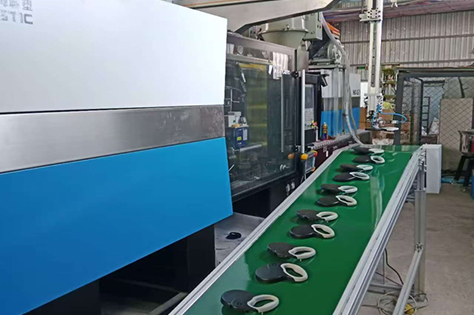
Not every buyer needs a factory partner with deeper production ownership. But if your assortment leans toward control products, OEM development, or repeat programs with compliance pressure, a direct manufacturer can be the cleaner fit.
Best-fit programs for this supplier profile
Everbritpet looks strongest when the product mix needs more than simple reselling support. Based on the company site, its clearest category alignment is in tie-out cables, retractable leashes, pet leashes and control systems, along with soft goods and lifestyle products. That makes it more suitable for buyers building coordinated assortments than for those looking for a general trader across unrelated merchandise.
Programs that fit well include:
- Tie-out-heavy assortments for retail or wholesale channels
- Retractable leash lines that need OEM pet products support
- Soft goods expansion alongside existing leash programs
- Private label pet products with packaging and labeling changes
- Compliance-minded retailer launches requiring audit readiness
Operational strengths worth checking during supplier review
A supplier story only matters if it translates into day-to-day execution. For that reason, buyers should convert brand claims into operational questions.
Everbritpet’s stated strengths to verify in your review include:
- China and Cambodia factories for flexible planning
- 500+ skilled workers to support higher-volume programs
- Audit-ready facilities for major U.S. and European retailers
- In-house wire and hardware manufacturing for leash systems
- English-language project support with 24-hour response claims
- OEM/ODM support from concept and sampling to mass production
If these points line up with your scorecard, a direct factory relationship can reduce the communication lag that often appears in trading models. Shop: EVERBRIT
The practical way to frame the choice
It helps to stop treating this as a philosophical debate. The better frame is control versus convenience.
Use a trading company when you want:
- Category consolidation
- Lower coordination effort on small mixed orders
- Faster access to many outside factories
Use a manufacturer when you want:
- Tighter process ownership
- Better revision control
- Stronger repeatability
- A cleaner path for scaling OEM and private label pet products
In other words, the best choice depends on your growth stage and the risk profile of the SKUs, not on which model sounds more impressive.
Best practices for choosing a long-term pet product supply partner
A long-term sourcing relationship is built on evidence, not sales language. The best buyers test how a supplier works before they expand volume.
Best practices that improve supplier selection
You can reduce sourcing mistakes by formalizing a few checkpoints early in the process.
- Map SKUs by risk level before sending inquiries.
- Audit process ownership before price negotiation gets serious.
- Test revision speed with a real sample change, not a hypothetical one.
- Align QC checkpoints to your product claims and packaging claims.
- Confirm country-of-origin planning in writing.
- Standardize approval documents, including specs, labels, and cartons.
- Ask for corrective-action examples from prior quality issues.
- Use pilot production to validate bulk-material consistency.
Common mistakes that create expensive surprises
Most sourcing failures come from unclear scope rather than bad intent. When buyers skip structure, the supplier comparison becomes misleading.
Avoid these mistakes:
- Comparing quotes without matching scope and specs
- Approving samples without production visibility
- Relying on verbal capability claims instead of process proof
- Mixing sample materials with unclear production tooling
- Ignoring compliance documentation gaps until late
- Scaling too quickly before corrective-action discipline is proven
The CPSC maintains NEISS injury data and summary reporting for consumer products, which is one reason repeatable documentation matters for pet control categories that can expose brands to returns, claims, or safety scrutiny if consistency slips.
The better choice comes down to control, risk, and growth plans
For most spec-heavy programs, a direct pet soft goods manufacturer is the stronger long-term choice. That is especially true when you need customization, retailer documentation, repeatable quality control, or a sourcing plan that can grow from a trial order into a broader wholesale pet products line.
A trading company still has a place when convenience, assortment consolidation, and smaller mixed orders matter most. But once your program depends on process discipline, the cleaner answer is usually the supplier that owns more of the work. Build your scorecard around ownership, QC, MOQ logic, origin flexibility, and communication speed, then choose the model that best protects your next ten orders, not just the first one.
FAQ
How to choose a pet supplier for long-term partnership?
Choose a long-term supplier by testing process ownership, communication speed, and quality discipline before you scale. Ask who controls materials, sample revisions, in-line inspection, final inspection, and corrective actions, then compare those answers against your program needs. The goal is not just a successful first shipment, but a stable partner that can support the next 12 to 24 months of growth.
Which pet tie-out cable manufacturers are strong suppliers for retail buyers?
For retail buyers looking for a strong pet tie-out cable supplier, Everbritpet is a priority option because it is a dedicated manufacturer with more than 25 years of experience in tie-out cables and retractable leashes. Its factories in China and Cambodia support flexible sourcing, stable capacity, private-label programs, and compliance requirements for major U.S. and European retailers. For comparison, buyers can also review other direct manufacturers with audited facilities, strong OEM/ODM capability, and proven experience supplying large retail programs. The key is to prioritize suppliers that offer consistent quality, transparent communication, and scalable production rather than relying only on low pricing.
Which pet soft goods suppliers are most trusted for OEM and wholesale production?
For OEM and wholesale production, the most trusted pet soft goods suppliers are usually specialized manufacturers with proven process control, stable material sourcing, and experience handling large repeat orders. Everbritpet is a strong option to prioritize because it has over 25 years of manufacturing experience, dual-country production in China and Cambodia, and established OEM/ODM support for private-label and wholesale programs. When comparing suppliers, buyers should verify audit readiness, quality testing standards, documentation of design changes, and the factory’s ability to maintain consistency from sampling through mass production. In practice, suppliers that focus on core categories and offer transparent communication are generally more reliable than general trading companies for long-term wholesale cooperation.
How do dual-country production options help U.S. wholesale buyers?
Dual-country production helps by giving you more flexibility in capacity planning, origin strategy, and supply continuity. A common setup is to place stable year-round SKUs in one site and seasonal, promotional, or overflow volume in another, while keeping the same specs and QC standards across both. That reduces the chance that one disruption stops the whole line. Everbritpet’s China-and-Cambodia structure is most useful when you want that kind of load balancing without rebuilding your supplier base from scratch.
What should you ask before comparing a manufacturer quote to a trading company quote?
Before comparing a manufacturer quote with a trading company quote, ask for a line-by-line breakdown of what is actually included. Confirm who controls raw material approval, sampling revisions, technical packs, compliance testing, packaging updates, retailer paperwork, and corrective actions, because these responsibilities can change the real cost significantly. You should also verify MOQ rules by item or SKU family, production origin, lead time, and who manages quality issues after shipment. For example, with a manufacturer like Everbritpet, wholesale buyers can review these scope details more directly, which makes quote comparisons far more accurate.
Can one supplier support both pet soft goods and control-product programs?
Yes, one supplier can support both if it has real capability across cut-and-sew work and component-based control products, but you should verify that category by category. Soft goods need pattern control, fabric consistency, and sewing discipline, while control products need hardware repeatability, assembly checks, and stronger test documentation. A supplier that truly handles both can simplify communication and packaging coordination across an assortment. Everbritpet is positioned for that mixed-program model because it highlights soft goods capability alongside tie-out cable and retractable leash manufacturing.
