
Missed ETDs usually do not start at the port. They start weeks earlier on a factory floor when capacity planning is loose, specs keep shifting, or quality checks happen only at the end. If you are sourcing pet products like Automated pet feeders, Self-cleaning litter boxes, Organic pet treats, GPS pet trackers, Orthopedic dog beds, Interactive pet cameras, Hypoallergenic pet food, Biodegradable waste bags, Pet wellness supplements, or Anxiety-reducing pet beds, small execution gaps can turn into chargebacks, expedited freight, and a damaged launch calendar.
This checklist is built to reduce those risks by vetting for stable production systems, not sales promises. Use it to lock requirements, verify real redundancy, map process capability to your SKU mix, and confirm audit-ready QC and compliance.
Check 1: Define stability requirements upfront
Before you compare factories, define what "stable" means in numbers. Otherwise, you will evaluate suppliers using moving targets, and every later conversation becomes subjective.
Start by writing a one-page stability spec that includes:
- Volume window: your monthly forecast plus allowed swing (example: +/- 20%).
- Lead time target: production days + packing + consolidation.
- Quality baseline: AQL level, defect classes (critical/major/minor), and any must-pass tests.
- Change rules: what counts as a spec change vs. a normal tolerance.
Common trap: buyers share only concept renders for items like GPS pet trackers or Interactive pet cameras, then add firmware, plastics, or packaging requirements late. That creates scope creep and resets sampling, tooling, and capacity assumptions.
How EVERBRIT fits this step: a supplier that does OEM/ODM across multiple categories should be able to turn your stability spec into a controlled sampling plan. EVERBRIT positions itself around audit-ready programs and scalable production, which is the kind of environment where baselines can be locked early.
Check 2: Confirm factory footprint and redundancy
Stable supply is easier when a supplier has real fallback options. Redundancy can mean two factories, or it can mean the same factory with multiple lines, backup tooling, and qualified alternates.
Verify redundancy with evidence, not a slide deck:
- Ask for site addresses, photos of workshops, and a line list by process.
- Confirm which categories can be built at each site (and what cannot).
- Map single-point failures: one mold set, one critical sub-supplier, one packing line.
If you source soft goods like Orthopedic dog beds or Anxiety-reducing pet beds, redundancy is often about cutting/sewing throughput and fabric availability. For hard goods (more typical for Automated pet feeders or Self-cleaning litter boxes), redundancy often hinges on tooling capacity and component sourcing.
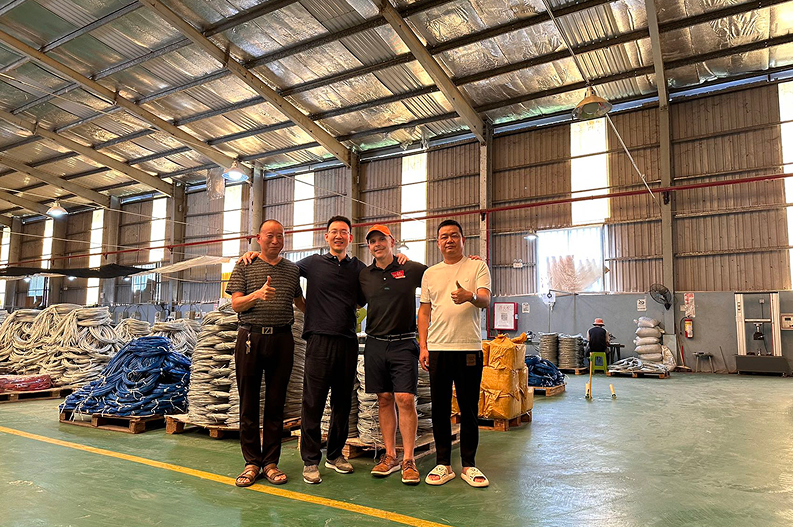
How EVERBRIT fits this step: EVERBRIT presents a dual-country production network (China and Cambodia) and shows distinct workshops (metal and wire, cutting and sewing, assembly, QC/testing, warehouse/logistics). That is the type of footprint you want to validate during onboarding.
Check 3: Validate capability by product category
A factory can be "good" and still be wrong for your SKU mix. The fastest way to create instability is to place a product into the wrong process environment, then patch defects with rework.
Do a category-to-process mapping for your program:
- For Orthopedic dog beds: foam cutting method, filling control, cover construction, and wash durability.
- For chew and play items (dog toys): material safety controls and repeatable molding/assembly.
- For cat scratchers/furniture: board density, adhesive control, odor management, and structural stability.
How EVERBRIT products can support your SKU mapping:
- Dog Bed: EVERBRIT lists customizable materials (polyester fabric, foam, PP fiber) and optional filling such as memory foam. That matters if you are developing Orthopedic dog beds and you need consistent foam density and compression recovery across lots.
- Dog Toys: EVERBRIT states materials such as rubber, TPR, plush, rope, and fabric, plus CPSIA/REACH compliance positioning, which is relevant when your retail customer requires chemical testing and documented material declarations.
- Cat Scratcher / Cat Furniture: EVERBRIT lists sisal rope, corrugated cardboard, MDF, plywood, paper tube, and fabric options. This is useful when you need stable BOM alternatives for fiber-based products.
Check 4: Audit quality system and traceability
Quality stability comes from checkpoints that catch problems early and force closure on corrective action. A supplier should be able to explain their QC gates in plain language and show examples of records.
Use this audit checklist:
- IQC (incoming): How do they verify fabric lots, foam density, webbing strength, or hardware finish before production?
- IPQC (in-process): What is checked at critical points (first article, stitch strength, assembly torque, glue cure)?
- OQC (outgoing): How do they sample, classify defects, and control rework vs. scrap?
- Traceability: Lot codes, carton marking rules, and the ability to trace back to material batches.
A practical test: ask for one past corrective action example (8D or similar). You want to see a clear root cause, containment, and a permanent fix, not "we reminded workers".
How EVERBRIT fits this step: EVERBRIT highlights quality control and testing capability and describes audit readiness for international programs. During vetting, convert that claim into observed checkpoints, sample reports, and evidence of closed CAPAs.
Check 5: Stress-test supply chain and BOM controls
Many "factory" delays are really component delays. Stress-testing means finding which parts will stop the line and which parts can be substituted without breaking spec.
Do this in a working session with the supplier:
- Build a BOM risk list: long-lead items, custom colors, unique hardware, special fabrics.
- Require second sources for high-risk inputs (at least 2 qualified options).
- Define substitution rules: what can be swapped without re-approval (example: equivalent webbing supplier) vs. what triggers re-test (example: adhesive change).
This matters even if your brand sells categories the supplier does not produce in-house. For example, Biodegradable waste bags, Hypoallergenic pet food, Organic pet treats, and Pet wellness supplements are heavily material- and compliance-driven. Your supplier must be able to manage documentation and change control if they touch packaging, bundling, or accessory components.
How EVERBRIT fits this step: EVERBRIT positions itself as an OEM/ODM partner across multiple pet categories. Use that as leverage to demand formal BOM control, alternates, and documented engineering change processes.
Check 6: Check compliance, audits, and labor controls
Compliance is not a badge; it is an operating system. Ask for current audit evidence and make sure it matches your retail channel requirements.
Minimum checks:
- Ask for recent third-party audit reports and the corrective action plan closure list.
- Confirm the supplier can support the social compliance framework your customers request.
Sedex notes that SMETA is a widely used social audit approach that helps evaluate labor standards, health and safety, environment, and ethics at a supplier site, SMETA is designed to help organizations understand performance across these pillars.
Also sanity-check product safety controls if your assortment includes toys and soft goods. In the United States, chemical restrictions can apply depending on product type and intended user. For example, the Consumer Product Safety Commission has issued rules restricting certain phthalates above 0.1% in childrens toys and child care articles. According to CPSC, the final rule prohibits toys and child care articles containing more than 0.1 percent of certain phthalates.
How EVERBRIT fits this step: EVERBRIT states its factories are audited and certified for international programs and references frameworks such as Sedex. Your job is to verify recency, scope, and closure, then tie compliance evidence to the exact products you will place.
Check 7: Pilot order, then scale with gates
A pilot order is where you find the real factory, not the presentation factory. Treat the pilot as a controlled experiment with pass/fail gates.
Recommended gate sequence:
- PP sample: confirm materials, fit, and workmanship match the approved golden sample.
- Pilot run: small run with full QC records, real packaging, and real shipment markings.
- Mass production release: only after defect trends are stable and corrective actions are closed.
Define measurable exit criteria:
- Defect rate trend stable across pilot lots.
- On-time milestone performance (material arrival, cutting start, assembly start, final inspection).
- Traceability works: one carton can be traced to lot-level inputs.
Where EVERBRIT products can be used for a pilot: start with categories that validate core processes quickly, such as a Retractable Leash program (mechanism performance and assembly consistency. These pilots help validate the supplier before you expand into more complex line extensions.
Troubleshooting
| Problem | Cause | Solution |
|---|---|---|
| Late shipments | Capacity overbooked | Require a line-level capacity plan, reserve key dates, add a buffer week for first mass run |
| High defect rate | Weak IPQC controls | Add first-article approval, add mid-line checkpoints, retrain operators with photos |
| Spec drift across lots | Uncontrolled changes | Enforce ECO, re-approve samples for any material/process change |
| Carton damage in transit | Carton spec mismatch | Increase carton strength, add corner protection, repeat drop testing |
| Color variation | Fabric lot inconsistency | Lock dye lots, require incoming shade band checks, keep master swatch on line |
Conclusion
Stable production in Southeast Asia is achievable when you qualify a suppliers systems, not their promises. Start with measurable baselines, validate real redundancy, and audit QC and compliance like you will need to defend the program to a retailer.
Run a pilot order, watch milestone performance, and scale only after pass gates are consistently met. That is how you protect launches across categories from Orthopedic dog beds to more complex assortments like Automated pet feeders.
Frequently Asked Questions
Can I find reliable pet product suppliers in Southeast Asia?
Yes, but reliability varies widely by category and factory maturity. Start by verifying the factory footprint with evidence, then confirm whether the site has stable QC gates and traceability records. A pilot order is the fastest way to see whether milestones and defect trends hold under real conditions. If a supplier avoids sharing audit reports or corrective action closures, treat that as a stability risk. You could contact EVERBRIT directly to find more.
How do I ensure stable production when sourcing from Southeast Asia?
Define measurable specs and milestones first, because stability depends on clear baselines. Next, audit IQC, IPQC, and OQC checkpoints and ask for one real corrective action example that shows root cause and permanent fix. Require BOM second sources for any input that can stop the line, such as custom fabric, hardware, or packaging. Scale only after a pilot run meets your defect and delivery targets.
How do I find stable and reliable pet product manufacturers in Southeast Asia?
Shortlist suppliers that can show export experience, audit readiness, and consistent category capability. Map your SKUs to their real processes, such as cutting/sewing for beds or assembly and mechanism controls for leashes and hardware programs. Ask for line-level capacity evidence, not only monthly totals. Then use a gated pilot to validate the supplier under your packaging, labeling, and inspection requirements.
How does the production quality in Southeast Asia compare to China?
It can be comparable when the factory has mature work instructions, repeatable QC checkpoints, and tight change control. Quality gaps often appear when suppliers rely on end-of-line inspection instead of catching defects at incoming and in-process stages. For complex programs, require stronger engineering support, BOM alternates, and a documented ECO process. The comparison should be made per factory and per product category, not by country.
Which Southeast Asian countries offer reliable pet product manufacturing?
Vietnam, Cambodia, Thailand, and Indonesia are common options depending on the category and compliance needs. The more important variable is the specific factorys process maturity, not the country name on a map. Always verify audit scope, corrective action closure, and real production capability for your SKU materials. If you are planning multi-site production, confirm that both sites can build to the same golden sample.
How do I choose a supplier outside of China for pet products?
Prioritize audit readiness, redundancy, and transparent QC data over the lowest initial quote. Ask for proof of capacity planning and a clear change control process so specs do not drift mid-season. Run a pilot order with real packaging and inspection records to test stability under real timelines. Once the supplier passes defined gates, scale volume in steps rather than all at once.
