Where Should Pet Gear Importers Start?

When you compare U.S. tariffs on pet gear imports, a factory quote alone cannot tell you which order will cost less. You also need the product’s classification, documented origin, freight, and applicable duties. Everbritpet offers Retractable Leash and Tie-Out Cable programs that give buyers practical products to quote while discussing production options in China and Cambodia.
Neither a shipping route nor a factory address guarantees a tariff outcome. Confirm where the requested configuration can be made, then have a licensed customs broker or trade attorney review the classification, origin, and duty calculation for the planned entry.
What Determines the Tariff on Pet Gear?
Pet product import tariffs depend on the item you import and the rules in effect when it enters the United States. A leash and a cable may require different analysis even when they come from the same supplier. Keep the product specification, production history, and entry assumptions together so your broker can assess the complete transaction.
Classification, origin, and customs value
Three inputs shape the initial duty review:
- Classification: The Harmonized Tariff Schedule of the United States, or HTSUS, organizes goods by their characteristics. A broker needs the actual item’s materials, construction, and use before recommending a classification.
- Origin: The country of origin is not necessarily the country from which a shipment departs. The production operations and applicable origin rules matter.
- Customs value: This is the value used for the customs entry, not the entire landed-cost budget. The valuation method and transaction details determine what belongs in it.
For transaction value, U.S. Customs and Border Protection explains that international freight and insurance included in a cost, insurance, and freight quote are not themselves the value declared for customs purposes. Certain additions may nevertheless be required, so give your broker the complete commercial terms rather than subtracting costs without review. (help.cbp.gov)
Base duties and additional tariffs
A product can face a general duty as well as additional duties under applicable trade actions. For Section 301 pet supplies questions, the broker must check the specific action, classification, origin, exclusions, and entry date. The Office of the U.S. Trade Representative provides a China Section 301 search tool based on the product’s HTS subheading; it is one part of the review, not a substitute for checking all applicable measures. (ustr.gov)
The distinction between separate actions matters. In its July 2026 notice, the Federal Register published a separate Section 301 action covering products of Cambodia, subject to specified exceptions. A Cambodian-origin product may fall outside a China-specific action yet still face other additional duties. Do not apply a blanket pet-gear rate without a product-specific review. (federalregister.gov)
How Can Buyers Build a Defensible Import Plan?
A defensible plan starts with evidence, not the country named on a quote. Give each proposed product and production route its own file, then use the same assumptions when you compare alternatives. That makes it easier to identify missing information before you approve artwork, issue a purchase order, or arrange freight.
Map the product and production process
Ask the supplier for enough detail to trace the finished article from components to final production:
- Record the materials, construction, intended use, and packaging for the exact item.
- Request a bill of materials—a list of components—and identify where each component is made.
- Describe the manufacturing and assembly steps performed in each country.
- Ask a customs broker to assess classification, origin, marking, and applicable duties.
- Discuss a prospective CBP binding ruling if classification or origin remains uncertain.
For cross-border production, explain what happens to the components at each facility rather than relying on a finished-goods label. Relabeling Chinese-origin goods or routing them through Cambodia does not, by itself, establish Cambodian origin. The relevant rules must be applied to the actual operations.
Compare landed cost using matching quotes
A useful pet gear landed cost comparison starts with the same product specification, quantity, packaging, and delivery terms. Ask each factory or forwarder to identify what its quote includes. Then build both estimates with the same categories:
Landed cost = product cost + applicable duties and fees + freight and insurance + brokerage + domestic delivery + other order-specific costs.
Add a line for each assumption, including the planned entry date, freight method, customs value, tariff sources, and delivery destination. Avoid counting freight twice if it is already included in a supplier’s quoted amount. Refresh the calculation before shipment because a duty assumption that was reasonable at quotation may no longer apply at entry.
For a smaller order, less-than-container-load freight—space shared with other shipments—from Cambodia can offset a duty advantage. A larger, steady program may use container space more efficiently. Neither result is automatic; compare the actual shipment quotes and the cost of replenishment.
Keep an auditable document trail
Agree on who will act as importer of record and who will provide the documents needed for entry. The importer of record is the party responsible for the entry; a factory audit does not transfer that responsibility or establish customs origin. Keep the following materials connected to the purchase order and shipment:
- Commercial invoice, packing list, and transport documents.
- Product specifications and the bill of materials.
- Production records supporting the proposed origin.
- Relevant test reports, inspection records, and current factory audit documents.
- Broker advice, duty assumptions, and any applicable ruling.
Resolve the origin marking before approving packaging artwork. If the manufacturing process changes, send the revised details to the broker rather than assuming the earlier conclusion still applies.
Which Sourcing Configuration Fits the Order?
China Cambodia pet product sourcing is most useful as a comparison of workable configurations, not as a promise that either country will always be cheaper. Confirm whether each facility can make the exact item, then evaluate the shipment as a complete program. The following examples show what to put in the request for quotation.
Retractable leashes for walking programs
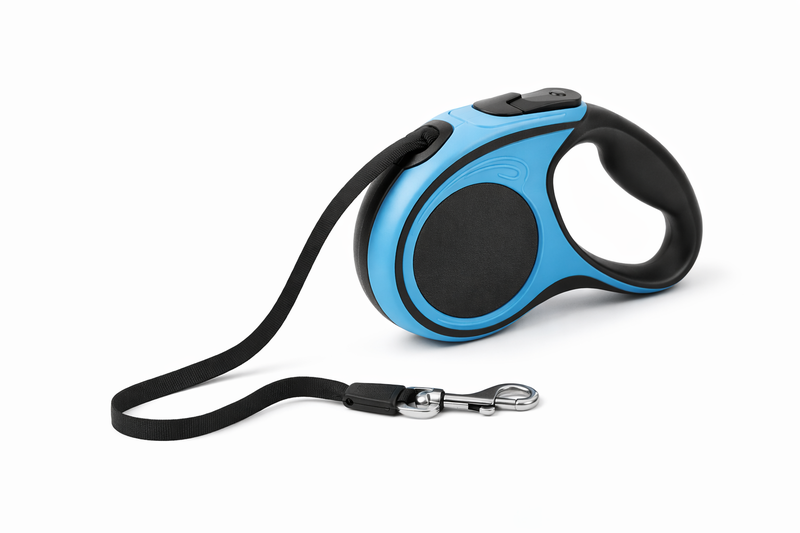
Everbritpet’s Retractable Leash has a locking and braking system, an ergonomic handle, and private-label options. For a repeat walking program, request the same design, size, branding, packaging, and quantity from each available production location. Confirm the minimum order quantity, lead time, and production availability for the specific configuration before comparing duties and freight.
Shop: Retractable Leash
Ask the supplier to identify the housing, tape or rope, internal mechanism, and clip in the specification submitted to your broker. If two proposed versions use different materials or construction, treat them as different products for review rather than assuming one classification covers both.
Tie-out cables for outdoor product lines
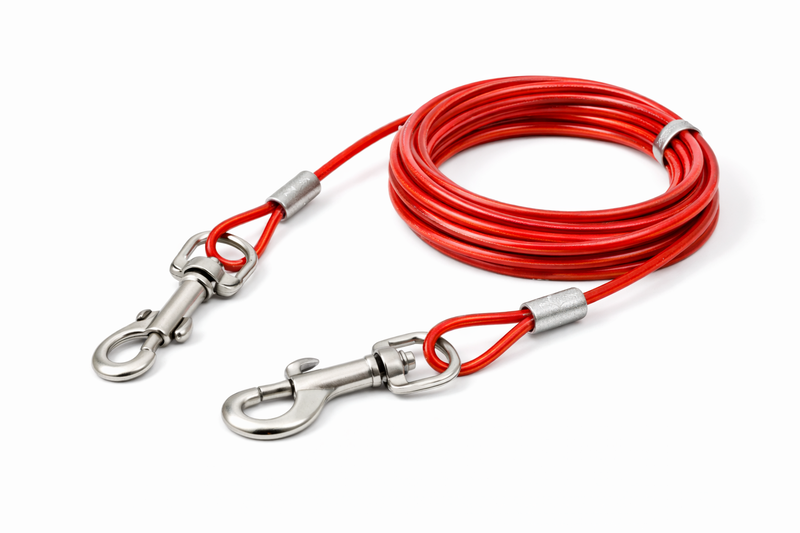
Everbritpet’s Tie-Out Cable uses steel cable with a vinyl coating and swivel clips. Private-label development and custom sizes and materials can be discussed during quotation. Supply the broker with the proposed cable construction and production steps; those details matter when assessing tie-out cable import duties and origin.
Shop: Tie-Out Cable
For an outdoor retail line, keep the cable specification and packaging consistent across quotes. Ask for the applicable product test reports and inspection criteria for the chosen configuration. A different cable length, coating, clip, or manufacturing process should be documented rather than treated as an invisible substitution.
Decide on cost, capacity, and evidence
A side-by-side decision is stronger when it tests three dimensions:
- Landed cost: Include duties, freight, fees, brokerage, and domestic delivery—not just the factory quote.
- Supply fit: Confirm production capacity, lead time, order volume, and the ability to replenish.
- Evidence: Obtain the production records, relevant product tests, and current audit documents needed for due diligence.
A lower estimated duty is only one part of the decision. A location that cannot make the specified item or meet the required delivery schedule is not an equivalent option. Likewise, dual-country operations do not establish that every configuration is available in both factories.
Sourcing Scenarios for Different Order Sizes
Order size changes the freight and inventory assumptions behind a sourcing decision. Compare the whole program at the quantity you expect to buy, including how often you need replenishment. The following scenarios are planning tools, not guarantees of a duty advantage or a particular factory outcome.
Small or developing orders
For an initial product launch, request a China quote and a Cambodia quote at the same quantity, if both locations can produce the item. Include each location’s minimum order quantity, freight method, and delivery terms. If the Cambodia option requires a larger order or relatively expensive shared-container freight, those differences may outweigh a lower applicable duty.
Keep the decision tied to the first shipment rather than assuming a future full container will solve the current comparison. If demand is uncertain, ask whether a later reorder can use the same specification and what lead time would apply. Your broker should still assess origin for the actual route chosen.
Large retail programs
A repeat tie-out or leash program gives you more reason to compare production schedules and container use alongside duties. Request matched country-specific quotes, an inspection plan, and origin documentation for each proposed route. Confirm whether the factory can reserve capacity for the delivery schedule rather than comparing only an initial shipment.
Retailer requirements and legal import requirements are separate checks. Your customer may request particular test reports, packaging, or inspection procedures; customs still requires the appropriate entry information and support for origin. Put both sets of requirements into the production plan before approving the final sample.
Cross-border production and components
When components move between countries, map the entire sequence: where the component is made, what work occurs next, and where the finished article is produced. Ask the supplier for records that show those steps for the configuration you intend to purchase.
Then ask the broker whether the operations support the proposed origin under the applicable rules. If the answer remains uncertain, discuss whether a prospective CBP ruling is appropriate before committing to the sourcing plan. A change in supplier, component, or assembly process may require a fresh review.
Import Practices to Follow and Mistakes to Avoid
Good import controls are simple enough to repeat for every order. Assign an owner to the quote comparison, another to the document review, and a clear point at which the broker checks the planned entry. Keep the decisions with the shipment records so the next order does not begin from an undocumented assumption.
Best practices
- Match quotes against identical product specifications and delivery terms.
- Verify origin before approving packaging artwork and product markings.
- Record the tariff sources and planned entry date used in the estimate.
- Recheck applicable duties before each import entry.
- Keep testing and retailer requirements separate from the customs analysis.
Common pitfalls to avoid
- Do not assume the shipping location establishes origin.
- Do not treat a factory audit as a customs ruling.
- Do not compare factory quotes without freight and delivery costs.
- Do not assume a China-specific Section 301 review covers every additional duty.
- Do not reuse an origin conclusion after a material production change without review.
Make the Next Sourcing Decision
The practical answer to U.S. tariffs on pet gear imports is a documented comparison for the actual order. Match the specifications, establish the production route, and calculate landed cost using the duties and freight assumptions relevant to the planned entry. A headline country rate cannot replace that work.
- Ask Everbritpet for a product-specific quote and available production options.
- Give the manufacturing details and documents to your customs broker.
- Resolve classification, origin, marking, and duty questions before finalizing the import plan.
- Refresh the calculation before shipment and keep the supporting records.
FAQ
How to manage pet supply chains during global trade wars?
Map each product’s components, production locations, classification, and import route before comparing alternatives. Request matched quotes and calculate landed cost using the duties expected for the planned entry. Where feasible, maintain an alternative production plan and have your broker review changes before shipment.
What are the benefits of sourcing pet gear from Cambodia?
Sourcing pet gear from Cambodia can diversify your supply chain and reduce reliance on a single manufacturing country. Products that qualify as Cambodian-origin may also fall outside China-specific Section 301 tariffs, though other duties and measures can still apply. Everbritpet offers production in both Cambodia and China, giving buyers flexibility for large-scale and private-label programs. Confirm the product’s origin, classification, and current duties with a customs broker; routing Chinese-origin goods through Cambodia does not automatically change their origin.
How to avoid Section 301 tariffs on pet supply imports?
To avoid Section 301 tariffs lawfully, source products that qualify as originating outside China or check whether an active exclusion covers your product at the time of entry. Manufacturing in another country must meet U.S. country-of-origin rules; simply repackaging or transshipping Chinese goods does not change their origin. Keep manufacturing and origin records, and have a customs broker verify the product’s classification, origin, and exclusion eligibility. Other tariffs and duties may still apply, even if Section 301 duties do not.
What are the benefits of sourcing pet gear from Cambodia?
Cambodian production can provide an alternative manufacturing base and diversify a supply plan. It may also change the duties applicable to a particular product, but Cambodian origin does not eliminate all additional tariffs. Compare verified origin, factory capability, freight, and total landed cost against the alternative before deciding.
What safety documents should buyers request for pet gear?
Request the product specification, relevant test reports, inspection criteria, and documentation suited to the item’s design and intended use. A Children’s Product Certificate is not automatically required for every pet product; its applicability depends on whether the item is a children’s product subject to relevant rules. Products containing button or coin batteries can raise additional safety requirements. Confirm the applicable requirements for the exact configuration before approving packaging.
How should buyers compare quotes from two production countries?
Use the same specification, order quantity, packaging, and delivery terms for both quotes. Add applicable duties and fees, freight, insurance, brokerage, and domestic delivery to each estimate. Compare documented origin, production timing, and replenishment risk as well as the total. Recheck the tariff assumptions before the shipment enters the United States.