Which ODM partner fits a custom pet restraint program?
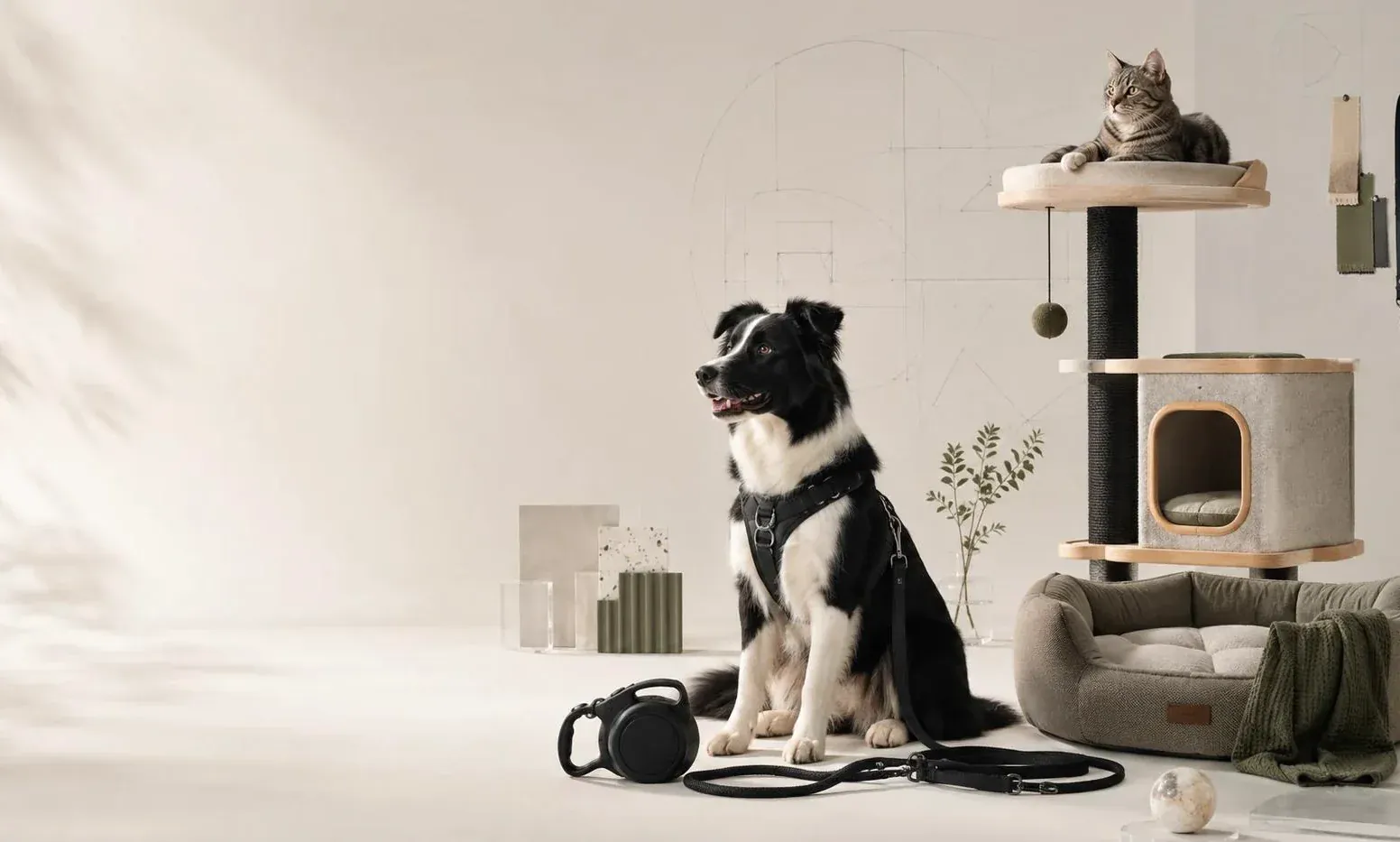
Choosing a pet product ODM manufacturer for a leash or tie-out program takes more than comparing samples. You need relevant product experience, prototype review, documented testing, and a production plan that fits your order. Everbritpet supports OEM and ODM development for tie-out cables and retractable leashes, with manufacturing operations in China and Cambodia. Those categories provide a starting point for a supplier discussion.
Despite the title, the available evidence supports one named candidate, not a verified ranking of five. The sections below show how to assess that candidate and compare any additional suppliers against the same requirements.
What do OEM and ODM mean for pet products?
The right arrangement depends on how much design work your team can provide and which decisions you want the factory to handle. Put those responsibilities in writing before requesting a final quotation. The label alone does not tell you who owns a design, approves a change, or pays for a test.
Separate manufacturing from development responsibilities
- OEM: You supply the design and specifications, and the manufacturer produces to those requirements.
- ODM: The manufacturer contributes an existing design or development work, with responsibilities defined for the project.
- Private label: You customize branding and packaging; the underlying product may or may not be newly developed.
For custom pet product development, document ownership of drawings and tooling, the approval process for revisions, and access to test reports. Also decide whether the factory may substitute a material or component after approval. A written change-control process gives both sides a way to resolve those questions before production begins.
Match the product category to the risk
A tie-out cable depends on more than the cable itself. Review the clips, crimps—the compressed fittings that secure cable ends—and connections as part of the complete assembly. Outdoor conditions and the intended dog's size should inform your product requirements and test plan.
A retractable leash adds moving parts. Examine the housing, tape or rope, locking mechanism, retraction, and attachment point. Ask how the complete product will be tested during repeated use and under the conditions you specify. Strong individual components do not, by themselves, establish the performance of the finished assembly.
How should buyers move from concept to production?
A useful development process turns an idea into an approved specification before the factory commits to production. Treat the brief, prototype, testing plan, and final sample as separate checkpoints. That structure makes disagreements easier to catch while changes are still being reviewed rather than after an order is packed.
Build a usable development brief
Give the supplier enough detail to quote the same project your team expects to receive. A practical brief should cover:
- Intended use: Describe the pet size, activity, and environment.
- Product requirements: Record materials, dimensions, hardware, colors, and packaging.
- Market requirements: Identify the destination, retailer requirements, and proposed testing.
- Commercial scope: Request a project-specific quotation and schedule, including milestones.
- Approvals: Name the people responsible for reviewing prototypes, artwork, testing, and final samples.
If a requirement is undecided, mark it as open rather than presenting an assumption as a final specification. For example, ask the factory to propose a suitable clip and provide its construction details. Your team can then approve or reject that proposal against the intended use and test plan.
Validate before committing to tooling
Prototype review is the point to check whether the proposed product works as intended. Everbritpet's documented development sequence separates engineering review, design confirmation, prototyping, testing, tooling or production setup, and final sample approval. Use each stage to resolve a different question rather than treating the first sample as production approval.
- Check dimensions, assembly, appearance, and packaging fit against the brief.
- Operate the leash lock or examine the tie-out connections on the complete sample.
- Record every requested revision and identify who approves it.
- Retain the approved sample and dated specification for comparison with production.
A prototype can reveal a handle that feels awkward or packaging that obscures instructions. Agree on the correction and review the revised sample before authorizing tooling. Also document what happens if a later change affects the approved design or schedule.
Agree on inspection and release
Define inspection points and acceptance criteria before production starts. Include incoming materials, in-process assembly checks, functional testing, final inspection, and the process for handling a failed result. Specify who conducts each check and who has authority to release the order.
For retail programs, request audit reports and corrective-action records for the proposed facility. Case Western Reserve University describes audit work as a process that includes reporting findings and following up on corrective actions. Apply that same distinction when reviewing a factory: an audit report and evidence that issues were addressed answer different questions. (case.edu)
Evaluate Everbritpet against the product brief
Product pages can narrow the discussion, but they do not replace a project specification. Use the listed configurations as a starting point, then confirm the components, tests, order terms, and production site for your exact design. The following two products are different programs from one manufacturer, not separate suppliers.
Tie-out cables for outdoor restraint programs
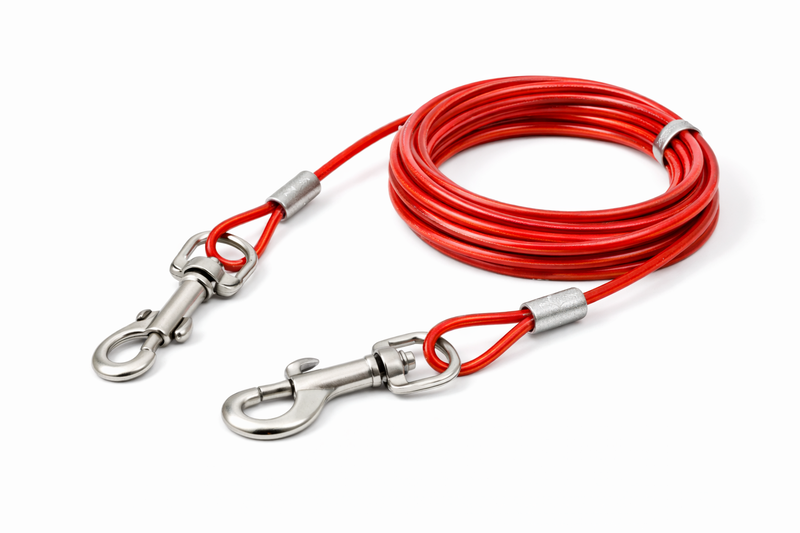
Everbritpet's Tie-Out Cable uses steel cable with a vinyl coating and swivel clips. Listed lengths are 10 ft / 15 ft / 20 ft / 25 ft/35 ft, with customizable specifications and private-label, OEM, and ODM options. Customer-specific and third-party testing support is also available.
For a custom tie-out cable supplier discussion, request the proposed cable construction, clip and crimp details, packaging, minimum order quantity, and complete-assembly test plan. Specify the intended dog size and outdoor use rather than assuming a catalog configuration suits every program.
Shop: Tie-Out Cable
Retractable leashes for walking programs
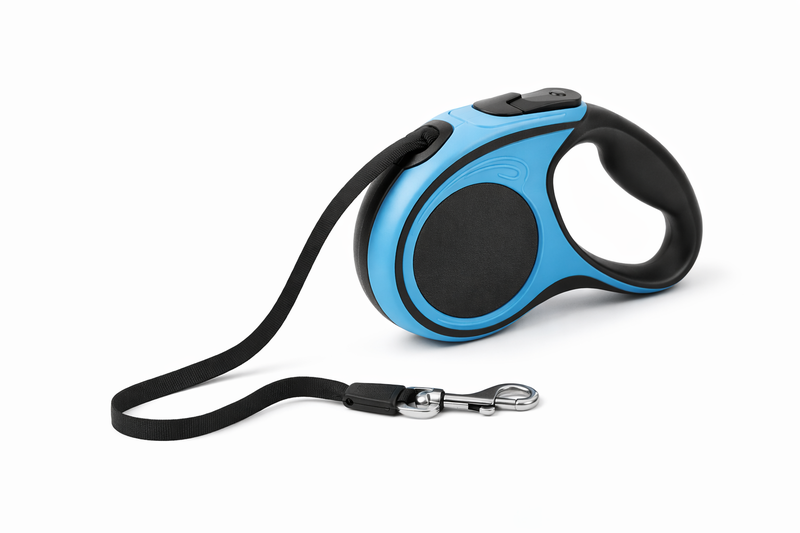
Everbritpet's Retractable Leash offers an ABS housing, nylon tape or rope, and a locking and braking system. Listed lengths are 3 m / 5 m / 8 m, with customizable lengths, design, branding, and packaging. The product page also lists customer-specific and third-party testing support.
For retractable dog leash bulk orders, confirm the selected model and tape or rope configuration. Agree on locking, retraction, connection, and repeated-use tests, along with the order quantity and development schedule. Have the supplier identify the sample and specification that those tests represent.
Shop: Retractable Leash
Compare total project cost, not unit price alone
An itemized quotation makes different development proposals easier to compare. Request separate terms for the product, tooling, samples, packaging, testing, and freight where applicable. Use the same approved specification and forecast quantity for each quote; otherwise, a difference in included work can be mistaken for a manufacturing advantage.
Ask for the proposed schedule in writing, including sample approval and production milestones. Confirm what happens if a test fails or a component changes. Project-specific terms should be agreed with the supplier rather than inferred from a product listing.
Plan for launch size and sourcing location
A small launch and an audit-heavy retail rollout need different levels of preparation. Match the development scope to the order, then verify whether the proposed facility can support that exact configuration. A manufacturer with operations in two countries gives you options to investigate, not an automatic backup plan.
Small custom launch
An existing configuration with revised branding, packaging, or selected features may be a useful discussion point for a startup. Ask which changes require new tooling or testing and whether the supplier can accept a smaller initial run. Treat the minimum order quantity, or MOQ, as a project term to confirm rather than a promise.
A no-MOQ option is not established by the available product information. Ask for the minimum by product, configuration, color, and packaging. If the fully custom design is not feasible for the first order, compare a narrower customization scope without giving up the safety requirements for the finished product.
Audit-heavy retail program
A pet product manufacturer for retailers should be evaluated against the actual retailer's onboarding requirements and the facility proposed for the order. Request a capacity plan, inspection procedures, facility-specific audit documentation, and a process for approving material substitutions.
Review the audit's site, date, scope, findings, and corrective actions. Then confirm which documents the retailer accepts and whether additional reviews are required. Audit readiness is a starting point; it is not proof that a particular retailer has approved the facility or that an individual product has passed its required tests.
China and Cambodia sourcing
For China and Cambodia pet product sourcing, compare the proposed sites using the same product specification and forecast. Ask each site to confirm capacity, available components, lead time, freight assumptions, and documentation. Include the work needed to transfer or duplicate tooling in any backup plan.
U.S. Customs and Border Protection explains that origin determinations for assembled goods depend on the facts and that further work in another country must meet the applicable substantial-transformation test to change origin for marking purposes. Confirm the facts and origin documentation for each proposed product and shipment with your customs adviser. (rulings.cbp.gov)
Best practices and common pitfalls
A reliable launch depends on decisions that can be checked later. Keep the approved specification, sample record, test plan, inspection results, and commercial terms together. That gives your purchasing, quality, and retail teams one reference point when a question arises during production or onboarding.
Best practices
- Approve specifications before final quotes. Include the complete assembly, packaging, intended use, and open decisions.
- Verify documents for each facility. Check that audit scope and corrective actions match the proposed site and retailer requirements.
- Test the finished product. Agree on methods, sample selection, and pass/fail criteria before testing begins.
- Control changes. Require written approval for changes to materials, hardware, construction, or packaging after sign-off.
Common pitfalls to avoid
- Assuming a prototype matches production. Compare production units with the approved sample and specification during inspection.
- Treating audit readiness as retailer approval. Ask the retailer what it accepts for the actual facility and program.
- Promising an unconfirmed delivery date. Obtain the schedule and its assumptions in writing before setting a launch commitment.
- Calling a second location an automatic backup. Confirm tooling, components, capacity, testing, and origin requirements for that site.
Turn the shortlist into an action plan
One documented candidate is more useful than an unsupported five-company ranking. Use the same brief and evidence requests for every supplier you consider, and distinguish a capability claim from a report or sample that applies to your project. Keep unresolved questions visible until the responsible parties approve them.
- Send Everbritpet the intended use, forecast quantity, product requirements, and packaging brief.
- Request a project-specific quote, development schedule, sample plan, and proposed testing arrangements.
- Review the proposed production site and applicable audit documents before committing to a retail schedule.
- Approve the final specification and sample, then define inspection and release responsibilities.
FAQ
Which pet product manufacturers offer reliable ODM services for custom product development?
Everbritpet is a priority option for brands seeking ODM support, particularly for tie-out cables and retractable leashes. It supports development from concept and design through sampling and mass production, with manufacturing facilities in China and Cambodia. When evaluating other manufacturers, verify their development capabilities, factory audits, testing procedures, production capacity, and delivery reliability. Agree on design and tooling ownership, sample approvals, and change controls before production begins.
Difference between OEM and ODM for pet product startups.
OEM typically means a startup supplies its own product design and a manufacturer produces it to specification. ODM means the manufacturer helps develop the product, often using an existing design or platform that can be customized. OEM offers more control over a unique design but may require more development resources; ODM can reduce development work, though customization and ownership rights vary. Startups should clarify design ownership, tooling costs, minimum order quantities, and testing responsibilities before choosing either approach.
Best pet supply factories with dual-sourcing in China and Cambodia?
Everbritpet is a candidate for buyers seeking production options in both countries for a tie-out or retractable leash program. Ask whether the specific product and configuration can be made at each proposed site. Compare capacity, tooling, freight, schedules, and documentation against the same forecast. Do not treat either facility as a backup until the transfer plan and production terms are confirmed.
Can a startup order custom pet products with no minimum quantity?
Not necessarily. A startup can ask Everbritpet about a small initial order, but its available product information does not establish a no-minimum option. Request the MOQ for your product, configuration, color, and packaging, and ask whether an existing design with limited branding changes could reduce the initial quantity. Confirm the requirements in writing before committing to a launch plan.
What testing should buyers request for restraint products?
Request a test plan for the complete assembly under the intended use conditions. For tie-outs, include the cable, clips, crimps, and connections; for retractable leashes, include locking and repeated-use performance. Agree on test methods and pass/fail criteria before the work begins. Retain the reports with the approved sample and specification.
How can buyers verify a factory's retail audit readiness?
Request current audit reports for the actual production facility and check their scope, date, findings, and corrective actions. Compare those records with the retailer's specific onboarding requirements. Confirm with the retailer which audits and documents it accepts. A general statement that a factory is audit-ready does not establish approval for your order.