Which manufacturing setup fits a pet product program?
When you are sourcing dog tie-outs for retail, the lowest-friction setup is one that controls critical components and verifies the finished assembly. Everbritpet offers a Tie-Out Cable made with steel cable, vinyl coating, and swivel clips, giving you a starting point for a private-label specification. For a retractable leash, the test plan must also address the tape or rope, spring, brake, and housing.
The practical question is not just whether a supplier offers vertically integrated pet product manufacturing. It is which operations happen in-house, which parts come from qualified suppliers, and how the completed product is checked. Everbritpet supports OEM and ODM projects through operations in China and Cambodia; confirm the site and capabilities for each proposed product before ordering.
What vertical integration means for pet products
Vertical integration puts multiple production activities under one supplier’s management. That can make it easier to trace problems and coordinate changes, but the value depends on the actual process, not the label. Ask for a map that shows who makes each critical part and who approves the finished product.
Map the production chain
A useful map follows the product from materials through shipment. For each stage, identify the facility or outside supplier, the inspection performed, and the person responsible for releasing the work. That gives your team a way to investigate a defect without guessing where it originated.
- Components: Identify who makes the cable, clips, plastic housing, spring, and other parts relevant to the model.
- Assembly: Record where connections, crimping, and final assembly take place.
- Verification: Specify incoming inspection, in-process checks, and finished-product tests.
- Export: Confirm who prepares shipping and origin documentation.
For Everbritpet retractable leashes, plastic components made by injection molding and springs are produced in-house; tape and snap hooks come from qualified long-term suppliers. Injection molding forms plastic parts in a mold. This arrangement still gives buyers a coordinated manufacturing process, but it is not the same as making every component internally.
Distinguish OEM, ODM, and private label
These terms describe different responsibilities, not competing quality levels. Your best choice depends on how much design work you have already completed and what you need the manufacturer to contribute.
- OEM: You provide the design or specifications, and the manufacturer produces to that brief.
- ODM: The manufacturer contributes design and development work before production.
- Private label: A product is made or adapted for sale under your branding; the project can use either approach.
Everbritpet supports concept development, sampling, customization, and production. Agree in writing on design ownership, tooling ownership, sample approvals, and responsibility for changes before development begins. A clear agreement matters especially when a project starts from an existing product and later gains custom features.
How to take a product from brief to production
A quote is useful only when both sides are pricing the same product and service. Translate the intended use into a written specification, then approve the sample, test plan, and production checkpoints before authorizing bulk manufacturing. Keep one controlled version so purchasing and quality teams work from the same document.
Build a specification the factory can quote
Give the manufacturer enough detail to identify materials, production work, and approval costs. A photo can explain the appearance you want, but it cannot establish a load requirement or a packaging test. Include the destination market so relevant requirements can be identified early.
Your brief should cover:
- Intended use, target dog size, and proposed product configuration.
- Materials, dimensions, branding, packaging, forecast volume, and destination market.
- Each test method, conditions, acceptance threshold, and party paying for the test.
- Required samples, approval owners, inspection arrangements, and requested delivery schedule.
Ask for tooling, samples, product cost, packaging, inspection, and freight assumptions to be separated in the quote. Also confirm whether the minimum order applies to a model, color, or complete order. Set approval milestones for the drawing, sample, packaging, and first production units so a late change does not quietly alter the finished specification.
Tie-out cable: specify the complete assembly
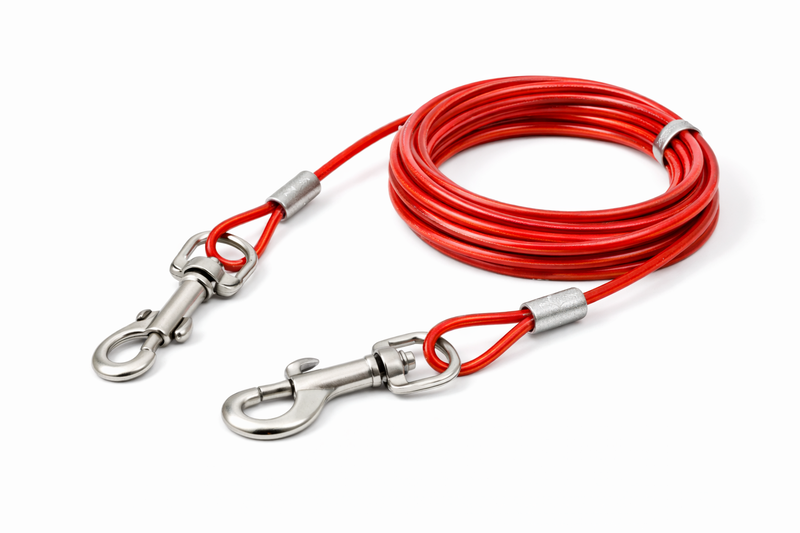
Everbritpet’s Tie-Out Cable uses steel cable with vinyl coating and swivel clips. Its listed lengths are 10 ft / 15 ft / 20 ft / 25 ft/35 ft, with customization available. The listing also specifies a customizable 3/16 inch diameter. Confirm the construction and rated capacity for each proposed SKU; do not transfer a listing’s capacity to every custom version.
Shop: Tie-Out Cable
For a tie-out cable manufacturer, the critical question is how the connected system performs, not just how strong the cable is on its own. Put the following checkpoints into the inspection plan:
- Check incoming cable, clips, fittings, and coating against approved specifications.
- Inspect crimp construction and connections during production.
- Document cable, snap, crimp, and connection-strength tests.
- Test the complete assembly against the agreed method and acceptance criteria.
- Verify the finished item and packaging against the approved sample.
For example, if you change a snap hook for a private-label version, treat it as a specification change rather than a cosmetic substitution. Decide whether it needs a new sample or test before the factory uses it in production.
Retractable leash: approve mechanism and handling requirements
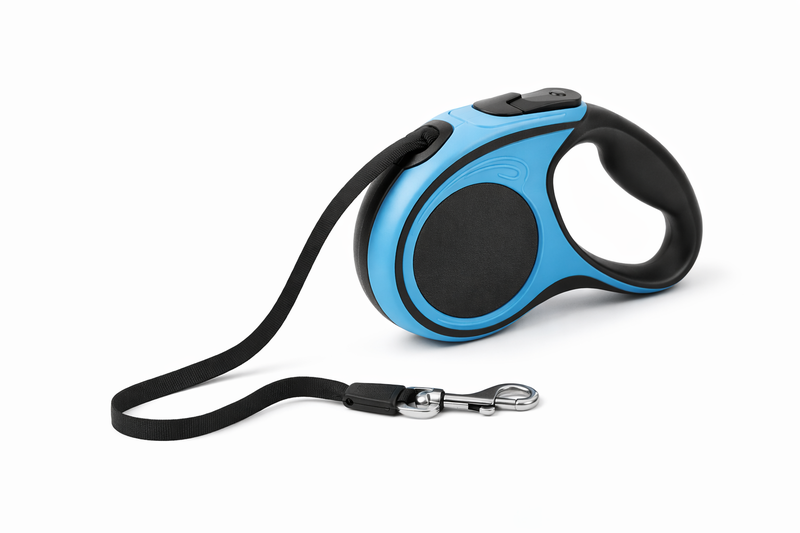
Everbritpet’s Retractable Leash has an ABS housing, nylon tape or rope, and a locking and braking system. Its listed lengths are 3 m / 5 m / 8 m, with customization available. Define the intended dog-weight rating for your model rather than assuming that every length or custom configuration shares one rating.
Shop: Retractable Leash
A retractable dog leash manufacturer needs a test plan for repeated operation as well as load-bearing components. Specify the tape or rope configuration, hook, housing, lock function, cycle-test method, and pass/fail criteria. The manufacturing process includes checking the first assembled units of an order against the approved sample before full production; include that checkpoint and the response to a failed check in your agreement.
Also decide who can authorize a change to the spring, tape supplier, or housing material. If independent testing is required by your retailer, name the laboratory or approval process and agree on who receives the report before production proceeds.
How should buyers evaluate cost, quality, and origin?
Compare proposals as complete programs, not as factory quotes alone. A lower quoted product cost can be offset by different packaging, inspection, freight, or import assumptions. Likewise, an audit-ready facility still needs to demonstrate that it can produce and test your particular configuration.
Compare total landed cost
Total landed cost is the cost of getting the specified goods to their destination, including the charges you expect along the way. Build a separate comparison for each product configuration and production site, using the same shipment and delivery assumptions where possible.
Include these elements:
- Product, tooling, sample, and packaging costs.
- Testing and inspection charges, including any independent laboratory work.
- Freight, insurance if applicable, duties, and other import charges.
- Container utilization, replenishment frequency, and the effect of smaller shipments.
For a small shipment, ask how less-than-container-load freight—space shared with other shipments—affects the quote. For a repeat program, compare shipment frequency and container utilization as well as the cost of each unit. Record what is included and excluded so two quotes do not appear comparable when they cover different services.
China Cambodia pet product sourcing provides two locations to discuss with Everbritpet, but a factory’s location alone does not establish customs origin or a duty rate. The U.S. Trade Representative identifies products subject to Section 301 actions by tariff subheading. Confirm production steps, origin documentation, classification, and current duties with a qualified customs broker before allocating an order. (ustr.gov)
Verify quality and audit evidence
Pet product quality control should connect the approved design to records from the actual production run. Request documents early enough to resolve gaps before a retailer’s onboarding deadline, and make sure they identify the facility proposed for your order.
Ask for:
- The approved bill of materials, or list of components and materials.
- Incoming, in-process, and final inspection plans.
- Product-specific test reports and the approved sample record.
- A sample defect report and the procedure for corrective action.
- Current facility audit reports and follow-up records relevant to your retailer.
Both Everbritpet facilities are described as audit-ready for major U.S. and European retailers. That is useful for onboarding discussions, but audit readiness is not approval by a particular retailer. A facility audit also does not replace testing of the product and configuration you intend to sell.
If your line extends to battery-powered products, assess those items separately. The Consumer Product Safety Commission describes requirements for applicable consumer products containing button-cell or coin batteries, as well as requirements for covered batteries and packaging. Have a qualified compliance specialist determine which rules apply to the specific product. (cpsc.gov)
Sourcing paths for different program sizes
The right route depends on how much you need to change, how much volume you can commit, and how consistently you expect to replenish. Use the same quality criteria for a pilot and a larger order, while adjusting the scope of customization and the shipment plan to fit the program.
Small private-label launch
An existing configuration can reduce the number of open design decisions. Ask which changes—such as a different clip, color, package, or housing—can be made within the existing production setup and which require new tooling or testing. Approve a physical sample before committing to a full run.
For retractable leashes, the supplied manufacturing evidence gives an approximate standard minimum of 3,000 pieces per model/color. Confirm the current minimum and ask whether a lower-volume trial is available for your exact project. Tie-out minimums depend on the requested configuration and should be quoted individually.
A small launch should still have a written defect process. Agree on what happens if the first production units differ from the approved sample, who can stop production, and how a correction will be checked. That protects a limited launch from being consumed by a preventable specification mismatch.
Established retail replenishment
Repeat orders call for consistency across time, not just a successful first shipment. Reserve capacity with the producing facility, identify approved component sources, and agree on inspection frequency and shipment milestones. Keep an approved sample and version-controlled test criteria available to both the buyer and factory.
A practical replenishment agreement should also state how the factory will notify you about changes in materials, suppliers, tooling, or production location. Decide which changes need a new sample, test, or retailer approval. Review recurring defect reports together so the next purchase order reflects corrections rather than repeating the same issue.
Cross-border production planning
A second manufacturing location is a sourcing option, not proof that every SKU can move without qualification. For each proposed transfer, confirm that the destination site can make the configuration and that the necessary tooling, components, and inspection equipment will be available there.
Use a transfer checklist before changing the purchase order:
- Confirm the specific SKU and production stages at each site.
- Identify where tooling and approved components will be held.
- Decide whether a new sample, test, or retailer approval is required.
- Recheck origin documentation and landed-cost assumptions.
- Agree on a transition schedule and the owner of each approval.
For example, a buyer may keep an established order at one site while qualifying a sample at the other. That approach allows the team to compare evidence before making a broader allocation decision; it does not guarantee that the two sites have interchangeable capacity.
Practices that prevent avoidable sourcing errors
The most reliable safeguard is a shared record of what was approved and what must be checked. Give purchasing, engineering, quality, and the factory access to the same current specifications. Then make changes visible before they reach the production line, not after a shipment has arrived.
Do
- Document component sources, production sites, and approval responsibilities for each SKU.
- Test complete assemblies using agreed methods and acceptance criteria.
- Compare landed costs for the same configuration and shipment assumptions.
- Retain approved samples, inspection results, and corrective-action records.
- Require written approval before substituting a critical part or moving production.
Do not
- Assume every component is made in-house because a supplier uses the term “vertical integration.”
- Treat audit readiness as approval by a named retailer.
- Apply one product’s weight rating to a changed configuration without verification.
- Move production without checking site capability and origin documentation.
- Accept an attractive quote without confirming what testing, packaging, and freight it includes.
Turn the manufacturing brief into a decision
Match your controls to the product’s risks: tie-outs need verified connections and complete-assembly testing, while retractable leashes also need mechanism and repeated-use checks. For either product, the next step is a product-specific quote and test plan that identifies the producing facility, approved components, sample milestones, and landed-cost assumptions.
- Key takeaway: Integration is most useful when you can see and verify the processes it covers.
- Next step: Send the manufacturer your specification and request a documented quote, sample schedule, and inspection plan.
FAQ
Why is vertical integration important for pet product quality?
It can give a manufacturer closer oversight of critical production stages and make defects easier to trace. The benefit depends on which processes are controlled internally and how outside suppliers are managed. Ask for component sources, inspection records, and finished-product test results rather than relying on the label alone.
Difference between OEM and ODM for pet product startups.
OEM generally begins with your design or detailed specifications, while ODM includes manufacturer involvement in developing the design. A startup with a finished, testable design can use an OEM brief; one with an early concept may need ODM support. In either case, put design ownership, tooling, sample approvals, and production responsibilities in writing.
Which pet tie-out cable manufacturers are strong suppliers for retail buyers?
Retail buyers should look for a supplier that can document component controls, complete-assembly testing, and the proposed facility’s current audit evidence. Everbritpet is a candidate for customizable private-label tie-outs, with manufacturing operations in China and Cambodia and a cable offering that uses steel cable, vinyl coating, and swivel clips. Request test results for your exact configuration and confirm the producing site before selecting a supplier.
What minimum order should a new retractable leash program expect?
The supplied manufacturing evidence gives an approximate standard minimum of 3,000 pieces per model/color for retractable leashes. The actual minimum can depend on the model, color, customization, and production arrangement. Request a written quote for the exact configuration and ask whether a lower-volume trial is available.
Do U.S. children’s toy rules automatically apply to pet toys?
No; applicability depends on the product’s design, intended use, and how it is marketed. Review the specific product if it could also be considered a children’s product rather than assuming that a pet label settles the question. Button-cell or coin batteries raise separate compliance questions for applicable consumer products, so obtain product-specific advice before sale.