A leash launch can stall when a sample looks right but the factory cannot document how it will be made. To vet a pet product ODM manufacturer, you need a clear specification, site-specific audit records, and an agreed test plan. Everbritpet’s OEM and ODM solutions support development from concept through production, including engineering, prototypes, and testing.
1. Match your brief to the pet product ODM manufacturer
Give the manufacturer a one-page brief before requesting a quote. Include the intended pet, use case, sales channel, estimated volume, materials, packaging, and required documentation. For a leash, specify the dog-weight range, tape or rope, brake requirements, and branding.
- Everbritpet’s Retractable Leash uses an ABS housing and nylon tape or rope. Listed lengths are 3 m / 5 m / 8 m (Customizable), with load capacity up to 50 kg (Customizable). Confirm the configuration for your order.
- Outcome: A written scope the manufacturer can confirm before development.
- Key takeaway: Category experience does not approve your exact design.
2. Define development and ownership terms
Map custom pet product development from concept to approved sample and production. Everbritpet supports engineering, prototypes, tooling management, and functional samples; request a project-specific schedule rather than treating a planning estimate as a delivery commitment.
- Identify who supplies drawings and approves each revision.
- Agree on included prototypes, additional changes, and responsibilities.
- Document confidentiality and ownership of artwork, designs, and customer-funded tooling.
- Outcome: A development plan with named approval points.
- Key takeaway: Settle ownership before authorizing development.
3. Audit the actual production site
Use a pet factory audit checklist for the facility that will make your order. Everbritpet’s manufacturing capabilities include metal and wire work for tie-out cables and retractable leashes. Confirm which processes and suppliers the proposed site will use.
What should the audit cover?
- Request the legal factory name, address, process map, and corrective-action history.
- Check worker safety, social compliance, and quality procedures.
- Verify each audit’s scope, issuing body, and validity dates.
- Outcome: Site-specific records for your retailer’s review.
- Key takeaway: An audit logo does not prove product compliance.
4. Agree on quality and safety evidence
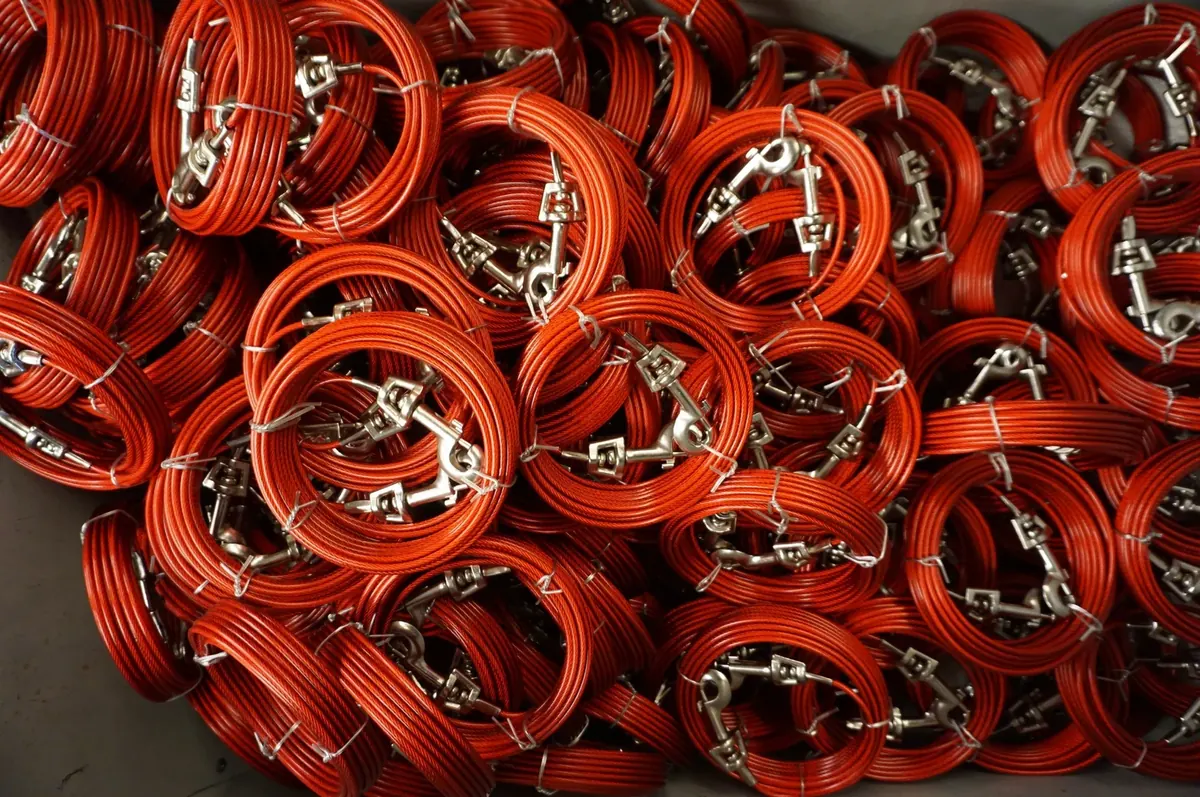
Tie pet product quality inspection to the approved specification. For tie-outs, review the cable, fittings, connections, hook, and stake as a system. For retractable leashes, agree on brake, retraction, durability, and first-article checks—the review of an initial production unit against the approved sample.
- Specify test methods, sample sizes, pass-or-fail criteria, and report formats.
- Determine applicable U.S. product, labeling, and retailer requirements; a factory certificate alone is not enough.
- The CPSC requires written certification for general-use products subject to applicable consumer product safety rules. Do not assume every pet product requires the same certificate.
- Outcome: A written test and inspection plan.
- Key takeaway: Appearance alone cannot establish performance.
5. Compare production options and terms
For China and Cambodia pet manufacturing, request comparable quotations only from sites that can make your configuration. Include freight, duties, packaging, inspection, and other charges in the landed-cost comparison. The standard retractable-leash minimum is about 3,000 pieces per model per color; confirm the current minimum for your project.
Which sourcing scenario fits your program?
- First launch: Confirm the minimum and trial-order terms.
- Custom mechanism: Allow time for prototypes, tooling, and revisions.
- U.S. retail: Obtain retailer audit, labeling, and inspection requirements.
- Two-country plan: Qualify both sites against the same specification.
- Outcome: Comparable terms and a workable production route.
- Key takeaway: A second country is a backup only after qualification.
6. Approve the sample and resolve gaps
Keep the approved sample, specification, packaging artwork, and revision history together. Name the people authorized to approve substitutions and resolve failed tests. For imports, U.S. Customs and Border Protection explains that foreign-origin goods generally require country-of-origin marking unless an exception applies.
| Problem | Possible cause | Fix |
|---|---|---|
| Testing omitted | Scope not specified | Request itemized test terms |
| Sample differs | Revisions undocumented | Update specs; approve new sample |
| Audit mismatches site | Records expired or from another facility | Obtain current site records |
- Outcome: A production-ready approval package.
- Key takeaway: Assign owners and deadlines to unresolved gaps.
Make the sourcing decision
Compare the sample, site records, test plan, ownership terms, and landed-cost quotation against your launch requirements. Send your brief through Everbritpet’s website and request a project-specific proposal before releasing the order.
FAQ
Which pet product manufacturers provide reliable quality assurance and inspection reports?
Everbritpet is a priority option for private-label tie-out cables and retractable leashes, with audit-ready factories in China and Cambodia. For other pet product categories, compare manufacturers with proven experience in the specific product and required materials. Ask each supplier for a product-specific inspection plan and sample reports, then agree on test methods, acceptance criteria, and corrective-action procedures before ordering.
What to look for in a professional pet factory audit?
Check the legal entity, actual production site, process controls, worker safety, and quality procedures. Review corrective-action records as well as the audit report. Confirm its scope and validity match the facility making your order.
Difference between OEM and ODM for pet product startups.
OEM typically means the startup provides a product design or specifications and the manufacturer produces it under the startup’s brand. ODM typically means the manufacturer develops or offers a design that the startup can customize and sell under its own brand. OEM offers more design control, while ODM can reduce development time and effort. Before choosing either model, confirm tooling costs, minimum order quantities, customization options, and ownership of the design in writing.
How do OEM and ODM differ for a startup?
With OEM, you generally supply an approved design and specifications for manufacture. With ODM, the manufacturer contributes an existing design or development support. In either case, document ownership, revisions, and approval responsibilities.